


Describe the shaft, load, motion, atmosphere, temperature cycle and mounting method so bushing geometry and material selection can be evaluated against the real interface.
Key Inquiry Requirements
Describe the bushing interface
A bushing drawing is only useful when the mating shaft, pin, rod or guide is defined alongside it. Provide nominal diameter, contact length, movement type, alignment condition, expected loading and whether the bushing rotates, slides or remains fixed. Explain whether the component is a clearance guide, an electrical isolator, a spacer or a combination of functions.
Include the housing or carrier geometry and the installation method. Pressing, clamping, bonding and loose insertion create different risks for a brittle ceramic ring. State insertion direction, available tooling, retention features and removal expectations. These details help determine whether the bore, outside diameter, shoulder and edge treatment are practical for assembly.
Account for the service environment
Boron nitride bushings should be evaluated against the full environment rather than a temperature label alone. Describe atmosphere, vacuum level if relevant, pressure, adjacent materials, vapors, particles, electrical conditions and the complete heating or cooling cycle. If the part is exposed to process chemistry or deposition, identify the likely species and cleaning method.
Explain how the bushing’s dimensions are expected to behave relative to the shaft and housing during operation. Differential expansion, alignment change and fixture distortion may alter clearance or create unwanted restraint. A useful RFQ gives the supplier the assembly state at installation and the expected operating state, allowing the interface to be reviewed as a system.
Bore, surface and edge design
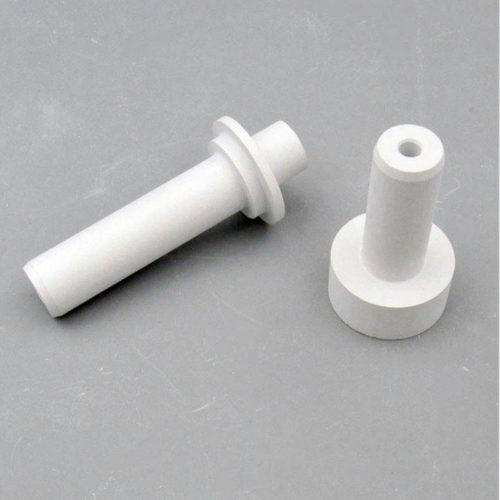
Define bore size, outside diameter, length, concentricity, roundness, end squareness and any shoulder or flange features from clear datums. State whether the bore guides a moving member, preserves a gap or simply locates another part. If contact is localized, show the contact band and identify surfaces that must remain free from machining marks or debris.
Ceramic edges are vulnerable during insertion and handling, so edge treatment should be explicit. Specify chamfers, radii or lead-ins by function and identify prohibited burr-like fragments, chipping or raised material. If a surface finish is required, apply it to the bore, outside diameter and end faces separately rather than using one general finish note.
Review loading and retention
Clarify radial, axial and impact loads, including assembly loads and any abnormal event that the bushing may experience. Show whether the component carries load directly or merely maintains position. Retention features should prevent movement without creating concentrated stress, especially where a housing, clamp or fastener contacts the ceramic near an edge.
If the bushing is part of a stack, provide the complete tolerance relationship and assembly sequence. State how alignment is established and whether adjustment is possible. A supplier can then identify where a longer bearing land, relieved zone, split feature or nonstandard profile may be useful, subject to review of the material and process route.
Make the RFQ inspection-ready
Include a dimensioned drawing, mating-part data, motion description, load case, environment, thermal cycle, installation method and cleanliness requirements. State whether the bushing is replaced individually or installed as part of a larger module. If there are multiple similar bushings, identify their positions and whether interchangeability is required.
Request a proposed material grade, manufacturing route, dimensional inspection plan and visual acceptance criteria. Ask how the supplier would verify bore condition, concentricity, edge integrity and packaging protection. Clear documentation makes it easier to compare technical suitability and prevents a low-cost quote from masking unresolved interface or handling risks.
Questions Before You Inquire
What mating-part information should accompany a bushing drawing?
Provide shaft or pin dimensions, housing geometry, alignment condition, surface condition, installation method, movement type and expected loads. Include the assembly sequence and operating environment because clearance and retention can change during heating, cooling or use.
How should bushing clearance be selected?
Clearance should be reviewed against mating dimensions, alignment, motion, thermal expansion, contamination and installation conditions. Give the supplier the installation and operating states, then request a proposed fit with its assumptions. Do not select a generic clearance from the material name alone.
Are chamfers important on ceramic bushings?
Yes. A controlled lead-in can support installation and reduce accidental edge contact, while an unsuitable edge may chip during insertion. Specify the edge treatment by location and function, and define visual acceptance criteria for the bore and outside diameter.
What should be inspected on receipt?
Useful checks may include bore and outside diameter, length, concentricity, end condition, edge integrity, visible cracks, cleanliness and packaging damage. Tie each item to the drawing’s datums and agreed acceptance criteria, especially when the bushing controls alignment or a critical gap.
Send a Clear Component Brief
Share your drawing, quantity and application with Porcecore. Mark the requirements that are fixed and the questions that remain open.


Reviews
There are no reviews yet.