
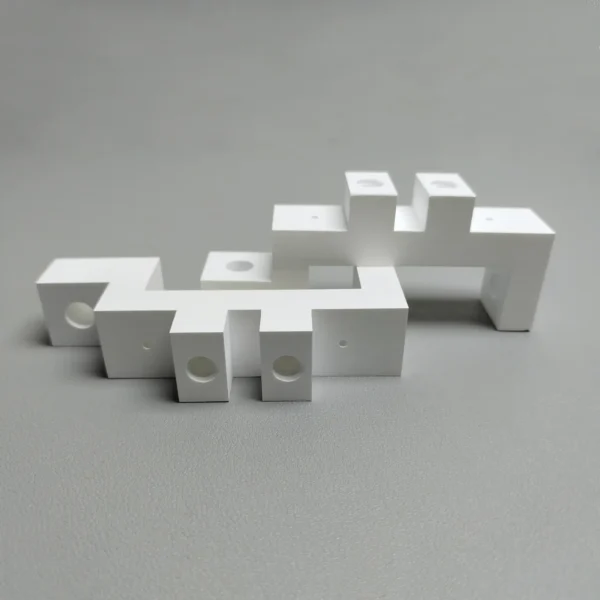


Define thread geometry, mating hardware, load direction, environment and assembly method before requesting a quotation. Porcecore can review the part drawing and application context for a controlled custom-component proposal.
Key Inquiry Requirements
Specify The Fastener As A System
A ceramic screw cannot be evaluated independently from the parts it joins. Thread form, engagement length, head geometry, counterbore, washer arrangement and mating material all influence assembly suitability. Include an exploded view or cross-section showing how the screw is installed, what it clamps and whether the fastener is expected to remain removable after service.
State whether the component is a screw, stud, pin, threaded insert or a related ceramic fastening part. The same broad description can cover very different geometries and installation risks. Mark functional datums, non-functional surfaces and any orientation features on the drawing so a supplier can distinguish critical assembly characteristics from cosmetic details.
Threads And Ceramic Handling
Threads in technical ceramics require careful definition because a nominal thread callout may not fully describe the required fit or handling method. Specify the thread standard, pitch, effective engagement, mating component and intended tightening approach where known. If the part must be assembled by hand, with a tool or with a controlled process, explain the procedure and any access limitations.
Avoid inserting an assumed torque value or strength target into an early inquiry when the assembly has not been validated. Instead, provide the clamp objective, load direction, expected cycling and failure concerns. A supplier can then discuss suitable thread geometry, edge transitions and inspection methods without treating an unverified numerical limit as a guarantee.
Thermal And Electrical Context
Boron nitride ceramic fasteners may be selected for duties where electrical isolation, non-metallic contact or thermal exposure is important, but the actual environment must be described. Include temperature changes in qualitative or approved project terms, surrounding gases, vacuum or pressure conditions, contamination concerns, nearby conductors and cleaning methods. These factors influence how the component should be reviewed.
If insulation is a primary function, define the electrical interfaces and what must remain isolated. If clean assembly is important, identify particles, residues or adhesion mechanisms that the design must avoid. Buyers should ask for the proposed material grade and relevant documentation rather than assuming every boron nitride product has identical behavior or processing history.
Mating Parts And Assembly Control
The mating hardware deserves the same attention as the screw itself. Provide details of nut material, threaded hole condition, surface finish, alignment, access, preload method and any soft interlayers. Ceramic fasteners can be sensitive to side loading, misalignment and unsuitable installation practices, so the assembly drawing should show how those risks are controlled.
For replacement parts, retain the original installation sequence and identify any field modifications. For new designs, request an assembly review before finalizing the thread and head configuration. A useful supplier response should separate drawing compliance from recommendations about handling, storage, installation tooling or trial assembly, keeping technical advice visible to the engineering team.
RFQ And Inspection Requirements
A strong RFQ should include a fully dimensioned drawing, thread definition, material family, mating-part information, service environment, expected loads and quantity as a planning input only. State whether prototypes, first-article review or sample assembly will be used. Do not rely on a product name alone to define the required fastener.
Agree how thread fit, head dimensions, concentricity, surface condition, visible defects and documentation will be checked. If the part is used in a sensitive assembly, identify which characteristics require recorded results. Ask the supplier to list assumptions and exclusions so the quotation remains comparable with other technically reviewed offers.
Questions Before You Inquire
What must be shown on a boron nitride ceramic screw drawing?
Show the complete thread definition, head or drive geometry, engagement length, critical diameters, datums and mating arrangement. Add section views where the screw interfaces with washers, inserts or housings. Identify inspection-critical features and explain the intended installation method so fit is assessed in context.
Can ceramic screws use ordinary metal nuts?
They may be designed to mate with metal hardware, but compatibility depends on thread geometry, alignment, loading, environment and installation practice. The nut, hole or insert should be included in the review. A supplier should not assume a generic metal mating part is suitable without assembly information.
Are ceramic screw parts suitable for electrical isolation?
Boron nitride may be considered where non-metallic fastening and insulation are required, but the application must define the electrical interfaces and environment. Review the proposed material grade, geometry, clearances and inspection needs together. Do not infer a guaranteed insulation rating from the material family alone.
How should installation risk be managed?
Provide the assembly sequence, access conditions, alignment controls and tightening method for review. Consider trial assembly or first-article inspection when the fastener is safety-critical or difficult to replace. Handling instructions and clear limits on side loading should be agreed before production use.
Send a Clear Component Brief
Share your drawing, quantity and application with Porcecore. Mark the requirements that are fixed and the questions that remain open.


Reviews
There are no reviews yet.