

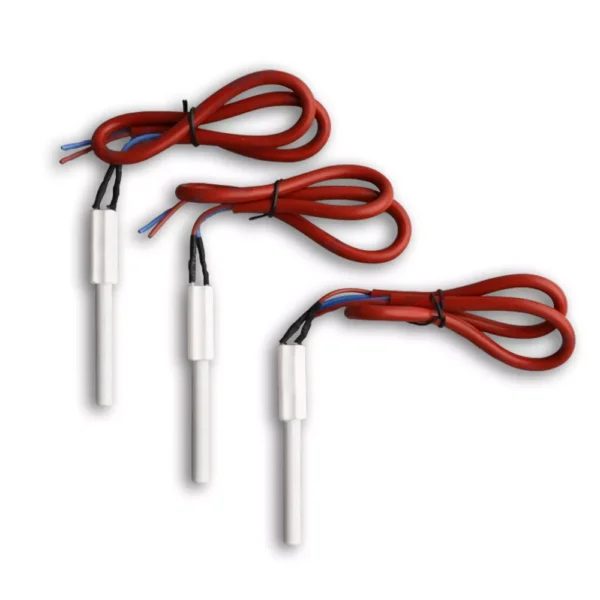

Use the 300W designation as a buyer-provided requirement to verify, not as a performance promise. The RFQ should define the ignition zone, installation envelope, terminal arrangement, surrounding fuel or airflow conditions and inspection evidence needed to assess the component for its intended appliance.
Key Inquiry Requirements
Define the appliance interface
Show the igniter’s installed position within the stove, burner, barbecue or other appliance and identify the surrounding components that constrain its shape. Include mounting holes, insertion depth, support points, clearances and access for replacement. Mark the active heating region separately from the cold or connection zone so suppliers can interpret the drawing correctly.
Describe how fuel, air, ash, vibration and maintenance actions may interact with the component. These are application inputs, not assumed product properties. If the same igniter concept may fit multiple appliances, provide each relevant interface or state which dimensions remain common and which are model-specific.
Clarify the 300W electrical basis
State the electrical system conditions associated with the 300W label, including the intended voltage, current or resistance relationship where confirmed. Define the reference condition for resistance and the measurement method. Identify lead, terminal, connector and polarity requirements, along with any insulation or routing restrictions imposed by the appliance.
Do not rely on wattage alone to describe the electrical interface. A buyer should specify whether power is controlled continuously, switched, pulsed or regulated through a separate controller. Suppliers should identify their assumed electrical construction and explain which values require confirmation before tooling, sample approval or production release.
Describe the ignition environment
The RFQ should identify the fuel type or fuel range, expected contact with combustion residue, airflow pattern and the location of the ignition surface. Explain whether the element is exposed, protected by a sleeve, surrounded by a tube or installed behind a grate. These details help suppliers assess geometry, surface treatment and handling requirements together.
Include startup frequency, operating cycle and maintenance conditions as design context, without turning them into unverified life claims. If thermal shock, chemical exposure or mechanical impact is a concern, identify the event and its likely source. The supplier can then respond with relevant material and process questions rather than relying on a generic igniter description.
Control surface and construction details
Specify the black appearance or coating requirement separately from the alumina material callout. Identify whether the color is functional, visual, emissive or simply an application preference, and define acceptable variation if appearance is inspected. Show the heated length, cross-section, transitions, tip geometry and any protective features that affect installation or ignition.
Review edges, terminals, joints and attachment points for handling and assembly risk. State which areas must remain free from chips, flaking, contamination or loose material according to the appliance design. If a coating, conductor or protective layer is included, require suppliers to describe its location and inspection basis instead of assuming uniform coverage.
Build the combustion-component RFQ
Provide the controlled drawing, appliance interface, electrical schematic, nominal power basis, fuel context, operating sequence, quantity phase and requested documentation. Include installation photographs or a sectional assembly view where they clarify airflow, fuel contact or maintenance access. Identify whether the part is for concept evaluation, replacement qualification or an established design transfer.
Ask for supplier comments on manufacturability, terminal attachment, proposed inspection and any assumptions about the 300W designation. Require deviations to be listed clearly. Performance statements about ignition speed, durability, temperature or fuel compatibility should be linked to an agreed test setup and should not be inferred from the product name alone.
Questions Before You Inquire
Does the 300W label fully define the igniter?
No. It identifies a nominal power designation supplied with the product brief, but the RFQ should confirm voltage, current or resistance basis, control method, test condition and terminal arrangement. Appliance geometry, fuel exposure and airflow also affect suitability, so they should be documented separately from the wattage label.
What appliance details should be included?
Show the mounting position, clearances, active ignition zone, fuel contact, airflow path, support method and maintenance access. Include the relevant fuel or residue conditions and operating cycle. These details help suppliers review the igniter as part of the combustion assembly instead of quoting an outline without installation context.
Should black color be treated as a technical requirement?
Clarify its purpose before making it an acceptance criterion. It may relate to appearance, coating, surface behavior or appliance preference. State the required visual standard and inspection method separately from the alumina material requirement, and ask suppliers to explain the proposed surface construction and any limitations.
What tests can support igniter comparison?
Use tests tied to the appliance decision, such as electrical verification, dimensional inspection, terminal checks, visual review or a controlled ignition test. Define the fixture, fuel, airflow, control sequence and acceptance criteria before comparing results. Avoid relying on informal demonstrations or unsupported claims about temperature or service life.
Send a Clear Component Brief
Share your drawing, quantity and application with Porcecore. Mark the requirements that are fixed and the questions that remain open.



Reviews
There are no reviews yet.