
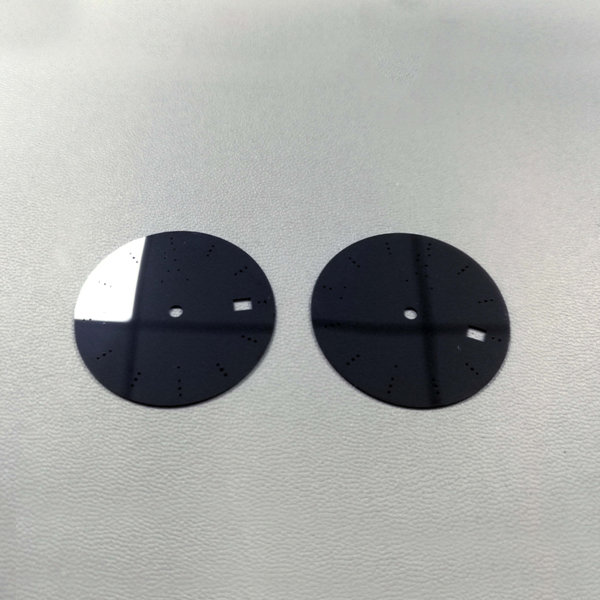
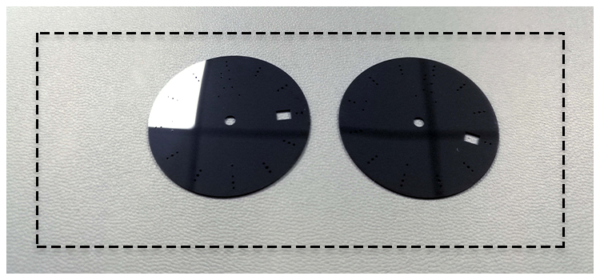
Specify the plate’s geometry, appearance zones, laser features, assembly interfaces and acceptance criteria so suppliers can quote the intended component rather than an assumed watch part.
Key Inquiry Requirements
Watch-plate role and visible design
A ceramic watch plate is both a precision-shaped component and a visible part of the finished product. Define whether it functions as a dial, cover, backing plate, spacer or another internal element, because the role changes the relevant interfaces and inspection priorities. Include the watch architecture, exposed surfaces, neighboring parts and assembly direction in the RFQ.
For a black zirconia component, the appearance brief should be separated from the structural drawing. Identify the viewing face, hidden face, edge band, apertures, windows and decorative zones, then describe the expected visual consistency. If color or gloss is judged against a reference sample, specify how the comparison will be controlled rather than using an unqualified color term alone.
Laser-processing scope
Laser processing may be used for marking, trimming, apertures, text, graphics or other localized features, but the exact operation must be stated. Provide the artwork or feature file, position datums, line or feature intent, orientation, repeatability expectations and acceptable edge condition. A laser request without a defined output can lead to different interpretations of the required part.
Explain whether the laser-processed area is visible during normal use, covered by another component or exposed to skin, cleaning agents and handling. State any restrictions on discoloration, debris, heat-affected appearance, microcracks or edge chipping. Ask the supplier to identify the proposed process sequence and any sample approval needed before the final production geometry is released.
Geometry, fit and ceramic handling
The watch plate drawing should show the external profile, thickness, holes, slots, locating features, corner radii and all interfaces that control assembly. Mark the datum scheme and identify which surfaces establish alignment with hands, movement, case, crystal, gasket or decorative hardware. Ceramic features that appear small on a drawing may still be critical to assembly and visible quality.
Describe assembly loads, fastening or bonding, contact materials, clearance, shock exposure and any repeated service handling. Avoid assuming that a metal-part tolerance or fit convention transfers directly to zirconia. The supplier should review thin ligaments, internal corners, small apertures and edge transitions for process feasibility, especially where laser processing and subsequent handling occur on the same part.
Appearance and inspection control
Cosmetic acceptance should be written in observable terms. Define the inspection lighting, viewing distance, orientation, clean condition and reference standard for color, gloss, haze, marks, pits, edge damage and laser-feature clarity. If different surfaces have different visual expectations, list them separately. This prevents a broad requirement for a black ceramic plate from obscuring the actual customer-facing criteria.
Dimensional inspection should cover the features that govern assembly and the laser features that govern display or function. Consider first-article approval with representative material and processing, particularly when artwork, small openings or exposed edges are involved. Request inspection evidence in a format that identifies the drawing revision, measurement method and any deviations rather than relying on an informal visual statement.
What belongs in the watch-plate RFQ
Provide the released drawing, artwork or laser file, assembly model, material and appearance brief, critical dimensions, quantity range and intended use stage. Include references for acceptable and unacceptable cosmetic conditions, packaging protection, cleaning restrictions and any requirement for individual identification. State whether the part is a prototype, design-validation sample or repeat component.
Ask for a quotation that separates ceramic forming, machining, laser processing, finishing, cleaning, inspection and packaging. Require the supplier to list assumptions about artwork, datums, visible surfaces and cosmetic acceptance. Compare offers based on process clarity, sample-approval provisions, inspection coverage and assembly understanding, not on an assumed standard watch-plate specification.
Questions Before You Inquire
What should the laser-processing file contain?
Provide the artwork or feature geometry in an agreed format, together with scale, orientation, position datums, line or area intent and revision control. Identify visible zones and any prohibited marks outside the design. If appearance is critical, include an approved reference sample or define the inspection method for the processed features.
How can black zirconia appearance be specified objectively?
Separate color, gloss, surface texture and defect criteria, then define the viewing face, lighting, distance, cleanliness and reference standard. State whether the edge and hidden surfaces have different requirements. A visual master or agreed inspection protocol is often more useful than the single phrase “black zirconia” on its own.
Should laser processing happen before or after final finishing?
The correct sequence depends on the geometry, visible result, edge condition and required cleanliness. Describe the intended feature and ask the supplier to recommend a process sequence, supported by representative samples where needed. The RFQ should make clear which surfaces and dimensions must remain protected throughout processing.
Which watch-plate dimensions are usually critical to assembly?
Critical dimensions commonly include the outer profile, thickness, locating features, apertures, datum surfaces, edge transitions and any interface with the movement, case, crystal, gasket or decorative parts. The buyer should identify them on the drawing rather than assume a standard tolerance scheme. Assembly trials can help confirm functional fit.
Send a Clear Component Brief
Share your drawing, quantity and application with Porcecore. Mark the requirements that are fixed and the questions that remain open.


Reviews
There are no reviews yet.