
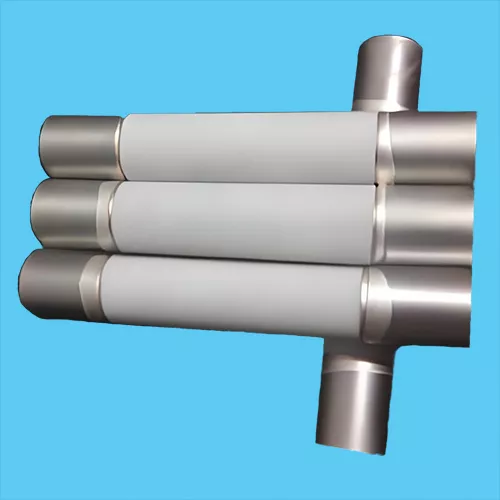


Porcecore supports technical review around the drawing, application environment and acceptance criteria. Use this page to frame the information needed for a quotation rather than as a representation of stock, standard dimensions or guaranteed component performance.
Key Inquiry Requirements
Define the tube around the assembly
Start with the tube drawing and identify every interface that affects assembly: inside and outside diameters, overall length, end geometry, shoulders, grooves and any stepped regions. The drawing should distinguish functional surfaces from noncritical surfaces and show datum references. If the tube mates with metal hardware, include the mating-part drawing or interface description so the ceramic and metallized features can be reviewed together.
A metallized insulator tube is not fully defined by its name. State the ceramic family, electrical role, intended joining process and whether the metallization is internal, external, on an end face or arranged in separate bands. Clarify whether the design requires a continuous conductive layer, a solderable region, a brazing interface or another approved finish. These decisions influence how the component should be quoted and inspected.
Specify metallization and joining intent
The metallization specification should identify coverage, termination points, masking boundaries and any areas that must remain free of coating. It should also state the downstream joining or plating sequence, because a surface intended for brazing may require different review criteria from one used for electrical connection. Where the process is still open, ask suppliers to identify assumptions rather than silently selecting a finish.
For assemblies described as hermetic or vacuum-related, define the actual requirement in measurable terms and identify the completed assembly that will be tested. Separate ceramic body inspection from joint or assembly leak testing. The RFQ can request proposed test methods, sample handling, reporting format and disposition of nonconforming parts without presuming a particular leak-rate value or certification.
Compare technical quality evidence
Compare quotations using the same controlled drawing revision, material description and inspection plan. Useful evidence may include representative dimensional reports, metallization coverage records, surface-condition photographs, process-control summaries and sample inspection results. Ask whether measurements are taken before or after metallization and how coating thickness, adhesion or discontinuities are evaluated when those characteristics are relevant to the application.
Ceramic tubes can be sensitive to handling, edge damage and geometry-dependent inspection access. Include requirements for chipping limits, cracks, contamination, burr-like coating buildup and packaging protection if they matter to assembly yield. A practical comparison should record which characteristics are measured on every piece, by sampling or only during process qualification, with the sampling approach stated explicitly.
Build an actionable RFQ package
Provide the current drawing, three-dimensional model where useful, annual or project quantity estimate, forecast pattern and intended application environment. Add mating hardware, joining sequence, cleaning expectations and any restrictions on materials or processing. If the metallized tube is part of a vacuum, high-voltage or X-ray-related assembly, describe the operating context without relying on a product label to communicate the engineering requirement.
Ask each supplier to return a marked-up assumption sheet with the material grade, metallization system, dimensional capability, inspection scope, packaging method and quotation validity clearly separated. Request clarification for every unspecified feature. This makes offers comparable and gives engineering, quality and purchasing teams a common basis for design review before any order decision.
Review samples and production readiness
Before approving a source, align the sample plan with the actual risk points: ceramic geometry, metallized boundaries, mating fit, joining compatibility and required testing. Decide who supplies mating components, who performs the joint and which measurements belong to the ceramic supplier. Record the approved drawing revision and sample disposition so later production parts are not judged against informal examples.
Production readiness should be assessed through documented process controls and repeatable inspection, not through a product title alone. Ask how drawing changes, coating changes, material substitutions and nonconforming lots are controlled. If the application requires traceability, define the required records, retention period and lot relationship in the RFQ rather than assuming a supplier will provide them automatically.
Questions Before You Inquire
What should accompany an RFQ for a metallized ceramic insulator tube?
Send the controlled drawing, ceramic material requirement, metallization coverage, joining process, mating-part information, quantity outlook, inspection criteria and packaging expectations. If hermeticity or electrical testing applies, define the test object, method and acceptance requirement. A marked-up model and list of open assumptions can prevent incompatible quotations.
Does the name guarantee a hermetic finished assembly?
No. Hermeticity depends on the ceramic, metallization, mating materials, joint design, joining process and test method. The RFQ should state whether the requirement applies to the tube, a subassembly or a completed device, then identify the required test evidence and acceptance limits.
How should metallization be described on the drawing?
Show the metallized faces or bands, coverage boundaries, keep-out areas, termination locations and any required thickness or finish criteria that your process needs. Also identify the joining method and masking-critical surfaces. If the finish is not yet selected, request supplier assumptions and approval samples instead of leaving the interface undefined.
What inspection evidence is useful when comparing suppliers?
Request dimensional inspection records, coating-coverage checks, surface-condition criteria and relevant sample or process-validation evidence. Ask suppliers to state measurement frequency, equipment basis and lot traceability. For joined assemblies, separate ceramic inspection from joint testing so a quotation does not imply that one type of evidence covers the other.
Send a Clear Component Brief
Share your drawing, quantity and application with Porcecore. Mark the requirements that are fixed and the questions that remain open.


Reviews
There are no reviews yet.