
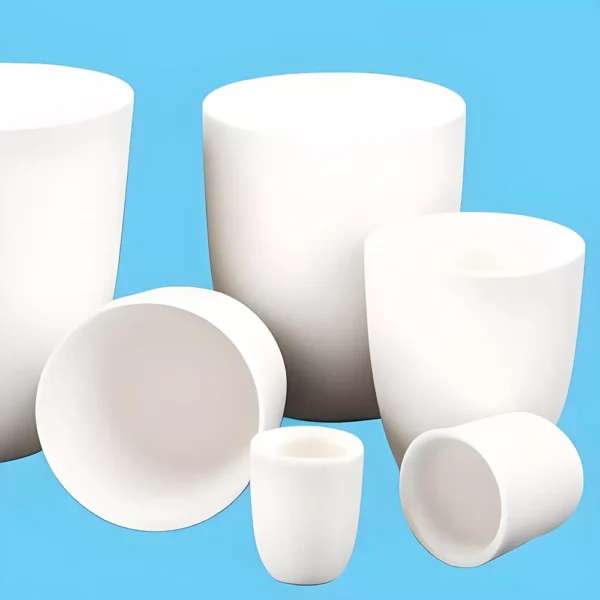


Porcecore helps buyers structure an alumina boat inquiry around geometry, material specification, operating sequence and inspection evidence. Treat the component as a drawing-led part: the source topic indicates the form and material family, but it does not establish dimensions, grade, service limits or availability.
Key Inquiry Requirements
Translate the process into geometry
Describe what the boat must hold, where it is supported and how it enters or leaves the equipment. Include usable cavity dimensions, wall and floor features, lips, slots, feet, handles or locating details on the drawing when they are functionally required. The loading pattern matters as much as the outside envelope, especially when the contents must remain separated or positioned during processing.
A boat intended for a laboratory fixture may have different priorities from one used in a repeatable production cycle. State whether the part is manually handled, robotically transferred, inserted into a carrier or stacked with other ceramics. Identify contact points, clearance zones and orientation marks. These details help suppliers distinguish cosmetic geometry from features that affect fit, flow, loading or safe removal.
Specify alumina and surface requirements
The material callout should identify the alumina grade or an approved material route, along with any required documentation. Do not rely on the word alumina alone if density, porosity, dielectric behavior, color, contamination control or surface finish affects the process. Ask suppliers to state the material basis of their quotation and list any substitutions that would require approval.
Define the surfaces that contact the charge, carrier or equipment separately from nonfunctional exterior areas. Note requirements for cleanliness, glazing, roughness, edge condition, coating absence or controlled surface treatment only where the process needs them. If residue, reaction or cross-contamination is a concern, describe the cleaning and handling sequence so the supplier can address it in the quotation.
Review thermal and chemical context
The source topic associates alumina boats with demanding thermal and corrosive applications, but an RFQ still needs the actual process context. Describe the temperature cycle, dwell pattern, atmosphere, pressure, ramp or cooling constraints and chemical exposure in application terms. Avoid replacing those details with a broad claim about high-temperature capability, since the complete assembly and cycle determine suitability.
Include how the boat is loaded, supported and inspected after cycling. Some designs may experience stress from uneven loading, point contact or rapid temperature change, so the drawing and process description should identify those risks for review. Ask suppliers to comment on suspected failure modes and proposed verification rather than promising a service life that has not been established.
Compare manufacturability and inspection
Compare offers against the same cavity, outside envelope, support geometry and drawing revision. Request an inspection plan covering critical dimensions, flatness or shape where relevant, edge damage, cracks, contamination and visual surface condition. Ask whether measurements are performed before or after any finishing operation and how inaccessible internal features are verified.
A boat may be simple in appearance while remaining sensitive to warpage, corner damage and variation in wall or floor geometry. Define the acceptance standard with drawings, photographs or reference samples when words are insufficient. Clarify whether inspection is piece-by-piece, sampled by lot or limited to qualification, and require the supplier to identify those assumptions in the quotation.
Prepare for handling and repeat supply
An effective RFQ includes quantity expectations, packaging orientation, separator material, cleanliness controls and the intended receiving inspection. If the boat will be cleaned before use, state the permitted process and any prohibited packaging or residues. If a carrier or fixture is part of the system, provide its interface drawing so the ceramic boat is not evaluated in isolation.
For repeat supply, establish a change-notification route for material, forming, finishing, inspection or packaging changes. Request sample approval against the controlled drawing and define how nonconforming boats are reported. This creates a practical handoff from initial process evaluation to purchasing without implying stock, minimum order quantity, lead time or guaranteed performance.
Questions Before You Inquire
What information is essential for an alumina boat RFQ?
Include the controlled drawing, usable cavity, outside envelope, support points, load description, process cycle, atmosphere, chemical exposure, surface requirements, cleanliness expectations and inspection plan. Add handling, packaging and quantity outlook. If the boat fits a carrier or furnace fixture, provide that interface so the quotation reflects the complete operating arrangement.
Is an alumina boat suitable for every high-temperature process?
No material label can determine suitability by itself. The result depends on the alumina specification, geometry, support condition, thermal cycle, atmosphere, chemical contact, loading and handling. Describe the complete process and ask the supplier to identify assumptions and verification steps rather than relying on a general temperature claim.
Which boat defects should be addressed before ordering?
Define acceptance criteria for cracks, chips, warpage, edge condition, contamination, dimensional variation and surface irregularities that could affect loading or cleaning. Use drawings, photographs or approved samples where helpful. Also state whether the inspection applies to every boat or to a defined sample from each production lot.
Should the RFQ specify a carrier or fixture?
Yes, when the boat is supported, stacked, transferred or located by another component. Provide the carrier interface, contact points, clearances and orientation requirements. This allows the ceramic geometry to be reviewed in its real assembly context and reduces the risk of a boat that meets its own drawing but fails during handling.
Send a Clear Component Brief
Share your drawing, quantity and application with Porcecore. Mark the requirements that are fixed and the questions that remain open.


Reviews
There are no reviews yet.