

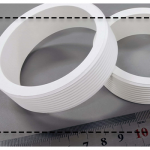


Define a threaded ring around its mechanical interface and service environment, not its material name alone. The RFQ should clarify thread geometry, engagement, locating features, contact surfaces, assembly torque or method, clearances and inspection requirements while leaving unsupported performance assumptions out of the specification.
Key Inquiry Requirements
Role of the threaded ring
A boron nitride ceramic threaded ring may serve as a retainer, spacer, insulator or positioning element, but the exact role must come from the assembly drawing. Show what the ring locates, compresses, separates or retains, and identify whether the thread is internal, external or part of a paired interface. Include adjacent materials and the direction of assembly so the design intent is unambiguous.
The ring should be evaluated as a complete interface rather than as a free-standing annulus. Define the load path through the thread, shoulder, face or clamping feature, and state which surfaces are functional. If the ring is exposed to heat, chemicals, vacuum or repeated handling, include those conditions as design inputs. This lets suppliers review the geometry against actual use instead of generic ceramic-part expectations.
Material and grade definition
Boron nitride is the stated material family, but the RFQ should identify the relevant grade or material controls only when the application has established them. Grain structure, additives, density, surface condition and processing route may affect machinability and interface behavior. If electrical insulation, chemical compatibility or thermal response matters, define the required test condition rather than relying on a broad material label.
Ask suppliers to disclose the proposed material specification and any process-related limitations that affect the thread or seating faces. A threaded ceramic feature may require different handling from a plain washer or ring. Compare material responses alongside thread integrity, face condition and assembly method. The goal is a controlled interface specification, not an assumed set of properties inferred from the name boron nitride.
Thread and seating geometry
Thread definition is central to this component. State the standard or custom profile, nominal size, pitch, class or fit, handedness, engagement length and run-out treatment. Add a detail view for crest, root, flank and lead-in geometry where needed. Identify datum references and inspection points, especially if the ring must align precisely with another ceramic or metal part.
Show shoulders, counterbores, chamfers, grooves and seating faces separately from the thread. Clarify whether the ring is tightened against a flat face, a conical seat, a gasket or another feature. Provide clearance requirements for assembly tools and thermal movement when applicable. A complete section view helps suppliers identify fragile transitions and prevents a thread callout from hiding important non-threaded geometry.
Assembly and service conditions
Describe how the ring is installed: hand-assembled, tool-driven, retained by a mating thread or compressed within a stack. If torque, preload or rotation limits are known, include them with the measurement or control method. If they are not yet established, request supplier review rather than inventing a value. Assembly sequence, lubrication or cleanliness rules should be stated when they influence the interface.
Service conditions should cover surrounding materials, temperature cycle, atmosphere, contact media, vibration and maintenance frequency where relevant. Ceramic threads can be sensitive to local damage, misalignment and concentrated contact, so identify handling constraints and inspection points. The buyer should also define whether the ring is intended for repeated removal or one-time installation, since that changes the practical interface evaluation.
RFQ inspection and comparison
Include the controlled drawing, mating-thread information, assembly section, material specification and revision history in the quotation package. Mark thread and seating features as critical where they affect retention, alignment or sealing. State whether visual limits, edge condition, surface finish, chips or handling marks have special significance. Suppliers should be invited to flag dimensions that are difficult to inspect or manufacture consistently.
Request inspection records for thread geometry, major seating dimensions, run-out or concentricity where specified, and visual condition. Confirm how internal or external threads will be gauged and how ceramic damage will be screened. For sample approval, define whether fit checks use production-intent mating hardware. This creates a meaningful comparison between quotations and separates interface evidence from general material claims.
Questions Before You Inquire
What makes a ceramic threaded ring difficult to specify?
The thread is only one part of the interface. The drawing must also define seating faces, shoulders, clearances, run-out, alignment, mating material and assembly method. Ceramic sensitivity to concentrated loads and edge damage makes section views, handling requirements and agreed inspection methods important for a useful quotation.
Should the RFQ state an assembly torque?
State torque only when it has been established for the complete mating assembly and its control method is known. Otherwise, describe the retention and preload objective and request engineering feedback. A torque value copied from another material or thread size may not represent the actual ceramic interface safely or accurately.
Can a standard metal thread gauge be used?
Gauge selection depends on the thread profile, fit, material behavior and acceptance requirement. The buyer should ask the supplier to identify the proposed gauging method and its limitations. If a mating fit check is critical, include controlled mating hardware or a defined functional gauge in the inspection agreement.
What should be compared between ring suppliers?
Compare conformance to the same thread and seating geometry, proposed boron nitride specification, edge and surface condition, inspection evidence, handling controls and response to assembly conditions. Also compare how each supplier identifies manufacturing risks. Broad statements about ceramic capability are less useful than records tied to the actual drawing.
Send a Clear Component Brief
Share your drawing, quantity and application with Porcecore. Mark the requirements that are fixed and the questions that remain open.
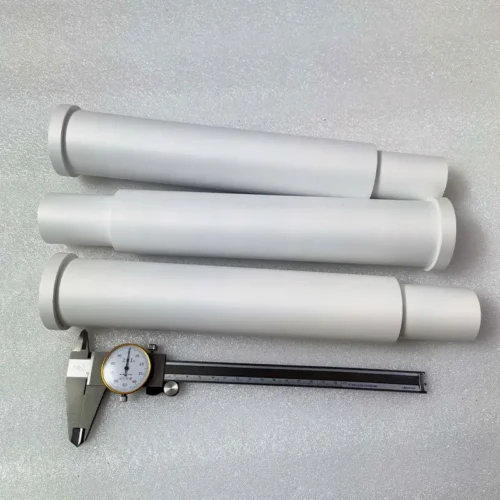


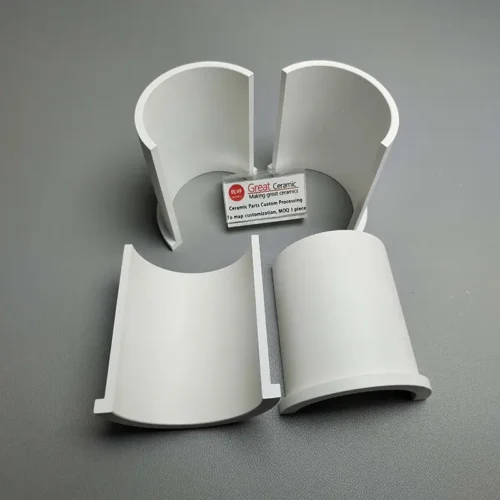
Reviews
There are no reviews yet.