

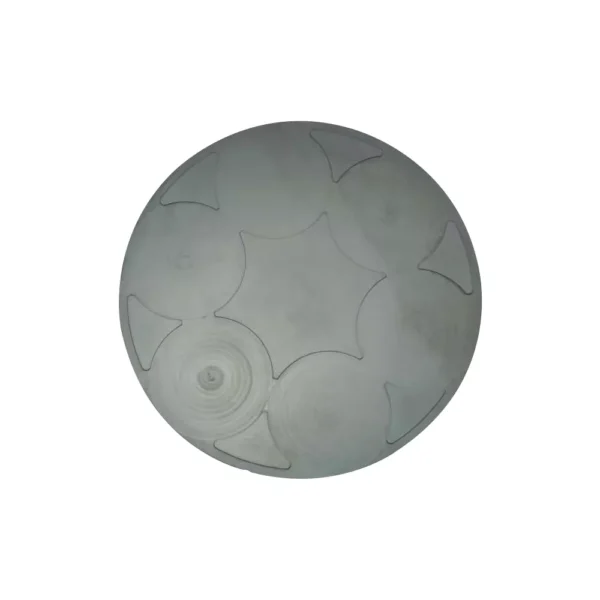

Specify the wafer or workpiece interface, chamber envelope, thermal role, mounting features and inspection expectations before comparing manufacturing routes or quotations.
Key Inquiry Requirements
Define the susceptor’s process role
A PVD susceptor may support, locate, shield or thermally couple a workpiece inside a vacuum tool. Those roles can produce very different geometry and review criteria. An RFQ should identify the supported article, exposed surfaces, contact zones, clearance requirements and whether the component is stationary, rotated, heated or otherwise integrated with chamber hardware.
Describe the process sequence around the part rather than relying on the product name alone. Include chamber type, relevant vacuum-side interfaces, loading direction, neighboring components and any expected interaction with plasma, vapor or fixtures. If temperature is important, provide the process range as a design input for evaluation, not as an assumed material capability.
Geometry and drawing information
Susceptor performance is often governed by fit and repeatability at interfaces. The drawing should show the outer profile, pockets, steps, slots, holes, edge breaks, datum scheme and any surfaces that contact the substrate or tooling. Mark dimensions that affect alignment separately from cosmetic or nonfunctional features so quotation reviews remain focused on process risk.
For circular or nested forms, include concentricity relationships, runout expectations and the reference used for each feature. State whether the geometry is symmetric, indexed or keyed, and identify lifting, clamping or gas-flow features. A model alone may leave inspection intent unclear; pair it with critical dimensions, section views and an acceptance record.
Material and manufacturing review
Silicon carbide is the stated material family for this component, but a buyer should still define the requested grade, starting form and any permitted material alternatives. Discuss whether the design is based on a dense body, a coated body or another construction, and ask how joining, finishing or surface treatment would affect the functional faces.
Potential process routes can influence shrinkage, porosity, edge condition, flatness and achievable feature detail. Ask the supplier to identify process allowances, machining access and areas that cannot be measured directly. The purpose is not to prescribe one route in advance, but to make the proposed route visible enough for engineering comparison and change control.
Inspection and contamination controls
Inspection planning should follow the susceptor’s role in the vacuum environment. Request a dimensional report for critical interfaces, visual review of edges and surfaces, and a defined method for checking flatness, location and surface condition. If the component enters a controlled chamber, specify cleaning, packaging and handling expectations in the RFQ.
Clarify how the supplier will record traceability from material through final inspection. Where particles, residues or surface damage could affect deposition, define the inspection method and acceptance language before ordering. Avoid vague requests such as “high quality”; identify the evidence needed to release the part for your equipment and process.
What to include in an RFQ
A useful RFQ package should contain the latest drawing revision, three-dimensional data where available, interface photographs, chamber constraints and the intended quantity for quotation purposes. Add operating conditions, loading sequence, replacement rationale and any known failure modes. This context helps a supplier distinguish a carrier fit issue from a thermal, contamination or handling concern.
Ask for assumptions, exclusions, proposed material designation, process route, inspection scope and packaging method in the quotation response. Request confirmation of manufacturability for thin walls, deep features, slots or unusual datum relationships. If trials are expected, define sample approval, dimensional feedback and revision ownership before production discussion begins.
Questions Before You Inquire
What should accompany a silicon carbide PVD susceptor drawing?
Provide the chamber interface, supported workpiece, critical datums, mounting details, clearances, process conditions and inspection requirements. Photos or a marked-up assembly view are useful when the drawing does not show loading direction, neighboring hardware or surfaces exposed to the deposition environment.
Should the RFQ specify a particular silicon carbide grade?
It should state the required material family and the reasons behind the selection, then request the supplier’s proposed grade and relevant construction details. If density, coating, electrical behavior or contamination control matters, define those as evaluation criteria rather than leaving them implicit.
How can susceptor quotations be compared fairly?
Use the same drawing revision and ask each supplier to list assumptions, process route, inspection coverage, material identification, finishing and packaging. Compare how each response addresses critical interfaces and risks, not only the headline unit price or an unqualified statement of capability.
What inspection evidence is commonly useful?
A buyer may request material traceability, critical dimensional results, visual and surface-condition records, and confirmation of cleaning or packaging controls. The exact evidence should match the chamber sensitivity and part function; acceptance criteria should be agreed before manufacture rather than inferred afterward.
Send a Clear Component Brief
Share your drawing, quantity and application with Porcecore. Mark the requirements that are fixed and the questions that remain open.



Reviews
There are no reviews yet.