

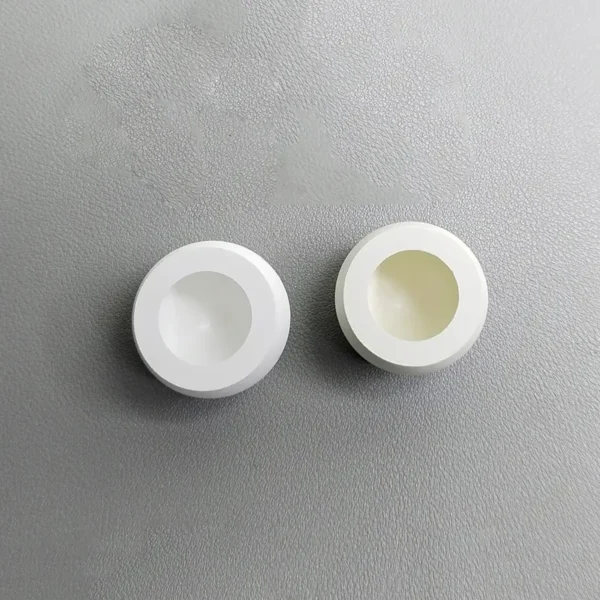

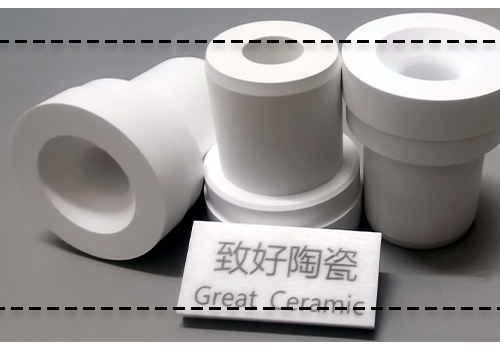
Share the component drawing, material preference, working environment and inspection priorities so Porcecore can assess a suitable technical-ceramic route for quotation.
Key Inquiry Requirements
Designed Around the Component Geometry
A shaped boron nitride part may combine openings, pockets, steps, thin walls or non-planar surfaces that are difficult to describe through a catalogue name alone. Your RFQ should identify every functional face, locating feature, contact area and clearance zone. Section views, datum references and a marked-up drawing help separate critical geometry from surfaces that can remain process-defined during early quotation.
The most useful geometry package includes the native CAD file where available, a dimensioned PDF and a short explanation of how the part is installed. Note whether the component is supported, clamped, slid, bonded or exposed as a free-standing insert. These details influence how a supplier reviews edge conditions, wall transitions, machining access and the practical sequence from ceramic blank to finished shaped part.
Material Selection Requires Operating Context
Boron nitride is a material family rather than one universal specification. Different grades and processing routes may suit different combinations of heat exposure, electrical isolation, chemical contact, atmosphere, mechanical loading and surface requirements. Instead of requesting an unspecified “BN part,” describe the environment and failure concerns that matter most, then ask the supplier to state the proposed grade and any relevant limitations.
Include the expected temperature range only when it is known, together with atmosphere, pressure, contact media, cycling pattern and nearby materials. Also identify whether the part must resist contamination, permit release from a mating surface or maintain a particular electrical role. These inputs allow a quotation comparison based on application fit rather than on material name alone.
Interfaces and Surface Requirements
Shaped ceramic components often succeed or fail at their interfaces. The drawing should distinguish sealing, sliding, locating, clamping and non-functional surfaces, because each may require a different finish or inspection approach. Call out edge-break expectations, corner radii, flatness, alignment and any surfaces that must remain free from chips, handling marks or processing residue.
If the component mates with metal, graphite, glass or another ceramic, provide the mating-part drawing or interface dimensions where possible. Explain whether assembly uses a gap, interference, fastener, braze, cement or another method. A supplier can then review differential movement, contact pressure and assembly access without assuming an interface design that the application team has not approved.
Inspection and Documentation
Inspection should be tied to function, not simply to a long list of nominal dimensions. Identify the datums, critical-to-fit features, visual acceptance criteria and measurement points that will determine whether the part can enter your assembly. For complex shapes, photographs of an existing part, inspection sketches or a coordinate-measurement strategy may clarify requirements that a conventional view does not show.
Ask the RFQ response to separate quoted inspection from optional documentation. Depending on the application, useful records may include material identification, dimensional results, visual inspection, cleanliness confirmation or process notes. Do not assume a certificate, test method or traceability level is included; state what must accompany the shipment and what can be agreed after technical review.
Build a Comparable RFQ
A clear RFQ for boron nitride shaped parts should combine the drawing, revision level, annual or project quantity, prototype intent and delivery destination. State whether the design is preliminary, production-released or still under engineering review. If several geometries are possible, identify which dimensions are fixed and which may be optimized after a manufacturability discussion.
Request a quotation that lists assumptions, proposed material grade, forming or machining route, inspection scope, packaging approach and exclusions. Ask the supplier to flag any feature that may require a design change, rather than silently substituting a different geometry. This creates a useful technical comparison while preserving the buyer’s control over the final component definition.
Questions Before You Inquire
What should accompany an RFQ for a shaped boron nitride part?
Provide a revision-controlled drawing, preferably with a CAD model, plus operating environment, interfaces, quantity basis and inspection requirements. Explain the part’s function and identify critical surfaces, datums, openings and assembly constraints. If the design is still developing, mark flexible dimensions and request a manufacturability review before final quotation.
Can one boron nitride grade cover every shaped-part application?
No single grade should be assumed suitable for every use. The selection depends on thermal, electrical, chemical, mechanical and cleanliness requirements, as well as the forming and finishing route. Ask the supplier to propose a grade against your stated conditions and to identify any limitations or assumptions in the quotation.
How should complex geometry be communicated?
Use a dimensioned drawing with section views, datum structure and tolerances where needed, supported by a native CAD file. Mark functional interfaces, thin or fragile areas, edge conditions and surfaces requiring special inspection. A sketch showing installation orientation and mating parts can prevent ambiguity that the component drawing alone may leave unresolved.
Are stock, price or delivery commitments implied by this product page?
No. This is a drawing-led technical-ceramic RFQ topic, not an inventory listing or performance guarantee. Availability, commercial terms, production route, inspection scope and delivery conditions must be reviewed against the approved drawing, material definition, quantity and project requirements.
Send a Clear Component Brief
Share your drawing, quantity and application with Porcecore. Mark the requirements that are fixed and the questions that remain open.


Reviews
There are no reviews yet.