


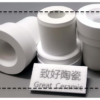
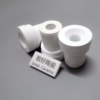
Describe what the nozzle controls, contacts, guides, or shields, then identify the geometry and environment that make the component difficult to replace. The most useful inquiry connects the material request to actual operating conditions and measurable acceptance criteria.
Key Inquiry Requirements
Start with the nozzle function
A boron nitride nozzle may serve as a delivery, guidance, shielding, or process-interface component, so the RFQ must begin with its function rather than its label. Explain what passes through the opening, what the nozzle contacts, and whether the ceramic body experiences heat, chemical exposure, electrical influence, abrasion, or repeated insertion and removal.
Hexagonal boron nitride is a material family with characteristics that may be relevant in selected thermal or process environments, but a broad property statement cannot replace design review. Identify the specific duty cycle, atmosphere, surrounding materials, and failure consequences. This gives suppliers a basis for discussing grade selection, geometry, and suitable verification.
Specify the passage and interface
Provide the complete internal and external profile, including bore dimensions, wall sections, transitions, outlet features, shoulders, grooves, flats, and reference datums. Identify the surfaces that guide flow or position the part, and mark the dimensions that control alignment. If a sketch is being used initially, state which details remain provisional and require supplier feedback.
Nozzle interfaces can be sensitive to clearance, compression, thermal expansion, and handling. Include mating hardware, seals, retainers, insertion depth, orientation, and removal method. Note whether the part is installed vertically, horizontally, or in a constrained chamber. These details help identify stress concentrations and prevent the drawing from describing only the visible exterior.
Review material and process suitability
Ask for the proposed hexagonal boron nitride grade, forming or machining route, finishing condition, and any limitations associated with the requested geometry. The source excerpt provides navigation evidence for a product topic but does not establish technical values or a complete manufacturing specification. Treat all grade, process, and property information as items to confirm in the supplier response.
If the nozzle operates near heaters, reactive media, vacuum hardware, plasma-related equipment, or sensitive surfaces, describe the surrounding environment in practical terms. Request relevant material data and test evidence where appropriate, while separating published reference information from order acceptance criteria. A well-defined RFQ should also explain whether contamination, outgassing, particles, or surface transfer are concerns.
Plan inspection around function
Inspection should concentrate on the passage, outlet, alignment surfaces, wall integrity, and features that determine mounting. Specify dimensional checks, visual examination, edge-condition review, and any material or surface verification that is genuinely needed. State the drawing revision, measuring references, report format, and whether inspection applies to every part or a defined sample.
For fragile or thin-walled nozzles, define how handling damage, chips, cracks, marks, and blocked passages will be assessed. If the nozzle’s function depends on flow, shielding, or thermal positioning, describe the test method rather than requesting an undefined performance guarantee. Clear acceptance language reduces disagreement between design intent, quotation scope, and final inspection.
Prepare a focused buyer inquiry
Include the controlled drawing, model, material family, application description, quantity scenario, prototype or production status, installation details, and environmental conditions. Explain why the current design or material is being reviewed, whether a legacy component is being replaced, and which dimensions cannot change. Add photographs only when they clarify orientation or surrounding hardware.
Ask suppliers to return their proposed grade, process assumptions, achievable feature approach, inspection scope, documentation, packaging, and identified risks. Invite comments on sharp corners, thin walls, unsupported openings, or difficult internal surfaces. This format makes competing quotations easier to compare and supports a design conversation grounded in the actual nozzle duty.
Questions Before You Inquire
What should a buyer state about a boron nitride nozzle’s function?
Explain whether it delivers, guides, shields, insulates, positions, or otherwise interfaces with a process. Identify the medium, neighboring materials, temperature changes, atmosphere, electrical conditions, and failure consequences. Function and environment determine which material and geometry questions need to be answered before quotation.
Can a supplier choose the boron nitride grade?
A supplier may propose a grade, but the buyer should define the required material family and application constraints first. Request the proposed grade, relevant documentation, limitations, and rationale. Keep the final material designation and acceptance criteria under controlled drawing or purchasing-document revision.
Which nozzle features usually need close attention?
Review the bore, outlet, wall thickness, transitions, shoulders, grooves, alignment surfaces, and mounting interfaces. Also check insertion depth, clearances, seals, and handling access. These features can affect flow, positioning, stress, and inspection, so they should be identified explicitly rather than left to a general profile tolerance.
What evidence can support approval of a custom nozzle?
Useful evidence may include dimensional reports, visual inspection records, material documentation, process notes, sample evaluation, or application-specific testing when justified. Define the required evidence before ordering. Separate informational data from acceptance criteria, and avoid treating generic catalog claims as proof of performance in your equipment.
Send a Clear Component Brief
Share your drawing, quantity and application with Porcecore. Mark the requirements that are fixed and the questions that remain open.


Reviews
There are no reviews yet.