
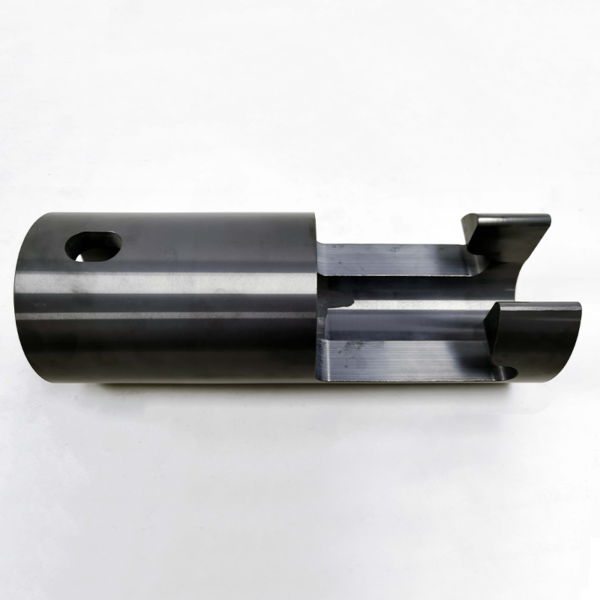
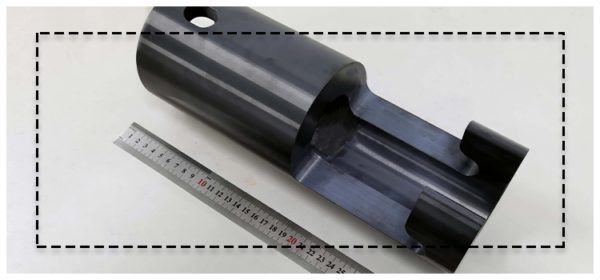
Use this page to frame an RFQ for a custom silicon nitride hook, with the drawing, service conditions and inspection requirements defining the quotation basis.
Key Inquiry Requirements
Component role and design intent
A ceramic hook is generally specified as a shaped support, retainer, hanger or positioning element rather than as a standard catalogue item. Its curved profile, throat opening, end geometry and mounting features should be treated as functional design variables. For silicon nitride, the buyer should explain whether the part handles suspended weight, guides another component, separates materials or maintains position during a heated process.
The hook drawing should identify every load-bearing transition, internal radius, free end and contact zone. Ceramic parts can be sensitive to concentrated stresses created by sharp corners, uneven clamping or point contact. Include the intended orientation, supported mass, motion, shock exposure and any neighboring materials so the supplier can review the geometry against the actual use case instead of quoting from an isolated outline.
Material and thermal service definition
Silicon nitride is used in demanding ceramic applications where the combination of hardness, thermal stability and resistance to certain forms of wear or chemical attack may be relevant. Those broad material attributes do not establish suitability for every atmosphere or cycle. An RFQ should state the operating environment, heating and cooling sequence, exposure duration, surrounding media and whether the hook is energized, insulated or in contact with process materials.
Avoid relying on the product name alone to define high-temperature resistance. Ask suppliers to identify the proposed material grade, manufacturing route and available material documentation, then compare those details against the process profile. If thermal gradients, repeated cycling or local hot spots are present, provide them explicitly. The quotation should distinguish design assumptions from properties that will be verified through agreed documentation or testing.
Geometry, finish and manufacturing review
Small geometric details can determine whether a hook survives handling and service. Specify the overall envelope, opening dimensions, section thicknesses, radii, flatness or alignment requirements, and the surfaces that must remain free from chips or visible defects. If the hook interfaces with metal, graphite, glass or another ceramic, describe the mating condition and allowable contact area rather than assuming a universal fit.
The production method should be selected after reviewing the shape, quantity and required finish. Forming, machining, edge treatment and cleaning may each affect the final result, but the applicable process should be confirmed by the supplier from the drawing. Request a manufacturability review covering thin sections, enclosed features, datum strategy, handling risks and any areas where inspection access could be limited.
Inspection and acceptance planning
A useful inspection plan separates dimensional checks from visual and application-specific checks. Mark critical dimensions, functional openings, contact faces and orientation features on the drawing, and state how the part should be supported during measurement. If surface cleanliness, color consistency, edge condition or freedom from cracks matters, define the inspection method and acceptance language before quotation.
For a repeat program, consider a first-article review that connects the approved drawing, material identification and inspection record. Ask what evidence can accompany each shipment, while avoiding assumptions about certifications or routine reports. Where the hook has a safety-related or difficult-to-measure feature, agree on a sampling approach, measurement equipment category and escalation process for nonconforming parts.
What to include in the RFQ
Send the latest two-dimensional drawing and, when useful, a neutral three-dimensional model, together with the quantity range and expected ordering pattern. Include the process temperature profile, atmosphere, load case, mounting sketch, contact materials, cleaning requirements and packaging sensitivities. State whether the request is for a prototype, design review, qualification sample or repeat supply so the quotation can be scoped accurately.
Ask for a response that lists assumptions, proposed material grade, feasible manufacturing route, inspection scope and any drawing features requiring clarification. Request confirmation of what is included in the quoted part, such as machining, cleaning, marking or documentation. The buyer should compare responses on technical completeness and risk visibility, not on an implied stock position or unverified performance claim.
Questions Before You Inquire
What information is most important when requesting a silicon nitride ceramic hook?
Provide the drawing, opening and contact geometry, load direction, supported mass, temperature cycle, atmosphere, mounting method and neighboring materials. Also identify critical dimensions, surface requirements and inspection expectations. These details allow the supplier to review the design as a working ceramic component rather than as an undefined hook shape.
Can the hook be designed for repeated thermal cycling?
It may be possible, but thermal-cycle suitability depends on geometry, section changes, heating and cooling rates, atmosphere, restraints and contact conditions. Describe the complete cycle and any thermal gradients in the RFQ. The supplier should then identify design assumptions and explain what analysis, sample evaluation or documentation is available.
Should the hook drawing specify ceramic edge and radius requirements?
Yes. Edge breaks, internal radii, transitions and thin sections can influence stress concentration, handling damage and fit. Mark functional surfaces and critical radii directly on the drawing, while allowing the supplier to flag features that need manufacturing review. Do not leave the opening or load-bearing transitions to interpretation.
How should ceramic hook quotations be compared?
Compare the proposed material grade, manufacturing route, dimensional interpretation, inspection plan, documentation and stated assumptions. Check whether each quotation addresses the same load case, thermal environment and mating condition. A lower commercial figure is difficult to evaluate if it excludes machining, cleaning, inspection or clarification of critical drawing features.
Send a Clear Component Brief
Share your drawing, quantity and application with Porcecore. Mark the requirements that are fixed and the questions that remain open.


Reviews
There are no reviews yet.