

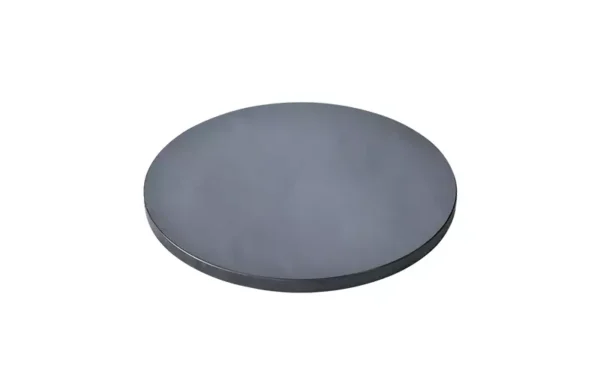


Specify the disk as part of a CMP carrier system. An RFQ should connect the disk outline and pocket pattern to wafer size, slurry exposure, restraint method, polishing sequence, cleanliness expectations and inspection evidence.
Key Inquiry Requirements
Carrier disk role in CMP
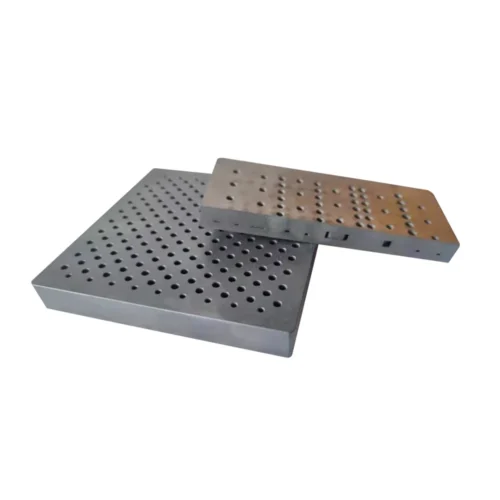
A CMP carrier disk positions and supports workpieces during polishing, so its geometry influences retention, exposure, pressure distribution and repeatable movement. Define whether the disk uses pockets, openings, bonding features, retaining elements or another restraint method. Include the wafer or workpiece interface and explain which faces contact the tool, carrier head or support plate.
The carrier should be evaluated as part of the polishing stack rather than as an isolated round plate. Identify rotation, translation, pressure direction, slurry access, cleaning stages and loading sequence. If the disk must align with a drive feature, vacuum path, backing structure or retaining ring, show those interfaces and their datums on the design package.
Silicon carbide and process environment
Silicon carbide may be selected for a CMP carrier when the design calls for a ceramic with particular stiffness, wear or chemical-environment considerations. The appropriate material specification and surface condition remain buyer-defined. State the silicon carbide family, any approved grade range, cleanliness expectations and restrictions on additives, coatings or bonded materials.
CMP compatibility depends on the complete process: slurry chemistry, abrasive content, pressure, speed, workpiece material, cleaning sequence and temperature exposure can all matter. Describe the intended process window and identify which conditions must be reproduced during sample evaluation. Do not rely on a generic material label to establish polishing behavior or service life.
Pocket layout and working surfaces
Pocket diameter, depth, edge transition, spacing and orientation can affect workpiece retention and polishing exposure. Mark the working face, support face and non-functional regions clearly. Detail the pocket floor, sidewall, entry edge and any relief or drainage feature, especially when small geometry differences could change loading or slurry movement.
The disk’s flatness, parallelism, thickness consistency and local surface condition may influence tool contact and pressure distribution. Define these requirements by function and measurement method. If a surface must be lapped, polished, textured, coated or cleaned to a particular state, state the process expectation and identify how incoming inspection should distinguish acceptable from questionable conditions.
Inspection, cleanliness and validation
Inspection should cover overall disk geometry, pocket position, depth and condition, surface relationships, edge treatment and any drive or alignment features. Establish datums and measurement locations before quotation. For CMP use, also define how particles, residues, chips, cracks, stains and handling marks will be assessed, packaged and documented.
Functional validation should use representative workpieces, tooling and process chemistry where practical. Review loading, retention, release, alignment, contact pattern, cleaning response and any effect on polishing uniformity according to the buyer’s own test method. Separate observations about the ceramic disk from results caused by slurry, machine setup or other consumable components.
Building a useful CMP RFQ
Send the controlled drawing, pocket map, model, process description, workpiece information, machine interfaces, quantity phases and approval plan. Include cleaning, packaging and contamination-control requirements, plus any restrictions on surface treatment or repair. Explain whether the disk is a development article, qualification part or repeat production component.
Request a quotation that identifies material assumptions, forming and finishing route, pocket-making approach, inspection access, cleanliness controls and sample documentation. Ask for clarification where the drawing does not define functional surfaces or process-critical limits. This gives engineering and purchasing a sound basis for comparing proposals without suggesting stock, guaranteed polishing results or fixed delivery commitments.
Questions Before You Inquire
What should a CMP carrier disk drawing show?
Show the outer profile, thickness, datums, pocket pattern, pocket depths, edge transitions, alignment or drive features and all functional surfaces. Add a section view for pocket geometry and identify flatness, parallelism, cleanliness and surface-condition requirements with their inspection methods.
Which process information helps evaluate a silicon carbide carrier?
Provide workpiece details, polishing motion, pressure direction, slurry or chemical environment, cleaning sequence, machine interfaces and loading method. Explain the intended validation method. These conditions help relate disk geometry and surface condition to actual process behavior.
How should carrier disk samples be inspected?
Measure the disk and pockets against the controlled drawing, then inspect edges, surfaces, residues and visible defects using agreed criteria. Assemble the disk with representative tooling and workpieces to review retention, alignment, loading, release and contact behavior under defined conditions.
Does silicon carbide guarantee CMP uniformity?
No. Uniformity depends on the carrier design, workpiece, slurry, pressure, motion, machine setup and process controls. The RFQ should define the buyer’s validation method and distinguish disk requirements from broader process results. Any performance conclusion should follow representative testing.
Send a Clear Component Brief
Share your drawing, quantity and application with Porcecore. Mark the requirements that are fixed and the questions that remain open.
Reviews
There are no reviews yet.