
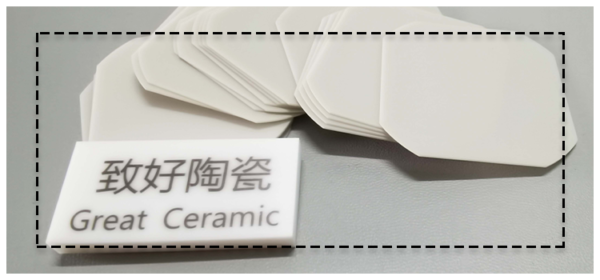
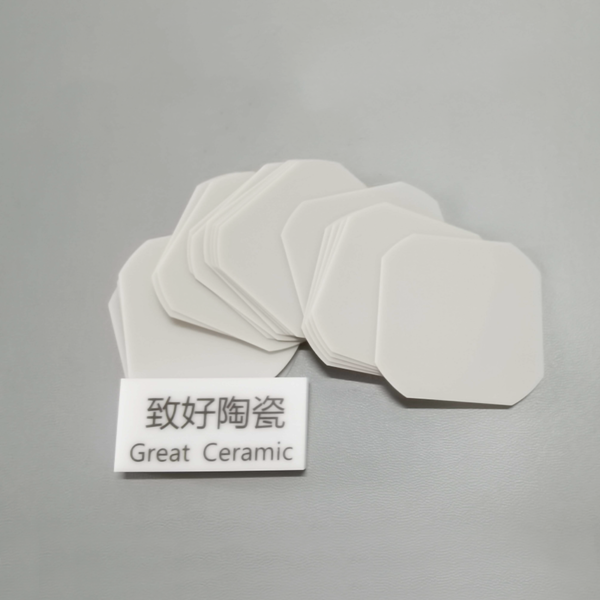
Porcecore supports RFQ preparation around the substrate design rather than an assumed standard part. Share the drawing, material expectations, metallization needs and application conditions so candidate processing routes and acceptance checks can be compared against the actual assembly.
Key Inquiry Requirements
Define the substrate around the assembly
An aluminum nitride substrate may serve as a structural, insulating or heat-spreading element within an electronic assembly. Its useful specification depends on the surrounding stack-up, attachment method, conductor pattern and thermal path. A buyer should identify the active area, clearance zones, mounting features and edge requirements on the drawing, rather than relying on a generic substrate label.
The RFQ should explain how the substrate will be handled and integrated after delivery. Include whether it is bare, patterned, metallized or intended for a later joining operation. Drawings should distinguish functional surfaces from non-functional edges, identify datum references and show any openings, steps, counterbores or pockets that affect processing and inspection.
Material and construction questions
Material selection should be documented as a requirement, not inferred from the product name alone. Ask suppliers to state the proposed aluminum nitride grade or material route, relevant material documentation and any applicable lot or batch controls. If thermal, electrical or mechanical values matter, specify the test method, direction and acceptance range required for comparison.
Construction details can influence both manufacturability and final assembly. The buyer should define whether the part is a flat sheet, shaped plate or multi-feature substrate, and whether edges may be machined after firing. Clarify allowable surface marks, edge chips, warpage, cracks and inclusions, with inspection methods aligned to the component’s actual use.
Geometry, flatness and surface control
Substrate drawings should identify all critical dimensions, datums, hole locations, pattern registration and edge relationships. Flatness or parallelism should be called out only where the assembly needs it, with a stated measurement reference. This helps suppliers separate functional requirements from general drawing tolerances and reduces ambiguity during quotation and first-article review.
Surface condition deserves its own specification when bonding, metallization or inspection depends on it. Define the required finish or process state, permitted contamination, cleaning expectations and visual acceptance standard. If one face differs from the other, mark orientation clearly and explain how the difference will be verified without damaging the substrate.
Metallization and joining interfaces
Where the substrate will carry conductors or receive attached components, the RFQ should describe the interface rather than simply requesting a metallized ceramic. Show conductor boundaries, isolation gaps, terminal zones, bond areas and any keep-out regions. State whether the supplier is expected to provide the metallization or only the ceramic body for a downstream operation.
Joining requirements may include brazing, soldering, bonding, clamping or another assembly method. Identify the joining process, contact materials and any cleaning or masking constraints known to affect the interface. Ask for proposed process controls and sample evidence where registration, adhesion or joint quality is central to acceptance.
RFQ package and inspection plan
A useful RFQ package combines the latest drawing with material requirements, quantity assumptions, application context and inspection priorities. Include a marked-up image or section view when the substrate has hidden steps or layered construction. If the design is still evolving, label provisional features separately so suppliers can identify cost and process implications without treating them as released requirements.
Before approval, compare quotations by technical scope, not only by unit price. Request clarification on process route, achievable feature definition, inspection records, packaging and change control. The final purchase specification should state which dimensions, surfaces, interfaces and documents require verification, while leaving unsupported properties open until they are formally agreed.
Questions Before You Inquire
What should accompany an aluminum nitride substrate RFQ?
Send the latest drawing, material family, surface and metallization requirements, expected quantities, assembly method and inspection priorities. Include section views for stepped or layered features, identify critical datums and explain the substrate’s role in the assembly so suppliers can assess the design against a shared technical brief.
Can this be requested as a bare ceramic substrate?
Yes, if the drawing clearly defines the uncoated ceramic body and excludes metallization or joining operations. State which faces are functional, how surfaces will be cleaned or handled, and whether downstream processing imposes limits on edge condition, flatness, contamination or packaging.
How should thermal or electrical requirements be specified?
State the property, test method, direction, temperature or conditioning basis and acceptance range required for the application. Avoid relying on a material name as a substitute for verification. If values are still exploratory, identify them as design targets and ask suppliers to declare the basis of any quoted data.
What inspection details are useful for first articles?
Define critical dimensions, datum scheme, flatness references, hole or pattern registration, surface acceptance and any metallization checks. Request a measurement report format before production begins. This makes first-article review more consistent and exposes unclear requirements before they become shipment disputes.
Send a Clear Component Brief
Share your drawing, quantity and application with Porcecore. Mark the requirements that are fixed and the questions that remain open.


Reviews
There are no reviews yet.