

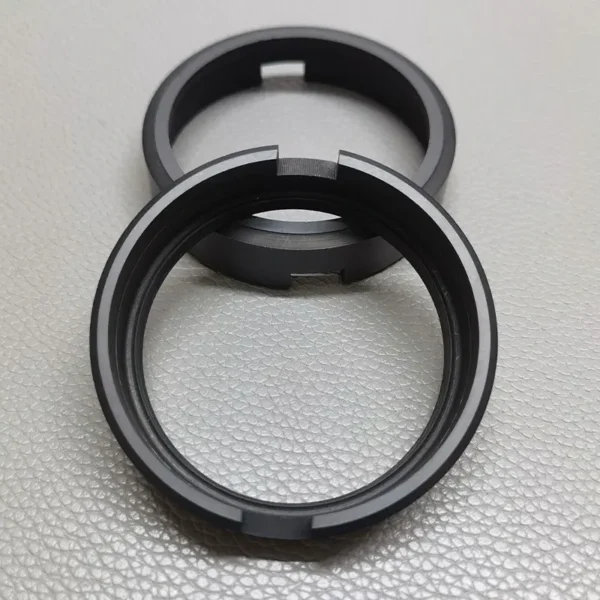

Define the ring through its geometry, loading, mating surfaces and inspection plan. Porcecore can review the component as an application-specific ceramic part rather than assuming a universal ring size or performance specification.
Key Inquiry Requirements
Ring function
A ceramic ring may act as a spacer, guide, insulator, wear interface, seal support or locating component. Silicon nitride is often considered where a design calls for a hard, rigid ceramic with resistance to demanding mechanical or thermal conditions, but the correct choice depends on the complete assembly. State the ring’s actual role and the loads it experiences.
Describe whether the ring is stationary, reciprocating or rotating, and identify contact partners, lubrication, preload and exposure conditions. A ring used for radial support has different priorities from one used as an electrical isolator or a precision spacer. The RFQ should connect each critical dimension to its assembly function so inspection can focus on what matters.
Geometry and interfaces
Define bore diameter, outside diameter, axial thickness, shoulders, grooves, chamfers, radii and any interrupted features on a controlled drawing. Include datum references and indicate whether the ring is symmetric or has an orientation feature. For ceramic parts, edge transitions are not merely cosmetic; they can influence handling, contact stress and assembly insertion.
Specify the mating materials, interference or clearance approach, contact width and installation method. If the ring is bonded, clamped, pressed or captured, provide the assembly sequence and any force limitations. Where the component runs against another part, identify the intended contact surface and surface-finish requirement rather than applying one finish to every face.
Material selection
Silicon nitride is a material family, not a complete purchase specification. Ask for the proposed grade, forming or machining route, finishing condition and relevant material documentation. If density, strength, toughness, thermal behavior, chemical compatibility or electrical isolation affects the design, state the required verification method without inserting assumed values into the enquiry.
The selected grade may influence machinability, surface texture, edge behavior and lot-to-lot documentation. Buyers should identify whether an approved equivalent is acceptable and how substitutions will be controlled. If the ring is part of a matched set, define the relationship between components and whether material or dimensional traceability is required across the set.
Inspection and assembly validation
Inspect the dimensions that control fit, concentricity, roundness, thickness variation and contact alignment, using datums appropriate to the application. Also define visual criteria for chips, cracks, stains and handling marks. If a surface will contact a seal, bearing, conductor or precision shoulder, give that face its own inspection requirement and acceptance logic.
Validation should reproduce the real installation and operating sequence. Check insertion, retention, runout, contact pattern, thermal cycling or electrical clearance as applicable. A dimensional report alone cannot demonstrate assembly suitability when performance depends on preload, mating-part finish, lubrication, temperature or the interaction of several rings.
RFQ preparation
Include the latest drawing, material preference, quantity scenario, application environment, mating-part details and intended inspection scope. State whether the request is for a prototype, qualification batch or production-intent part, while avoiding assumptions about availability or timing. Photographs of the installed location can help explain access, orientation and contact conditions.
Ask suppliers to identify manufacturing assumptions, proposed material grade, achievable inspection evidence and any drawing features requiring clarification. Compare quotations by the stated geometry, process controls, documentation and deviation list. If the ring is safety-critical or difficult to replace, define sample approval and change-control expectations before placing an order.
Questions Before You Inquire
Which ring dimensions should be marked critical?
Mark the bore, outside diameter, axial thickness, concentricity, roundness, shoulders, grooves and contact faces that control assembly fit or motion. Tie each critical feature to a datum and function. Avoid applying unusually tight requirements everywhere; distinguish assembly-critical dimensions from reference or non-functional geometry.
Can silicon nitride rings be used in rotating assemblies?
They may be considered for rotating applications, but suitability depends on speed, contact geometry, loading, balance, lubrication, mating materials and environment. The RFQ should describe the complete interface and require application-representative validation. A material name alone cannot establish safe or reliable rotating performance.
What surface information belongs in the enquiry?
Specify the surface finish, waviness or texture only where it affects contact, sealing, friction, bonding or inspection. Identify the relevant face and measurement method. Also state whether edge breaks, chamfers and visible ceramic marks have functional limits, since different surfaces may need different acceptance criteria.
Are standard ring sizes assumed?
No. This is a drawing-led RFQ page, not a promise of standard inventory. Submit the required geometry, material expectations, quantity scenario and inspection needs. The quotation should confirm the proposed configuration and disclose assumptions, substitutions or deviations before the part is approved.
Send a Clear Component Brief
Share your drawing, quantity and application with Porcecore. Mark the requirements that are fixed and the questions that remain open.


Reviews
There are no reviews yet.