
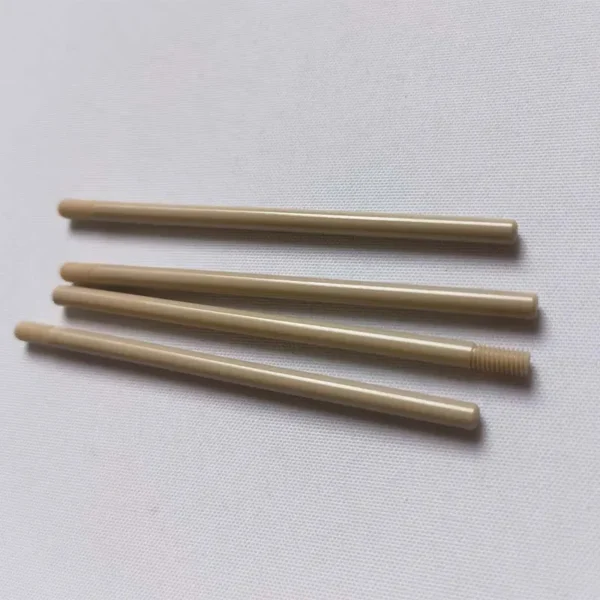
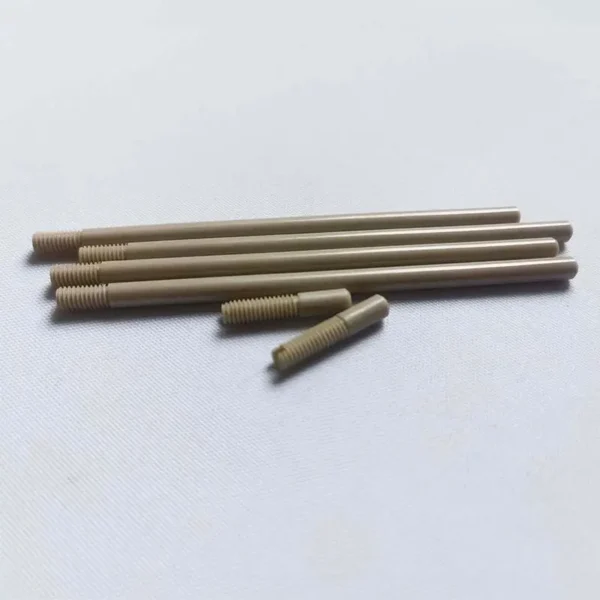
Define the rod through its diameter, length, straightness, interfaces and service conditions. Porcecore supports technical inquiry preparation without assuming a standard size, stock position or guaranteed thermal result.
Key Inquiry Requirements
Rod geometry and straightness
An aluminum nitride rod should be specified with its full diameter profile, finished length, end condition and datum strategy. Identify whether the rod acts as a support, spacer, heat path, electrical insulator or alignment element, because each role can make different surfaces critical. Include steps, flats, holes, slots or reduced sections rather than relying on a simple cylindrical description.
Straightness should be related to the assembly length and support condition. State how the feature is referenced, how it will be measured and which deviation could prevent installation. If the rod is slender or handled through a guide, provide the mating bore, clearance and insertion sequence so the supplier can review manufacturability and inspection access.
Material and application duty
Aluminum nitride should be confirmed as the required material family, with the RFQ describing the thermal, electrical, mechanical and environmental duties that led to the selection. Buyers should identify heat sources, contact surfaces, insulation boundaries, atmosphere, cycling profile and contamination concerns. These details support a meaningful grade and process discussion without inventing a property value.
Where heat dissipation is important, define the heat-transfer path and the interfaces that control it. A rod’s practical behavior depends on geometry, contact pressure, joining method and surrounding materials as well as ceramic selection. Request relevant supplier data under stated test conditions and keep application validation separate from a material datasheet comparison.
Ends, surfaces and assembly
End geometry can determine whether a rod seats, transfers load, contacts a conductor or enters a constrained opening. Specify square ends, chamfers, radii, shoulders, polished zones or other treatments only where they serve a defined function. Mark handling-sensitive edges and identify whether contact is point-based, face-based, bonded or mechanically retained.
Surface requirements should distinguish visual appearance from functional condition. If the rod enters a bore, define permissible chips, cracks, particles and surface damage at the interface. If it transfers heat through a contact face, identify the required finish or flatness basis. Suppliers should explain which features are formed, machined, ground or otherwise finished.
Inspection and verification
Inspection may include diameter, length, straightness, end geometry, surface condition and any steps or flats shown on the drawing. Identify critical characteristics, measurement datums and the requested reporting level. For internal or difficult-to-access features, agree the inspection method before production so the quoted evidence is practical and comparable.
If the rod has a thermal or electrical role, separate dimensional inspection from functional verification. The RFQ should define what resistance, insulation, thermal or interface checks are requested, under which conditions and at what stage. Avoid accepting unqualified performance language; ask for test methods, measurement uncertainty where relevant and clear limits approved by the buyer.
Preparing the rod RFQ
Send the latest drawing, model if available, mating-part information, installation method, service environment, quantity by project phase and intended inspection scope. Explain whether the rod is a prototype, qualification component, replacement design or recurring production item. Include packaging requirements when straightness, edge condition or surface cleanliness could be affected by transport and handling.
When evaluating quotations, compare material confirmation, forming and finishing assumptions, straightness approach, inspection evidence, packaging and declared exclusions. Invite suppliers to flag unsupported dimensions, difficult inspection points or alternative processes separately. This creates a disciplined technical review while leaving final acceptance with the buyer and the approved drawing.
Questions Before You Inquire
What should an aluminum nitride rod drawing include?
Show diameter, length, straightness reference, end geometry, datum scheme and every step, flat, hole or reduced section. Add mating bores, supports and contact surfaces where relevant. Identify critical characteristics and explain whether the rod’s main role is structural, thermal, electrical, alignment-related or combined.
How should thermal requirements be expressed?
Describe the heat source, transfer path, contact interfaces, mounting pressure, surrounding materials and operating cycle. If a numeric requirement exists, provide its test condition and acceptance basis. Ask suppliers to distinguish material data from assembly-level verification, since geometry and interfaces can affect the result.
Are straightness and surface finish always critical?
No. Their importance depends on how the rod is installed and used. A guided or aligned rod may need controlled straightness, while a contact or insertion surface may need a defined finish. Mark only functionally important characteristics and connect each one to a measurement method.
Can another ceramic replace aluminum nitride?
Only after reviewing the rod’s combined thermal, electrical, mechanical and environmental duties. A substitute may change heat transfer, insulation, strength, joining or dimensional behavior. If alternatives are acceptable, define the comparison criteria and approval process; otherwise, require confirmation of aluminum nitride and documented deviation control.
Send a Clear Component Brief
Share your drawing, quantity and application with Porcecore. Mark the requirements that are fixed and the questions that remain open.


Reviews
There are no reviews yet.