
Pressureless Ceramic Sintering for Dense, Application-Fit Components
Connect material, geometry, quantity, and service conditions to pressureless ceramic sintering for dense technical components matched to your project.
Featured Technical Ceramic Components for Pressureless Sintering
















Pressureless Ceramic Sintering: What Buyers Specify
Evaluate the material, geometry, process route and evidence needed to move from a ceramic requirement to a clearer quotation discussion.
Control the Drawing Revision
Start with the current drawing revision, critical dimensions, tolerances, mating features and open questions so a pressureless ceramic sintering quotation reflects the intended part.
Confirm Material Grade Requirements
Confirm the ceramic family and grade requirements, including known composition, additives or purity expectations, while separating specified values from properties requiring project confirmation.
Design for Geometry and Shrinkage
Define geometry around shrinkage considerations, wall sections, holes, radii and machining allowances, especially where component shape affects tooling, handling or final dimensional control.
Align the Process Route
Discuss the intended process route and atmosphere with the supplier, because material family, component geometry and required density can influence how pressureless ceramic sintering is evaluated.
Specify Critical Functional Surfaces
Identify functional surfaces that mate, seal, locate, insulate or transfer heat, then define their finish, flatness, roughness or protection requirements as applicable.
Define Inspection Evidence
Set inspection expectations for dimensions, density-related evidence, surface condition, traceability and documentation, aligned with the acceptance criteria needed for assembly and approval.
Related Ceramic Processes, Materials, and Components
Move from manufacturing capability to relevant materials, applications, resources, and component pages for a clearer project-specific sourcing discussion.

Ceramic Manufacturing Capabilities
Review ceramic manufacturing capabilities by process, geometry, and project requirement, including forming and pressureless sintering considerations. Use a drawing-led inquiry to clarify dimensions, tolerances, material grade, mating surfaces, inspection expectations, and documentation before quotation.
Discuss Your Ceramic Part
Ceramic Solutions by Industry
Explore advanced ceramics applications across industrial equipment, mechanical systems, electrical assemblies, and engineered components. Match the component’s operating environment, service conditions, and acceptance requirements to a suitable technical ceramic discussion rather than selecting by material name alone.
Discuss Your Ceramic Part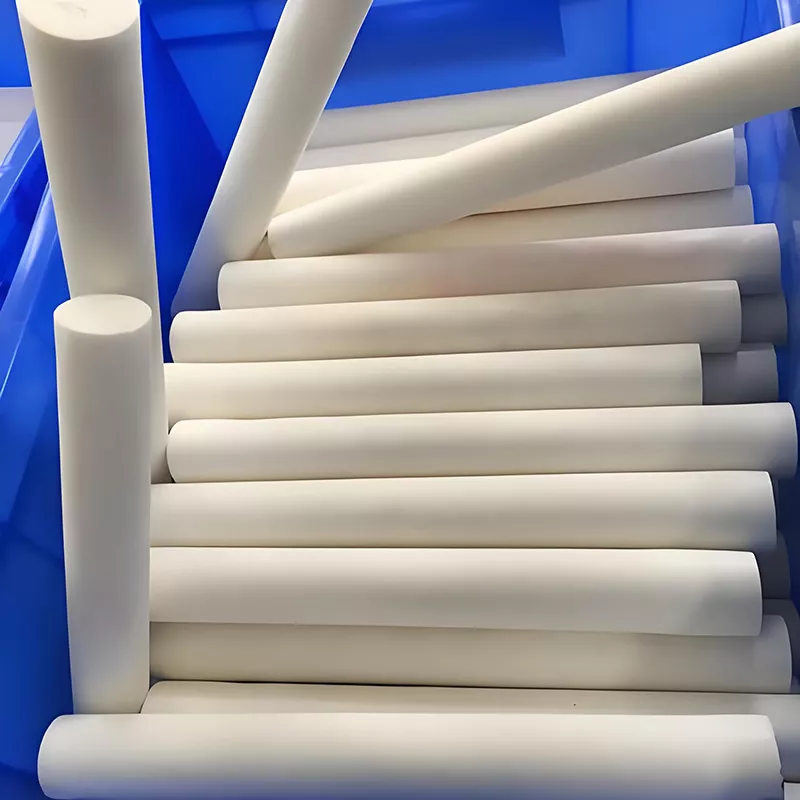
Advanced Ceramic Materials
Compare advanced ceramic materials including alumina ceramics, zirconia ceramics, silicon carbide ceramics, silicon nitride, aluminum nitride, boron nitride, and specialty ceramics. Material selection remains project-specific, with grade, geometry, processing route, operating conditions, and required documentation confirmed for each inquiry.
Discuss Your Ceramic Part
Technical Ceramic Products
Browse technical ceramic products such as tubes, rods, rings, substrates, and other industrial ceramic parts. Product pages provide a starting point for identifying a relevant form; drawings, quantities, service conditions, tolerances, and acceptance criteria establish the basis for a project quotation.
Discuss Your Ceramic Part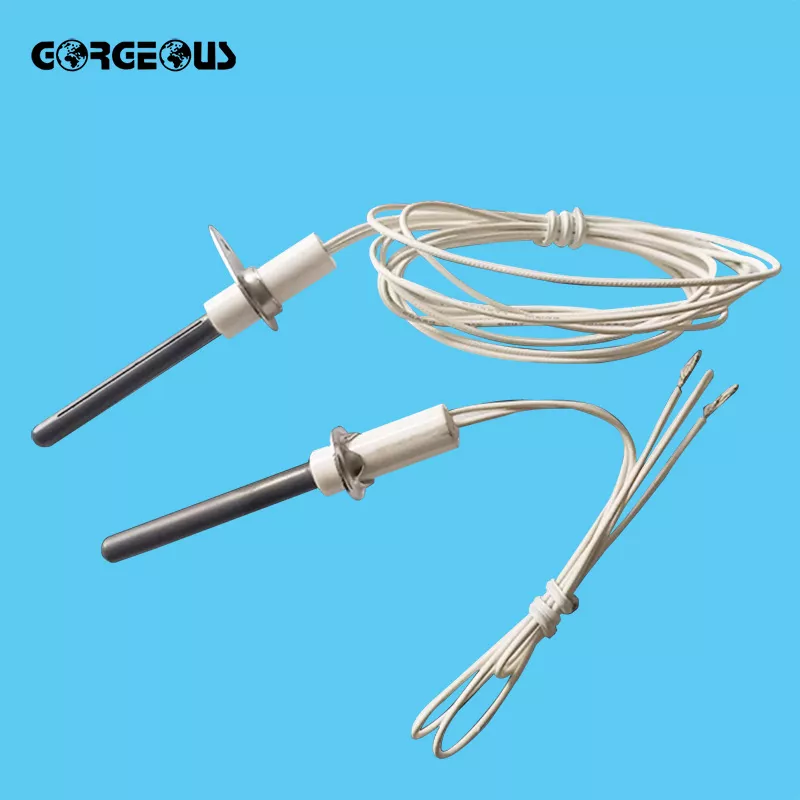
Technical Ceramic Resources
Use the technical ceramics guide to clarify material terminology, component requirements, forming and sintering considerations, and quotation inputs. For direct support, email a drawing or application description to info@zlrsmaterials.com or info@cceramic.com, or contact WhatsApp at +86 130 6482 5920.
Discuss Your Ceramic PartPorcecore’s Pressureless Ceramic Sintering Approach
Founded by Andy Yuan, Porcecore helps industrial buyers connect ceramic material choices with clearly defined part requirements. Our scope covers technical ceramic materials, custom ceramic components, and familiar component forms for procurement teams, engineers, equipment builders, and distributors evaluating pressureless ceramic sintering for a specific application.
Porcecore starts with the component and the job it must perform. Geometry, mating surfaces, operating conditions, material designation, quantity and acceptance criteria belong in the same conversation. This drawing-led approach helps separate essential requirements from preferences before a quotation or production discussion moves forward.
Our capability is centered on making technical ceramic inquiries clearer, not on making undocumented claims about factory scale, equipment or certifications. Send a current drawing revision or describe the required tube, rod, ring, substrate or other part. We can then identify open questions around grade, geometry, documentation and project expectations.

Key Pressureless Ceramic Sintering Quality Considerations
Select the Right Powder Grade
Pressureless ceramic sintering outcomes depend on the selected ceramic family, powder characteristics, additives and target grade. Define the required thermal, electrical, wear, chemical and mechanical behavior first, then confirm which material designation and property data apply to the proposed component.
- Match the grade to service conditions and performance priorities
- Separate general material data from grade-specific values
- Confirm additives, atmosphere and sintering basis during quotation
- Identify any required material certificates or documentation

Design for Green-Body Geometry
The geometry formed before firing influences shrinkage behavior, handling and final dimensional control. Share the current drawing, including wall thickness, holes, radii, transitions and difficult-to-form features, so the manufacturing discussion can distinguish essential geometry from preferences.
- Review thin walls, deep holes and sharp transitions
- Identify features that may need tooling or secondary work
- Confirm orientation, datum structure and inspection access
- Discuss whether the geometry is suitable for near-net forming

Allow for Controlled Shrinkage
Sintering changes the component’s dimensions as the compact densifies. Shrinkage allowance must be considered alongside material, geometry, batch behavior and required tolerances. A drawing-led review helps establish which dimensions need process compensation and which can be finalized through subsequent finishing.
- Mark dimensions that determine assembly or alignment
- Define critical tolerances before quotation
- Consider flatness, roundness, concentricity and warpage
- Agree how final dimensions will be verified

Define Mating and Acceptance Requirements
A technically suitable ceramic part still needs to fit its surrounding system and pass the project’s approval process. Identify mating surfaces, operating environment, quantity, inspection method and acceptance criteria early, giving Porcecore a concrete basis for quotation and production discussion.
- Highlight sealing, locating, sliding or electrical contact surfaces
- State temperature, load, chemical exposure and operating cycle
- Specify inspection records, samples or test requirements
- Confirm the current drawing revision and approval standard

Pressureless Ceramic Sintering vs. Reaction Sintering
Compare material fit, geometry, density and finishing requirements before confirming a drawing-led ceramic component inquiry.
← Swipe left or right to view →
Pressureless Ceramic Sintering Production Flow
A drawing-led path from material selection to documented component release, with control points confirmed around each project’s geometry, grade and acceptance requirements.
Review the Requirement
Review the current drawing, component function, mating surfaces, service conditions, quantity, material designation and acceptance criteria before confirming a pressureless ceramic sintering route.
Prepare Material Inputs
Confirm the ceramic family and project-specific grade, then align powder preparation, additives and handling controls with the required geometry and performance.
Form and Debind
Form the green body using a suitable method, then complete debinding where applicable while managing dimensions, density distribution and distortion risks.
Control the Sintering
Establish the sintering cycle, atmosphere and furnace controls around the selected ceramic system, accounting for shrinkage, density development and project-specific process limits.
Finish and Inspect
Apply agreed finishing operations where required, then inspect critical dimensions, mating surfaces, visual condition and material-related characteristics against the approved requirements.
Document and Release
Compile inspection results, material information and agreed documentation, resolve open questions, and confirm the released component matches the project’s accepted specification.
How to Order Pressureless Ceramic Sintering Components
Provide the details that connect your ceramic component requirement with a clear, project-specific quotation discussion.
Share Your Drawing
Share the current drawing revision, component form, quantity, and material designation if known so Porcecore can frame the pressureless ceramic sintering inquiry accurately.
Describe Service Conditions
Describe service temperature, atmosphere, loads, electrical conditions, and cycle expectations to connect the ceramic material and geometry with the part’s operating environment.
Identify Critical Interfaces
Identify critical mating surfaces, dimensions, tolerances, and inspection points that determine assembly, fit, sealing, alignment, or electrical performance in your equipment.
Confirm Acceptance Requirements
List acceptance criteria and required documentation, including inspection records or material information, then confirm open questions before quotation and production decisions.
Pressureless Ceramic Sintering Project Examples
No customer testimonial has been supplied for publication. Project evidence will be added only after the buyer approves the relevant geometry, material, acceptance criteria, and sourcing details.
Porcecore does not publish project results or customer claims without buyer approval. A drawing-led project summary can be discussed when the relevant evidence is authorized for publication.
Porcecore does not publish unverified customer claims. Share your drawing and requirements to discuss a pressureless ceramic sintering component for your application.
Pressureless Ceramic Sintering FAQ for Engineering Buyers
Practical guidance for defining ceramic material, geometry, inspection and quotation requirements.
Which ceramic families are suitable for pressureless ceramic sintering?
What component geometries can pressureless ceramic sintering support?
How are shrinkage and tolerances handled in pressureless ceramic sintering?
What design limitations should engineers review before requesting a quotation?
Can pressureless ceramic sintering parts receive secondary finishing?
How should we plan samples, quantity, MOQ and lead time for pressureless ceramic sintering?
What information should an RFQ include for a pressureless ceramic sintering component?
What inspection evidence and packaging details should be agreed before ordering?
The Complete Buyer’s Guide to Pressureless Ceramic Sintering
Use this decision framework to compare pressureless ceramic sintering routes, evaluate materials and supplier capabilities, control customization and quality risks, and avoid costly sourcing mistakes before approving production.
1. What Is Pressureless Ceramic Sintering?
Pressureless ceramic sintering densifies a shaped ceramic body through heat, without externally applied mechanical pressure during the sintering stage. During heating, particles bond through diffusion and, where applicable, a liquid phase; pores contract, the body shrinks, density rises, and properties such as strength, hardness, thermal stability, or chemical resistance develop. Final dimensions therefore depend on predictable shrinkage and controlled processing. Hot pressing applies uniaxial pressure, while HIP uses isostatic gas pressure; reaction bonding instead forms or infiltrates a new phase through chemical reaction.
2. Evolution and History of Pressureless Sintering
Pressureless sintering routes evolved as powder control, additive chemistry, and furnace-atmosphere management improved. Vacuum, inert-gas, and high-temperature furnace systems help limit oxidation, control grain growth, and make complex shapes more practical, while liquid-phase approaches broaden the processing window. Today, process maturity matters to procurement because repeatable powder lots, validated firing cycles, and controlled shrinkage support scalable production and qualification evidence. A capable supplier should explain the selected route, inspection basis, and relevant experience for the specific drawing rather than treat pressureless ceramic sintering as a generic material label.
3. Types of Pressureless Ceramic Sintering
Five pressureless ceramic sintering routes differ mainly in whether densification occurs entirely solid, through a transient liquid, or with chemical assistance.
Solid-State Sintering
Alumina, zirconia, and some silicon carbide grades densify through solid-state diffusion below melting, typically requiring high temperature and controlled shrinkage. It suits clean, wear-resistant parts but may demand long cycles and careful grain-growth control.
Liquid-Phase Sintering
Yttria-alumina additives can form a transient liquid that improves particle rearrangement and mass transport at lower temperatures than purely solid-state routes. This benefits silicon carbide and selected nitride compositions where toughness or densification is important.
Vacuum And Inert Atmosphere
Argon, nitrogen, or vacuum atmospheres limit oxidation and help process carbide, nitride, and boride ceramics at elevated temperature. Atmosphere selection affects decomposition risk, additive behavior, surface chemistry, and furnace compatibility.
Reactive And Additive-Assisted Routes
Reaction sintering uses chemical conversion or infiltration, while carbon, boron, or oxide additives accelerate diffusion and densification. These routes can reduce temperature or cycle demands, but residual phases, porosity, and composition gradients require qualification.
Material-Specific Variants
Silicon carbide, boron carbide, silicon nitride, and zirconium diboride each require different additives, atmospheres, and shrinkage models; one furnace recipe cannot represent every ceramic. Material-specific selection should follow the drawing, operating environment, and required inspection evidence.
4. Materials for Pressureless Ceramic Sintering
Five ceramic families illustrate why pressureless ceramic sintering must be specified by property, geometry, and service environment. Grade-specific values require supplier confirmation.
Powder And Process Controls
Purity, particle size distribution, binder burnout, sintering-aid chemistry, and atmosphere govern densification, grain growth, contamination, and shrinkage.
Material Selection Matrix
Typical distinctions are summarized below; grade-specific values require supplier confirmation.
| Material | Key properties | Applications | Qualification concerns |
|---|---|---|---|
| Alumina | Dense; hard; insulating; chemically resistant | Insulators, tubes, wear parts | Purity, porosity, tolerances |
| Zirconia | Tough; low thermal conductivity; insulating | Seals, wear components, tooling | Phase stability, aging, shrinkage |
| Silicon carbide | Very hard; thermally conductive; high-temperature stable | Furnace parts, seals, heat exchangers | Sintering aids, atmosphere, machining |
| Boron carbide | Very hard; low density; neutron absorption | Armor, nozzles, nuclear components | Difficult machining, density, impurities |
| Aluminum nitride | High thermal conductivity; electrical insulation | Heat spreaders, substrates | Oxygen content, metallization, flatness |
Buyer Qualification Questions
Drawing revision, mating surfaces, operating temperature, electrical requirements, chemical exposure, inspection method, and acceptable machining allowance should accompany the inquiry.
5. Customization Options for Sintered Ceramic Components
A drawing for pressureless ceramic sintering must define both the finished component and its manufacturing route.
Geometry And Sintering Allowances
Shrinkage compensation, wall thickness, hole size and support strategy belong in the green-body design. Thin walls, deep bores and abrupt section changes can increase warpage or distortion.
- Define datum surfaces and mating dimensions.
- Ask how holes, slots and threads will be formed.
- Confirm flatness, concentricity and warpage limits.
Surface And Material Customization
Surface finish, porosity, color and grade-specific properties should be stated separately; color is material-dependent and is not a universal specification. Specify roughness on functional faces and porosity where sealing, insulation or fluid exposure matters.
- Specify Ra or equivalent finish limits.
- Confirm metallization system and adhesion criteria.
- Separate appearance requirements from performance requirements.
Assembly Integration And Approval
Metal joining, brazing, adhesive bonding and mechanical retention each impose different clearances and thermal-expansion risks. Electrical assemblies may require metallized pads; mechanical assemblies may require inserts, shoulders or controlled fits.
- Provide service temperature and joining cycle.
- Identify insulation, grounding or sealing requirements.
- Confirm acceptance criteria before sampling.
6. Key Construction and Quality Elements
Three control groups determine reliable pressureless ceramic sintering: material identity, thermal processing, and verification.
Material And Green-Body Control
Each batch needs powder grade, additive lot, supplier lot, and mixing record traceability. Forming checks should address green density, wall uniformity, orientation, and defect exclusion.
Firing And Shrinkage Control
Every load should record the furnace profile, atmosphere, setter arrangement, load position, and deviation handling. Atmosphere selection and setter design affect contamination, warpage, and composition stability.
Verification And Lot Consistency
Density testing, dimensional inspection, and surface inspection should use defined methods, sampling plans, and acceptance limits. Critical-to-function features include fits, sealing surfaces, thickness, strength-related defects, and electrical interfaces; cosmetic marks may be separately classified.
7. How to Choose a Pressureless Sintering Manufacturer
One drawing should connect the part requirement, process route, and acceptance criteria.
Verify Process Capability
Five checks matter first: material expertise, forming methods, furnace capacity, atmosphere control, and tooling.
- Request sample density and shrinkage data.
- Review furnace atmosphere and temperature controls.
- Confirm tooling ownership, maintenance, and repeatability.
Test Engineering And Quality
A qualification plan should define prototype quantities, inspection points, dimensional reports, and release criteria.
- Request sample inspection reports.
- Define lead-time milestones and approval gates.
- Check quality-system records and reference projects.
Confirm Delivery Readiness
Export readiness includes protective packaging, labeling, documentation, and shipment responsibility.
- Verify packaging for fragile ceramic parts.
- Confirm export documents and traceability.
- Record open questions before ordering.
8. Common Pressureless Ceramic Sintering Buying Mistakes
Eight buying errors repeatedly turn a technically suitable pressureless ceramic sintering route into an assembly problem.
Define Material And Geometry Together
Shrinkage during sintering can shift dimensions and distort mating features. Specify grade, green-body allowance, critical surfaces and post-sinter machining responsibility.
- Name the grade, not only alumina, SiC or zirconia.
- Record shrinkage assumptions against the approved drawing.
- State tolerances, datums and surface-finish requirements.
Align Process Scope And Validation
Atmosphere compatibility affects oxidation, decomposition risk and final properties; prototype testing exposes failures before production tooling. Require the proposed atmosphere, thermal cycle and sample acceptance criteria.
- Compare quotes line by line: tooling, machining, inspection and packaging.
- Test fit, thermal cycling, dielectric or wear performance as applicable.
- Approve a first-article report before releasing volume orders.
Challenge Claims And Unit Price
Unsupported density, strength or temperature claims can produce unsafe substitutions, while the lowest unit price may exclude tooling, yield loss or documentation. Link every performance value to a grade, test method and contract requirement.
- Request material certificates and applicable test standards.
- Define atmosphere, quantity, lead time and acceptance scope in the quotation.
- Evaluate cost per accepted part, not headline unit price.
9. Steps to Launch a Pressureless Ceramic Sintering Program
A successful program begins with the part’s operating requirements, then converts them into a controlled drawing, test plan, and supply decision.
Define Requirements And Material
Step 1 records temperature, loads, chemistry, electrical conditions, mating surfaces, tolerances, quantity, and acceptance criteria. Engineering selects a candidate ceramic family; procurement confirms grade availability, target volumes, documentation, and RFQ timing.
Review Design And Feasibility
Step 2 checks CAD, shrinkage allowance, wall sections, radii, datum structure, machining stock, tooling approach, and inspection access. The supplier returns feasibility comments, open questions, assumptions, and a preliminary process route.
Prototype, Qualify, And Supply
Steps 3–6 cover tooling, prototype samples, dimensional and performance testing, design iteration, process qualification, and pilot production. Engineering approves results against the test plan; procurement approves cost, lead time, packaging, traceability, and quality records.
10. Pressureless Ceramic Sintering Pricing and Cost
1 quotation should separate material and additives, part mass, forming, furnace cycle, atmosphere, machining, inspection, packaging, development, and logistics. Compare each line against the drawing revision and acceptance criteria; Porcecore does not publish unsupported prices or lead times. 2 quantities matter: unit economics can change with tooling, setup, furnace loading, and development amortization.
| Cost Category | Pricing Basis | Main Variables | Ways to Control Cost |
|---|---|---|---|
| Material and additives | Material mass and grade | Ceramic family, purity, additives, yield | Confirm grade and essential properties |
| Forming and tooling | Setup, tooling, and part complexity | Geometry, tolerances, forming method, quantity | Use repeatable geometry and stable revisions |
| Sintering cycle | Furnace time and loading | Temperature, atmosphere, cycle, batch size | Plan compatible batch quantities |
| Finishing and inspection | Operation and inspection time | Machining, surfaces, metrology, documentation | Specify critical features only |
| Packaging and logistics | Packed shipment and destination | Protection, export handling, freight terms | Consolidate orders and define delivery terms |
Discuss Your Pressureless Ceramic Sintering Requirement
Email a drawing or describe the component, operating environment, quantity, and acceptance criteria to begin a focused quotation conversation with Porcecore.