


Porcecore supports RFQ preparation around the feedthrough geometry, ceramic family, metal interface, sealing method, and inspection evidence required for a technically comparable quotation.
Key Inquiry Requirements
Define the Feedthrough Interface
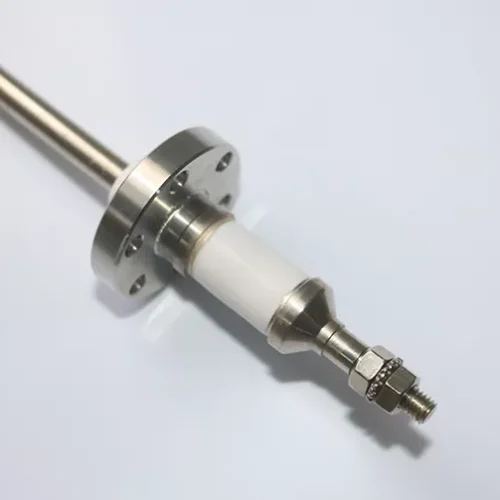
A sealed feedthrough is not specified by the ceramic ring alone. The RFQ should identify the conductor or metal body arrangement, sealing boundary, mounting method, electrical role, and available envelope. Include sectional drawings that show shoulders, clearances, joining surfaces, reference datums, and any restricted zones. If the feedthrough connects to a vacuum vessel or instrument, describe the mating hardware and assembly sequence so interface risks can be reviewed early.
Buyers should distinguish the required ceramic body from the complete ceramic-to-metal assembly. State whether the quotation should address only shaped ceramic parts, joined subassemblies, or a route for both. The intended service environment should be described in functional terms, including vacuum use, cycling, contamination sensitivity, voltage exposure, and mechanical loading, without relying on an assumed standard design. This helps suppliers identify missing decisions before pricing or technical review.
Compare Ceramic and Metal Choices
Specialty ceramic selection should be compared against insulation needs, thermal expansion behavior, joining compatibility, surface condition, and resistance to handling damage. The metal side also needs definition: alloy family, finish, cleanliness expectations, and any restrictions created by the downstream system. Buyers can request a documented comparison of proposed material combinations, joining approach, and interface assumptions rather than accepting a ceramic designation without assembly context.
For ultra-high-vacuum-related use, ask how the proposed design will be cleaned, joined, handled, packaged, and inspected. The RFQ should identify whether virtual leaks, trapped volumes, exposed braze areas, or particle control are concerns. Do not leave vacuum acceptance as a general label; define the test method, conditioning steps, acceptance threshold, and reporting format required for the finished feedthrough or the ceramic component.
Drawing and Joining Review
The drawing package should show all features that influence sealing or joining, including edge breaks, flatness zones, concentric relationships, surface finishes, and inspection datums. Where dimensions remain open, mark them as design inputs rather than allowing a supplier to infer them from a photograph. A useful RFQ also identifies whether the joining process must preserve a specified aperture, maintain electrical clearance, or support later integration operations.
Ask bidders to explain which characteristics are controlled during ceramic forming, machining, metallization, joining, and final cleaning. The comparison should separate proposed process capability from guaranteed acceptance criteria. Review how the supplier will manage ceramic chipping, distortion, residue, and alignment at the metal interface. If a prototype or first-article stage is planned, specify the evidence needed before design release, such as inspection records or assembly trial observations.
Inspection and Acceptance Planning
Inspection should follow the functions that matter to the assembly. Potential RFQ items include dimensional conformity, visual condition, surface defects, joint continuity, electrical isolation, leak-related testing, and cleanliness documentation. Each item needs a method, sampling expectation, and acceptance rule agreed in advance. If only the ceramic ring is being purchased, clearly separate incoming inspection from tests that apply only after metal joining or vessel installation.
Request traceable inspection outputs that match the drawing revision and lot definition used for the quotation. Buyers may also ask for photographs of critical interfaces, material identification documentation, process records, or nonconformance handling rules where relevant. These requests should be proportionate to the application and written as deliverables, not vague promises of quality. A clear evidence plan makes supplier comparisons more meaningful and reduces disputes during integration.
Build a Complete RFQ
A strong sealed-feedthrough RFQ combines the latest drawing, ceramic and metal material expectations, interface details, operating context, cleaning requirements, inspection plan, packaging needs, and quotation assumptions. State what is fixed and what may be proposed. Include the desired submission format for marked-up drawings, technical deviations, inspection evidence, and questions. This gives suppliers a defined route to identify risks without implying that an off-the-shelf component is available.
Before release, check that the inquiry distinguishes design responsibility, joining responsibility, and final acceptance responsibility. Ask for a clear list of exclusions, unresolved inputs, and recommended design reviews. If the geometry is still developing, request a feasibility response tied to the supplied section and functional requirements. The aim is a comparable engineering quotation based on the actual interface, not a generic promise attached to a product name.
Questions Before You Inquire
What should accompany an RFQ for a sealed feedthrough?
Provide a controlled drawing, section views, mating-interface details, ceramic and metal expectations, service environment, joining scope, cleaning requirements, inspection criteria, and packaging needs. Also identify which dimensions are fixed and where the supplier may propose an alternative design or joining approach.
Should the RFQ cover the ceramic ring or the complete assembly?
State this explicitly. A ceramic-only inquiry requires part geometry, material, finish, and incoming inspection requirements. A complete feedthrough inquiry must additionally define metal interfaces, joining, alignment, cleanliness, leak-related testing, electrical checks, and responsibility for final assembly acceptance.
How should vacuum requirements be written?
Describe the intended vacuum function and define the applicable test method, conditioning procedure, acceptance threshold, and reporting format. Avoid relying only on terms such as ultra-high vacuum. Identify contamination, trapped-volume, cleaning, packaging, and installation concerns that could affect the finished assembly.
Can a supplier recommend the ceramic-to-metal combination?
Yes, if the RFQ provides the functional constraints and asks for a documented proposal. Request the reasoning behind the ceramic and metal choices, joining assumptions, compatibility risks, inspection plan, and any deviations from the drawing. Treat recommendations as technical options requiring review, not automatic approval.
Send a Clear Component Brief
Share your drawing, quantity and application with Porcecore. Mark the requirements that are fixed and the questions that remain open.



Reviews
There are no reviews yet.