
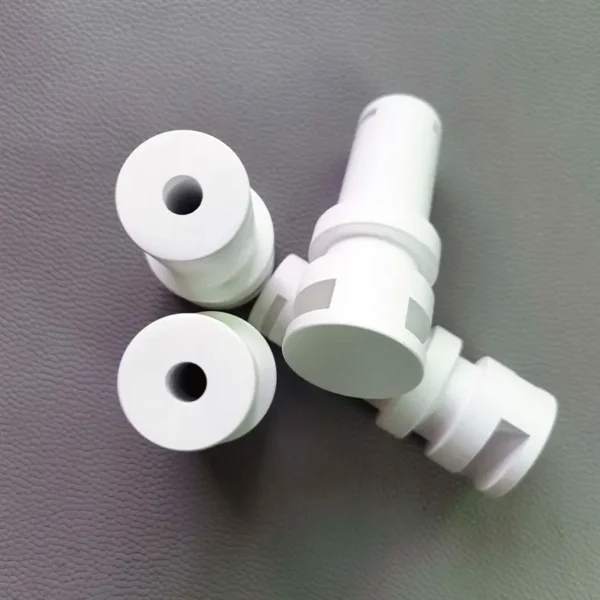


Use this page to explain the block’s actual role in an assembly or process fixture. Special-shape ceramic parts require a controlled drawing and clear evidence requirements because the name alone does not define the feature layout or intended use.
Key Inquiry Requirements
Define the block’s actual role
A ceramic block can serve as an insulator, support, separator, liner, fixture element or shaped process component, and those roles impose different design priorities. Start the RFQ with a plain-language description of what the block does, what touches it and how it is installed. Identify whether it is a standalone part, a bonded insert, a replaceable wear element or part of a composite assembly.
Boron nitride is a material family rather than a complete specification. State the environment around the block, including atmosphere, chemicals, contact materials, heat exposure, loading, vibration and cleaning. If the part operates near electrical conductors or sensitive products, describe the relevant contamination and insulation concerns without assuming that a general material label resolves them.
Control special-shape geometry
For a special-shape block, the controlled drawing should show every functional contour, step, slot, hole, pocket, radius and contact face. Use datums and section views where the shape cannot be understood from a single view. Identify the features that locate, retain or align the block, and separate them from cosmetic or non-functional surfaces.
Composite geometry needs especially clear boundaries. State whether the proposed part is one ceramic body, multiple ceramic pieces, a ceramic body with another material or a supplied assembly. Define joint locations, bonding or fastening expectations, and whether the supplier may propose a design change. Any alternative should be submitted as a documented deviation or engineering option for review.
Interfaces, joining and handling
Describe how the block is installed and removed, including clamping, sliding, bonding, fastening or placement into a pocket. Provide mating-part drawings and assembly clearances where possible. Ceramic components can be sensitive to concentrated force and edge damage, so the RFQ should identify contact zones, load paths, tool access and any restriction on assembly preload.
If the block is part of a composite or multi-piece design, clarify who owns the joining process and whether the quoted scope includes subassembly, cleaning or packaging. Specify orientation marks and handling controls when they matter to installation. These details prevent a quotation from covering only the ceramic shape while leaving the critical assembly work undefined.
Material and evidence requirements
Ask suppliers to identify the proposed boron nitride grade or material designation and provide relevant data for the stated application. Explain which properties are decision-critical, such as electrical behavior, thermal response, chemical compatibility, machinability or contamination control, without inserting unverified numerical requirements. Request the evidence needed to compare proposals on the same basis.
Inspection should match the part’s functional complexity. Define dimensional checks for locating features, flatness or profile where relevant, visual acceptance for edges and surfaces, and verification of any composite or joined region. If cleanliness, marking or packaging is important, include it in the specification. Avoid accepting broad claims such as special shape without a drawing-linked inspection method.
RFQ structure for a non-standard part
Include the drawing, revision, application narrative, mating hardware, material family, intended quantity basis and requested documentation. State whether the inquiry concerns a concept, prototype, qualification part or repeat requirement. Add reference images only to explain orientation or context; they should not override the controlled dimensions or create an implied production commitment.
When comparing offers, review shape interpretation, proposed grade, joining assumptions, inspection scope, packaging and technical exclusions. Ask suppliers to list open questions and deviations before approval. A useful comparison records not only price or schedule proposals, but also who owns design changes, assembly compatibility, test evidence and disposition of nonconforming features.
Questions Before You Inquire
What is the first question to answer for a boron nitride ceramic block?
Define the block’s role in the assembly or process. Explain what it supports, separates, insulates, lines or locates, and identify the materials and surfaces it contacts. A role-based description allows the supplier to review geometry and material suitability without treating a generic block shape as a complete specification.
How should a special ceramic shape be documented?
Use a controlled drawing with multiple views, sections, datums and dimensions for every functional contour, hole, pocket, radius and locating surface. Identify non-functional areas separately. If the part is composite or assembled, show interfaces, joint boundaries and ownership of bonding, fastening, cleaning and final inspection.
Can a supplier suggest a different boron nitride grade?
A supplier may propose an alternative for technical review, but the substitution should be documented rather than assumed. Request the material designation, relevant application data, impact on machining or joining, and any changes to inspection. Keep the approved material decision linked to the drawing revision and buyer acceptance.
What evidence should accompany a quotation?
Request a drawing interpretation, proposed material designation, manufacturing assumptions, dimensional inspection plan, visual criteria and any evidence for joining, cleanliness or packaging requirements. Ask suppliers to identify exclusions and unresolved questions. The appropriate evidence depends on the block’s function, so acceptance criteria should be agreed before release.
Send a Clear Component Brief
Share your drawing, quantity and application with Porcecore. Mark the requirements that are fixed and the questions that remain open.


Reviews
There are no reviews yet.