
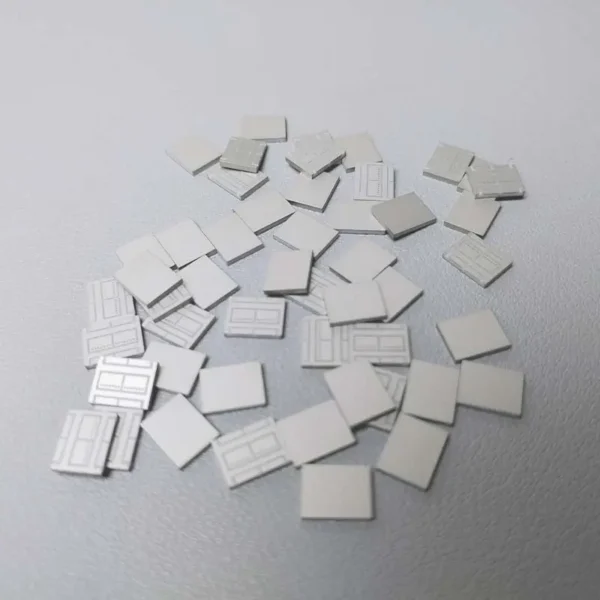


Use this page to define the sheet architecture, metallized areas and acceptance criteria for a beryllium oxide ceramic packaging component. Final suitability depends on the complete drawing, assembly process, thermal and electrical conditions, and any safety or regulatory requirements associated with beryllium-containing ceramic materials.
Key Inquiry Requirements
Component role and design intent
A metallized beryllium oxide sheet typically combines a rigid ceramic substrate with a conductive surface feature, such as a deposited or bonded metal layer defined by the assembly design. The useful specification is therefore more than a material name. It should identify the active area, metallized zones, edge clearances, holes, steps, reference datums and any surfaces that must remain free of metal.
For an RFQ, describe how the sheet will be mounted, joined, insulated, contacted or enclosed. Include the mating materials, joining sequence, expected thermal path, electrical isolation points and environmental exposure. If the part will be handled near sensitive electronics or personnel, state the applicable safety controls and documentation expectations so the quotation can address the complete risk profile.
Material and metallization definition
Beryllium oxide is the stated ceramic family for this component, but the finished part depends on body composition, forming route, sintering condition and surface preparation. Buyers should request the proposed material designation and relevant batch or lot documentation, then compare it against the design’s dielectric, thermal, mechanical and chemical priorities without assuming any unlisted property value.
Metallization should be specified as an engineered interface rather than a generic coating. Define the metal system if already selected, layer sequence, coverage, adhesion expectations, soldering or brazing compatibility, surface finish and allowable discontinuities. Where the design is still open, ask the supplier to identify assumptions and provide alternatives for review instead of treating a catalogue image as a final construction.
Drawing details to include
The drawing should show overall outline, thickness, flatness or warp requirements, corner treatment, cut-outs, holes and all metallized geometry. Mark critical dimensions with datums and identify whether dimensions apply before or after metallization. A clear revision level, units, edge condition and quantity basis will reduce avoidable interpretation during quotation and first-article review.
Also provide the assembly drawing or a marked interface view when the sheet mates with a heat spreader, conductor, package frame or ceramic stack. Explain which surfaces are functional, which are cosmetic and which may carry handling marks. If cleanliness, packaging, traceability or visual inspection is important, place those requirements directly in the RFQ rather than relying on informal correspondence.
Inspection and comparison
Useful comparison points include ceramic body integrity, metallized coverage, edge chipping, surface contamination, dimensional conformity, warpage and the condition of holes or cut features. The exact inspection method should match the drawing and application. Ask which characteristics are measured routinely, which are sampled, and which records can accompany approval lots or prototypes.
When comparing quotations, separate confirmed capability from proposed process assumptions. Review sample reports, inspection plans, test definitions and nonconformance handling together with the price. A visually similar sheet may differ materially in interface preparation, metallization consistency or documentation. Those differences can affect assembly yield, so they belong in the technical comparison before commercial selection.
RFQ and approval path
A complete RFQ package should include the latest drawing, three-dimensional file when useful, application summary, annual or project quantity, prototype expectations, packaging needs and target approval milestones. State whether the request is for design feedback, sample manufacture, pilot quantities or repeat production. Avoid asking for a stock promise when the component is defined by a custom metallized pattern.
Before release, agree how drawing changes, substitutions, inspection records and deviations will be controlled. Ask for clarification of any beryllium-related handling documentation required by your organization or jurisdiction. Approval should follow review of representative samples and evidence against the agreed drawing, not appearance alone or an assumed similarity to the reference image.
Questions Before You Inquire
What should be included in an RFQ for this metallized sheet?
Provide the ceramic sheet drawing, metallized pattern, thickness and edge details, mating materials, joining process, operating environment, inspection requirements, quantity stage and documentation needs. Include assembly context and safety expectations for beryllium-containing ceramic materials. If any feature is undecided, identify it clearly as an engineering question rather than an implicit requirement.
Does the product page confirm a particular metal coating?
No. The topic is a metallized beryllium oxide sheet, but the source evidence does not establish a specific metal system, layer stack, thickness or finish. Those details must be selected against the joining process and documented in the drawing or technical specification before quotation and approval.
Can the sheet be quoted from an image alone?
An image can communicate the general component form, but it cannot define critical interfaces, tolerances, metallization boundaries, edge condition or inspection standards. A supplier should receive a controlled drawing and assembly context. If the design is preliminary, request a review of assumptions and open technical points before fixing the quotation basis.
What should be inspected on received parts?
Inspection should follow the approved drawing and may include outline, thickness, flatness, holes, edge condition, ceramic damage, metallized coverage, surface cleanliness and interface quality. The required methods and sampling plan must be agreed in advance. Review the supplier’s records alongside representative parts, especially for characteristics that influence joining or electrical isolation.
Send a Clear Component Brief
Share your drawing, quantity and application with Porcecore. Mark the requirements that are fixed and the questions that remain open.


Reviews
There are no reviews yet.