

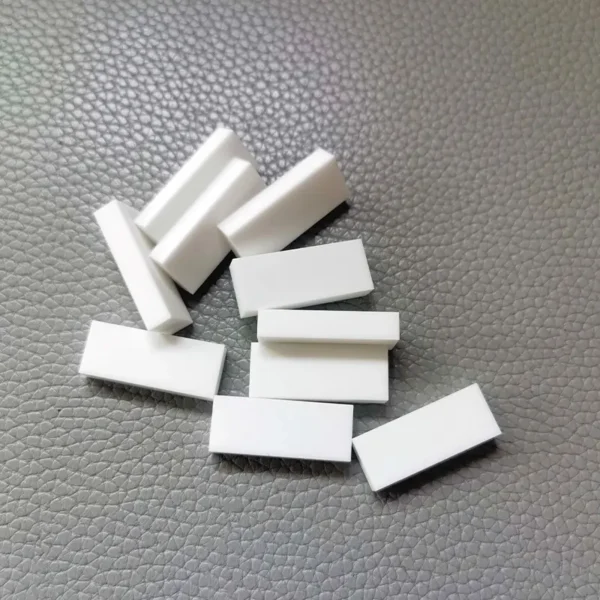


Define the block’s function, machining state, exposure controls and inspection requirements before requesting a quotation. Porcecore can review the drawing while keeping material and safety assumptions explicit.
Key Inquiry Requirements
Block Geometry and Functional Faces
A beryllium oxide ceramic block should be specified as a functional component, not simply as a rectangular solid. Identify overall dimensions, stepped regions, bores, slots, pockets, chamfers, corner radii, and all faces that contact other parts. Use datums tied to the assembly so the supplier can distinguish locating surfaces from clearance surfaces and assess inspection access.
Explain whether the block acts as a support, insulator, spacer, thermal interface, structural insert, or another defined element. Include the mating materials, clamping method, load direction, and installation sequence. A section view or assembly sketch is especially useful when a block contains hidden features or when surface orientation affects how it is installed and inspected.
Material Disclosure and Process Planning
The RFQ should state that beryllium oxide is the required material family and identify any approved designation or substitution policy. Do not assume a material name alone communicates every relevant condition. Ask the supplier to disclose the proposed material form, machining state, finishing route, and any process limitations that could affect the final geometry or surface condition.
Beryllium oxide components also require deliberate discussion of manufacturing and handling controls. Ask the supplier to describe how dust-generating operations, cleaning, packaging, labeling, and documentation will be managed within the applicable workplace and transport requirements. The quotation should make responsibilities clear without relying on vague language about safe handling or general ceramic processing.
Thermal, Electrical and Mechanical Context
If the block participates in heat transfer, describe the contacting surfaces, direction of heat flow, mounting pressure, cycling pattern, nearby materials, and any interface layers. If it provides electrical isolation, identify the conductors, contact arrangement, isolation boundaries, and cleaning environment. These details help the supplier understand which faces and dimensions are functionally critical.
Mechanical loading should be described separately from thermal or electrical duty. State whether the block sees compression, bending, vibration, fastening force, or intermittent contact, and identify unsupported spans or stress concentrators. Avoid replacing this information with a generic request for strength; the design and loading path determine which questions belong in the technical review.
Inspection, Cleanliness and Documentation
Inspection planning should cover overall dimensions, flatness or parallelism where interfaces depend on them, hole or pocket location, edge condition, visible damage, and surface cleanliness. Identify the inspection datums and acceptance method for cracks, chips, contamination, or residue. If the block enters a controlled assembly, define packaging and incoming inspection responsibilities before quotation.
Request documentation that connects the supplied part to the drawing revision and declared material. Depending on the project, this may include a dimensional report, material identification record, handling statement, packaging description, or deviation log. Specify which records are required for approval; do not assume that a general certificate or photograph answers a drawing-specific inspection question.
RFQ Review for BeO Blocks
A complete RFQ should include the controlled drawing, assembly context, material requirement, process-state expectations, handling constraints, inspection plan, packaging instructions, and revision history. State whether raw, semi-finished, or fully machined condition is being requested. Ask suppliers to flag features that need clarification before they commit to a manufacturing route.
Compare quotations by technical completeness rather than block dimensions alone. Review material disclosure, geometry assumptions, machining and finishing route, handling controls, inspection evidence, packaging, and deviation management. Confirm that the supplier understands which surfaces are functional and which risks require buyer approval before the component definition is frozen.
Questions Before You Inquire
What handling information belongs in a BeO ceramic block RFQ?
State the intended use, workplace handling expectations, packaging, labeling, cleaning, documentation, and responsibilities for any dust-generating or damaged-part situations. Ask the supplier to describe applicable controls and assumptions. The RFQ should make the safety workflow explicit rather than treating handling as a generic note.
Should the drawing identify thermal or electrical interfaces?
Yes. Mark the faces, boundaries, and dimensions that control heat transfer, isolation, contact, mounting, or clearance. Add an assembly sketch when the block’s role is not evident from orthographic views. This helps align machining, inspection, and technical review around the actual application.
Can BeO blocks be quoted from a simple size description?
A size-only request is usually insufficient for a custom technical ceramic block. Provide the complete profile, datums, functional surfaces, material requirement, process state, inspection expectations, and assembly context. Hidden features, edge conditions, and handling requirements can materially change the quotation basis.
Does this page confirm BeO block stock or guaranteed performance?
No. It is a drawing-led sourcing guide and does not state stock, standard sizes, lead time, price, or guaranteed performance. Submit the controlled design and application requirements so the supplier can identify assumptions, technical questions, inspection scope, and handling provisions.
Send a Clear Component Brief
Share your drawing, quantity and application with Porcecore. Mark the requirements that are fixed and the questions that remain open.


Reviews
There are no reviews yet.