
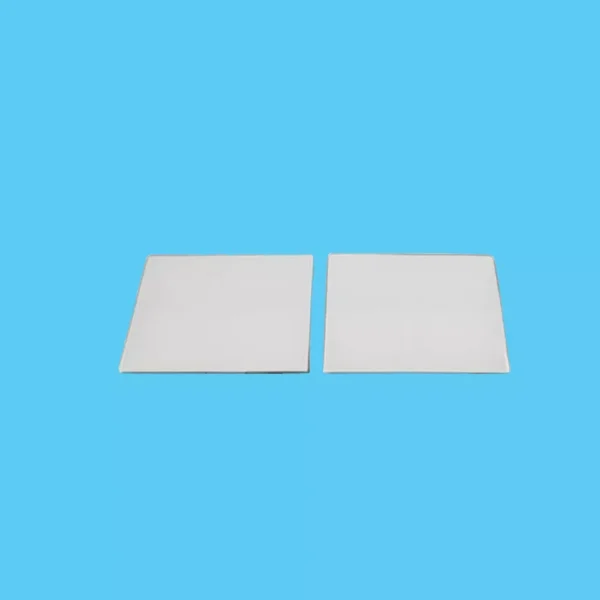
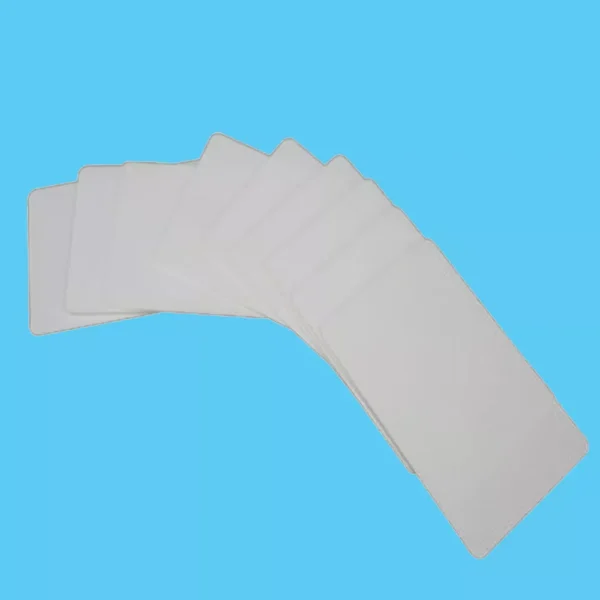


Turn the sheet into a complete component definition by documenting thickness, profile, interfaces, finish and inspection priorities. Request technical review before treating any standard sheet format as suitable.
Key Inquiry Requirements
Define the sheet as a finished component
Begin with the finished part envelope, not only a nominal sheet size. Show length, width, thickness, corner geometry, holes, slots, cutouts, steps and edge treatments, together with datums and orientation. Identify whether the sheet is a substrate, cover, spacer, insulator or structural support. This context helps the supplier distinguish a machined ceramic component from a raw material panel.
Mark the surfaces that contact metal, adhesives, clamps, thermal interfaces or other ceramics. State which faces must remain functional after grinding, lapping, cleaning or any other finishing operation. If the drawing uses a carrier or handling frame, clarify whether it is temporary or part of delivery. Such details prevent uncertainty about usable area, edge access and final inspection.
Specify electrical and mechanical needs
Alumina sheets are often selected for insulation and structural stability, but the RFQ should translate those goals into measurable requirements. Define the electrical role, contact arrangement, isolation boundaries and any creepage or clearance decisions relevant to the assembly. For mechanical use, describe loading, support, clamping and shock concerns without assuming that a generic ceramic sheet has the required strength or durability.
Explain which characteristics are critical to fit and operation: thickness uniformity, flatness, parallelism, surface finish, edge integrity or hole position. Ask suppliers to identify proposed measurement methods and datums. If the part must carry a coating, printed feature, bonded layer or attached hardware, show the process sequence and reserve the necessary clearances in the drawing.
Compare alumina grades and finishes
Ask suppliers to identify the alumina material designation, forming route and finishing condition they would quote. Avoid requesting a vague “high-quality” sheet when the application depends on insulation, mechanical support, thermal transfer, surface adhesion or contamination control. State the function first, then request the material information and documentation needed to confirm that the proposed grade is appropriate.
Compare proposals across sheet preparation, sintering, flattening, machining, edge finishing, cleaning and packaging. Ask how the route may affect warpage, surface defects, edge chipping, hole quality and usable area. If the supplier proposes an alternative grade or process, require the technical differences and qualification implications to be stated clearly rather than silently substituting a familiar material.
Set inspection and handling criteria
Create an inspection plan around the features that determine assembly success. Include dimensional checks for thickness, profile, hole location and critical relationships, plus agreed criteria for flatness, parallelism, surface condition and edge damage. If the sheet acts as an electrical insulator, define the relevant test method and contact arrangement with engineering input instead of asking for an unspecified insulation guarantee.
Ceramic sheets can be vulnerable to handling damage before installation, so include packaging, separators, cleanliness and visual inspection expectations in the RFQ. Request a sample inspection report or proposed control plan when useful. Tie records to the drawing revision and identify whether inspection covers every piece, a sample or a defined first-article stage.
Make customization decisions explicit
A customized alumina sheet quotation should identify what is being changed from a basic sheet: cut geometry, holes, surface finish, thickness control, edge treatment, coating preparation or another feature. Provide quantity context and intended usage, while avoiding assumptions about stock, minimum order, pricing or delivery. Ask the supplier to separate one-time engineering considerations from recurring production requirements.
Include the application environment, assembly process, cleaning method and known restrictions. Request manufacturability feedback on narrow webs, close hole spacing, sharp internal corners and large unsupported areas. Before approving the quote, confirm that the proposed part matches the latest drawing, includes the requested inspection evidence and does not quietly omit a feature described only in the application narrative.
Questions Before You Inquire
What distinguishes an alumina sheet from an alumina substrate RFQ?
The distinction is usually functional and dimensional. A substrate may require defined electrical surfaces, mounting patterns or coating interfaces, while a sheet may serve as a general insulator or support. Describe the assembly role, critical faces and inspection needs so the supplier quotes the correct finished condition.
Which drawing details matter most for alumina sheets?
Show thickness, overall profile, datums, holes, cutouts, edge conditions, flatness or parallelism requirements, surface finish and contact regions. Identify critical characteristics separately from reference dimensions. Include the assembly interfaces and any process features needed for bonding, coating, printing or mounting.
How should surface finish be specified?
Tie surface finish to its purpose, such as bonding, electrical contact, sealing, sliding or thermal contact. Identify the relevant face and measurement basis, then ask suppliers to confirm achievable inspection methods. Do not use a generic smoothness description when surface condition affects the assembly process.
What should be requested for incoming inspection?
Request dimensional records for critical features, visual inspection criteria for cracks and chips, surface-condition checks and any agreed electrical or functional test. Define sampling, equipment basis and reporting format with the supplier. Also require part identification tied to the drawing revision and material documentation where needed.
Send a Clear Component Brief
Share your drawing, quantity and application with Porcecore. Mark the requirements that are fixed and the questions that remain open.


Reviews
There are no reviews yet.