


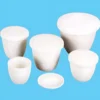
Define the crucible around its working volume, opening, wall profile, support arrangement and thermal process. A useful RFQ should also explain the handled material, heating atmosphere, cleaning method, inspection expectations and any interaction between the ceramic and the process charge.
Key Inquiry Requirements
Geometry for the Process
Start with the operating geometry rather than a nominal capacity alone. The drawing should identify internal volume, mouth opening, outside envelope, base shape, wall transitions and any pouring lip, cover interface or locating feature. Clarify whether the crucible sits in a holder, furnace tray or another support, because contact areas and clearance can influence the usable design envelope and inspection plan.
If the vessel will be loaded manually, by tooling or through an automated sequence, describe that sequence in the RFQ. Include access restrictions, insertion direction, extraction method and any risk of snagging or edge contact. Buyers should distinguish functional dimensions from reference dimensions, mark critical surfaces, and state whether the drawing represents a finished condition, an assembly interface or an initial design concept.
Material and Process Definition
Alumina is a material family, not a complete purchasing specification. Ask the supplier to review the proposed ceramic against the process environment, handled material, heating cycle, atmosphere and cleaning practice. The RFQ should identify whether the crucible is exposed to powders, melts, vapours, reactive residues or repeated thermal handling, while avoiding assumptions that a general material label guarantees compatibility.
Describe the intended duty in measurable, reviewable terms without prescribing unsupported values. Useful information includes the process range, cycle pattern, dwell periods, heating and cooling conditions, load weight, contact chemistry and expected service changes. If these details are not final, label them as design assumptions and request confirmation of what additional evidence or testing would be needed before release.
Features, Edges and Handling
Small geometric details can determine whether a crucible is practical to use. Show corner radii, rim treatment, foot geometry, holes, slots, grooves, identification marks and any required surface transitions on the drawing. State which edges are hand-accessible, which surfaces contact fixtures and which areas must remain clear for loading or inspection. These details also help suppliers identify avoidable stress concentrators and handling risks.
Explain how the part will be packed, moved, installed and removed during production. A fragile rim, unsupported base or tight holder interface may require a different design review than a simple open vessel. Buyers should request inspection photographs or sample records only when relevant to the approval process, and should define how nonconformities, cosmetic marks and edge damage will be assessed.
Inspection and Acceptance
Acceptance criteria should connect directly to the drawing and process purpose. Identify the dimensions that control fit, the surfaces that influence contact or cleanliness, and any visual conditions that would prevent use. A clear inspection plan may include dimensional checks, visual review, packaging verification and agreed documentation, but each item should be tied to a defined requirement rather than a vague quality statement.
Before issuing an RFQ, decide which characteristics are critical, which are informative and which remain open for supplier recommendation. Ask for the proposed inspection method, measurement references and reporting format. If validation is needed, describe the intended evaluation sequence and sample use without treating a trial result as a guaranteed production performance claim.
What to Include in the RFQ
Send a controlled drawing, revision, quantity estimate or usage context, and a short process description. Add the material family, desired component form, mating equipment, loading method, atmosphere, cleaning approach and delivery packaging expectations. Where dimensions or process conditions are undecided, show ranges or decision points clearly and ask the supplier to identify design consequences before preparing a formal quotation.
A useful comparison should examine drawing interpretation, proposed material route, manufacturability, inspection coverage, communication of assumptions and ability to support revisions. Request clarification on exclusions, customer-supplied information and any qualification work separately from the component quotation. This keeps the discussion focused on a defined ceramic vessel rather than an implied inventory item or an unverified performance promise.
Questions Before You Inquire
What information should accompany an alumina crucible drawing?
Provide the internal and external geometry, opening, support interfaces, loading method, handled material, process atmosphere, heating cycle, cleaning practice and inspection requirements. If any item is provisional, identify it as an assumption. This allows the supplier to review manufacturability and compatibility without treating an incomplete sketch as a final specification.
Can the crucible be designed around a holder or furnace tray?
Yes, the holder or tray should be included as controlled interface information. Supply contact locations, clearances, insertion direction, support conditions and any relevant assembly drawings. The supplier can then review the vessel and fixture relationship together, reducing the risk that a nominally correct crucible will bind, tilt or be difficult to remove.
How should crucible acceptance criteria be written?
Separate fit-critical dimensions, process-facing surfaces and cosmetic observations. Define how each will be inspected and what evidence is required for approval. Avoid broad phrases such as high quality unless they are translated into drawing requirements, visual limits, documentation expectations or an agreed validation method.
Does an alumina material label define process compatibility?
No. Compatibility depends on the handled material, atmosphere, thermal cycle, cleaning method, contact time and mechanical handling. Treat alumina as the starting material family, then ask for a technical review of the actual duty. Where uncertainty remains, define a controlled evaluation rather than assuming suitability from the material name alone.
Send a Clear Component Brief
Share your drawing, quantity and application with Porcecore. Mark the requirements that are fixed and the questions that remain open.


Reviews
There are no reviews yet.