

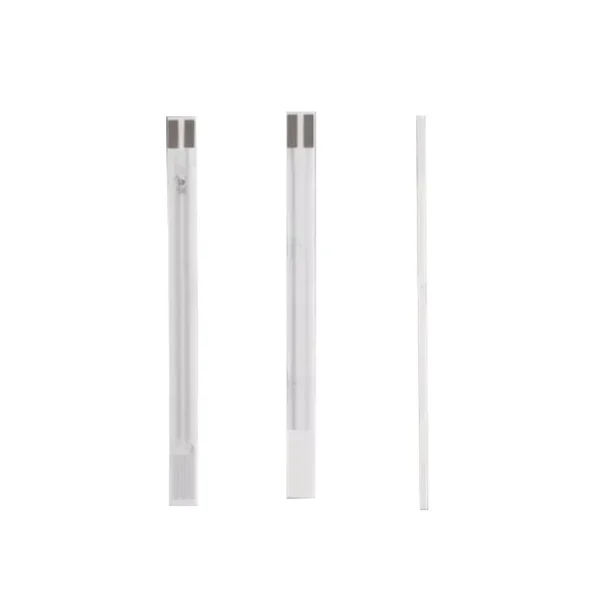

Porcecore supports application-specific discussion for zirconia chips without treating the pictured form as a guaranteed manufactured product. Provide the chip drawing, assembly context and validation needs so the RFQ can address geometry, interfaces, cleanliness, inspection and integration risks.
Key Inquiry Requirements
Sensor role and system context
An automotive sensor chip may act as a ceramic functional element within a probe, control module or exhaust-related assembly, but the exact role must be defined by the customer. Explain what the chip senses or supports, how it is energized or read, and which neighboring parts contact it. The drawing should show the active region, inactive margins, apertures, edges and orientation references.
Automotive use also requires a clear view of the duty cycle and environment. Describe exposure to gases, condensates, vibration, pressure changes, thermal cycling, assembly forces and cleaning or storage conditions as applicable. Do not substitute a generic automotive label for actual requirements. Suppliers need to understand the application envelope before commenting on zirconia grade, geometry or processing.
Material and functional construction
Zirconia is the specified material family, while the final chip may depend on a particular composition, structure and manufacturing route. Ask suppliers to identify the proposed ceramic and any relevant forming, sintering, machining or finishing steps. If electrodes, coatings, contacts or attachments are part of the assembly, define them separately rather than assuming the base ceramic description covers the complete functional stack.
Chip geometry can be sensitive to thickness, cut edges, holes, slots, local transitions and patterned surfaces. Review how the proposed process will control shrinkage, warpage, edge condition and feature placement. If the component is paired with a heater, sensor circuit or protective housing, provide those interface requirements. This makes the RFQ specific enough to compare process assumptions without inventing unverified performance data.
Electrical, thermal and mechanical interfaces
Identify each electrical or thermal interface on the drawing, including contact areas, conductor paths, bonding zones, insulation clearances and orientation marks. State whether the chip is clamped, bonded, brazed, wired or otherwise assembled, and identify the mating materials. If an attachment process is customer-controlled, distinguish the ceramic requirements from the downstream assembly requirements so responsibilities remain clear.
Mechanical definition should include support points, insertion direction, edge clearances and allowable contact regions. Explain whether the chip is mounted in a probe, carrier, tube or protective housing. If vibration or repeated thermal cycling is part of the application, include the relevant loading description and validation boundary. This helps suppliers review fragile features and propose inspection points tied to actual assembly risk.
Inspection and validation planning
Inspection should cover the dimensions and surfaces that affect sensing, heating, assembly and electrical connection. Depending on the design, buyers may need checks for thickness, flatness, feature location, edge condition, coating or contact placement and visible defects. Define datums, measurement access and reporting format. A general statement about precision or quality is not a substitute for an agreed inspection plan.
Separate incoming component acceptance from system validation. The RFQ can request dimensional, material and process documentation for the chip, while the customer validates response, durability or integration in the intended sensor assembly. If functional testing is requested from the supplier, specify the fixture, inputs, outputs and acceptance criteria. This prevents unclear performance expectations from entering the quotation as implied guarantees.
RFQ package for automotive integration
Provide the chip drawing, revision, assembly schematic, sensor role, environmental envelope, attachment method, electrical interface and expected project quantities. Include any vehicle or equipment validation requirements that affect sampling or documentation, while avoiding unsupported assumptions about certifications. Mark critical surfaces, orientation, active regions and keep-out zones. If the design is still under development, identify provisional dimensions and open interfaces.
When comparing suppliers, review the proposed zirconia specification, manufacturing route, functional-layer scope, inspection plan, packaging and change-control process. Ask for comments on edge handling, feature repeatability, assembly compatibility and sample validation. Confirm which tests and documents are included in the quotation. A disciplined RFQ keeps the chip’s technical definition separate from claims that require application-specific validation.
Questions Before You Inquire
What should be included in an RFQ for a zirconia sensor chip?
Include the chip drawing, sensor role, active and inactive regions, electrical or thermal interfaces, attachment method, environmental duty cycle, assembly schematic and inspection needs. Identify mating materials, orientation, critical edges and feature locations. Any requested functional testing should include its fixture and acceptance criteria.
Does the zirconia material family define the complete sensor component?
No. The ceramic base, electrodes, coatings, contacts and attachment layers may have separate requirements. Ask the supplier to state which elements are included in the quoted scope and identify the proposed zirconia specification and manufacturing route. This avoids confusing a ceramic chip with a complete sensor assembly.
How should automotive chip quality be compared between suppliers?
Compare stated material and process assumptions, feature control, edge and surface inspection, interface documentation, sample planning and change control. Functional validation should be evaluated under the customer’s defined assembly and duty cycle. Avoid ranking suppliers on unsupported claims about lifetime, response or certification.
Are automotive certifications or performance guarantees included?
No. The page does not establish certifications, vehicle approvals, guaranteed response, durability, stock or delivery terms. Include any required standards, tests or documentation in the RFQ and confirm responsibility with the supplier. Application-level performance must be validated against the intended assembly and operating conditions.
Send a Clear Component Brief
Share your drawing, quantity and application with Porcecore. Mark the requirements that are fixed and the questions that remain open.


Reviews
There are no reviews yet.