


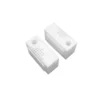
Define the finished shape, machining allowances, working environment and acceptance criteria before comparing zirconia block options. A useful RFQ should make the intended component, critical faces, reference datums and inspection evidence clear.
Key Inquiry Requirements
Block Geometry and Design Intent
A zirconia block may be specified as a simple rectangular blank or as the starting point for a machined structural part. The buyer should identify overall envelope, datum scheme, holes, slots, edge treatments and any surfaces that must remain untouched. Drawings should separate critical dimensions from non-critical features so suppliers can review manufacturability and propose a clear inspection approach.
For shaped blanks, clarify whether the requested dimensions describe the supplied block, a near-net form or a finished machined component. Include section views where hidden features, stepped profiles or asymmetric surfaces matter. This prevents a quotation from being built around an assumed form and helps the supplier identify where machining, grinding or finishing decisions could affect the final fit.
Material Selection and Service Context
Zirconia is selected for applications where the design brief may call for a combination of hardness, wear resistance, strength and toughness. Those words are not a complete specification. The RFQ should describe contact conditions, loading pattern, surrounding materials, cleaning method and any thermal or chemical exposure that could influence the appropriate material grade or design review.
Avoid treating a material family name as a guaranteed performance statement. Ask for the proposed grade, available material documentation and the basis used to compare alternatives. If the block will become a close-fitting or highly loaded part, explain the failure mode being controlled, such as abrasion, chipping, distortion or contamination, so evaluation remains tied to the real application.
Machining, Edges and Surface Requirements
Finished zirconia blocks often depend on controlled machining of faces, edges and functional features. Your drawing should state which surfaces establish alignment, whether edges may be broken, and how corners, chamfers or radii are to be interpreted. Where surface condition affects sealing, sliding or particle control, specify the relevant requirement instead of relying on a broad phrase such as smooth finish.
Ask suppliers to distinguish achievable as-machined conditions from any additional lapping, polishing or edge treatment. The quotation should identify assumptions about stock allowance and finishing sequence. This makes competing offers easier to compare and helps prevent an apparently lower-cost option from omitting work needed to produce the functional geometry.
Inspection and Documentation
Inspection planning should follow the drawing rather than a generic checklist. Identify critical dimensions, flatness or parallelism requirements if applicable, feature location references, visual criteria and the records needed with the shipment. A supplier can then explain which measurements are practical for the proposed geometry and whether inspection access changes the recommended block design.
For technical-ceramic sourcing, request material identification and a dimension report matched to the agreed drawing revision. If traceability, sample approval or a first-article review matters, state it during quotation. These requests are procurement controls, not assumptions about a supplier’s standard process, and should be confirmed in writing before order placement.
Building a Comparable RFQ
A strong zirconia block RFQ combines the drawing, intended use, annual or project context, required documentation and a concise list of decision-critical features. Include the preferred units, revision status, packaging concerns and whether the quoted item is a blank or a finished component. This gives each supplier the same basis for review without implying inventory or a preset delivery promise.
Invite the supplier to list exclusions, technical questions, material alternatives and inspection limitations with the quotation. Compare proposals by confirmed scope, drawing interpretation, evidence offered and risk to the application. Before approval, reconcile every open point, including geometry, material designation, finish, packaging and acceptance records, in the controlled purchasing documents.
Questions Before You Inquire
What should be included in an RFQ for zirconia ceramic blocks?
Provide the latest drawing, material family, finished or blank status, critical dimensions, datums, surface requirements, application conditions and inspection needs. Also state whether sample approval, traceability, material documentation or special packaging is required. This gives suppliers a consistent basis for technical review and quotation.
Are zirconia blocks supplied as blanks or finished parts?
Either arrangement may be considered, but it must be stated clearly in the RFQ. A blank requires allowance and downstream machining decisions, while a finished part requires controlled geometry and inspection. Ask each supplier to identify the proposed form, included processing and any assumptions affecting comparison.
How should zirconia grades be compared?
Compare the proposed grade against the actual failure mode and service environment, not against a material name alone. Request the supplier’s material designation, supporting documentation and rationale for selection. Review wear, loading, thermal, chemical and contamination considerations together with the component’s geometry.
What inspection information should accompany the quotation?
Ask for a proposed inspection plan covering critical dimensions, reference datums, visual condition and any surface or feature requirements shown on the drawing. If reports or traceability are needed, specify them before quotation. Suppliers should state measurement limits, exclusions and the records they can provide.
Send a Clear Component Brief
Share your drawing, quantity and application with Porcecore. Mark the requirements that are fixed and the questions that remain open.


Reviews
There are no reviews yet.