
Ceramic Extrusion for Drawing-Led Technical Components
Align technical ceramic components and custom ceramic components around geometry, material grade and acceptance criteria before a project-specific quotation.
Reference Components for Ceramic Extrusion Development
















Ceramic Extrusion: Distinctive Buyer Considerations
Evaluate continuous profiles, repeatable cross-sections, material options and project-specific geometry requirements before requesting a drawing-led quotation.
Continuous Profile Geometry
Ceramic extrusion is suited to continuous profiles with repeatable cross-sections; confirm wall thickness, length, tolerances, transitions and other geometry limits against the project drawing.
Material Grade Selection
Material options may include oxide, nitride, carbide and specialty ceramics, but the suitable grade depends on service temperature, chemistry, electrical needs and confirmed acceptance requirements.
Process Route Alignment
The forming route, including body preparation, de-airing, die selection, drying and firing, should be reviewed with the intended profile and project-specific dimensional expectations.
Functional Surface Requirements
Identify mating surfaces, sealing areas, holes, channels and finish-critical features early, so the ceramic extrusion discussion connects functional interfaces with manufacturable geometry and inspection priorities.
Inspection Evidence Planning
Define inspection evidence before quotation, including critical dimensions, tolerances, visual criteria, test expectations and documentation needed for engineering approval or incoming quality review.
Application And Quantity
Quantity, operating environment and usage conditions help frame the quotation; share temperature, load, atmosphere, duty cycle, quantity and current drawing revision for informed review.
Related Ceramic Capabilities and Component Pages
Compare manufacturing routes, material families, applications and component formats before sending a drawing-led inquiry for project-specific requirements.

Ceramic Manufacturing Capabilities
Review ceramic manufacturing capabilities across extrusion and adjacent forming routes. Compare processes according to component geometry, dimensions, mating surfaces, material grade and inspection expectations, then contact Porcecore with the drawing revision, quantity and service conditions for a project-specific quotation discussion.
Discuss Your Ceramic Part
Ceramic Solutions by Industry
Explore advanced ceramics applications by industry and connect the component to its operating environment. Application context helps clarify temperature, electrical, wear, chemical or dimensional requirements before selecting a manufacturing route, material family or acceptance criteria.
Discuss Your Ceramic Part
Advanced Ceramic Materials
Compare advanced ceramic materials including alumina, zirconia, silicon carbide, silicon nitride, aluminum nitride, boron nitride and other specialty ceramics. Use the material family as a starting point, then confirm grade-specific properties, geometry, availability and documentation for the intended application.
Discuss Your Ceramic Part
Technical Ceramic Products
Browse industrial ceramic parts by familiar component forms such as tubes, rods, rings, substrates and custom ceramic components. Product illustrations indicate possible formats, while dimensions, tolerances, surfaces, material designation and inspection requirements require confirmation for each project.
Discuss Your Ceramic Part
Technical Ceramic Resources
Use the technical ceramics guide to clarify material selection, component requirements and quotation preparation. Learn which details to include, such as drawing revision, quantity, service conditions and acceptance criteria, then email info@zlrsmaterials.com or contact Porcecore by WhatsApp at +86 130 6482 5920.
Discuss Your Ceramic PartPorcecore’s Approach to Ceramic Extrusion
Founded by Andy Yuan, Porcecore helps industrial procurement teams, engineers, equipment builders and ceramic distributors begin more useful technical ceramic conversations. Our scope covers oxide, nitride, carbide and specialty ceramics, with component requirements considered alongside the application rather than reduced to a material name or generic product category.
For ceramic extrusion projects, we connect the part to its intended job through drawing-led communication. Geometry, mating surfaces, operating conditions, material grade, quantity and acceptance criteria help establish a practical quotation basis. This application-first approach makes open questions visible and supports clearer decisions about custom tubes, rods, rings, substrates and other components.

Key Ceramic Extrusion Design and Quality Considerations
Confirm the Material Grade
Ceramic extrusion performance depends on the selected material family and project-specific grade. Share the known designation, purity or additive requirements, and relevant thermal, electrical, chemical or mechanical priorities so Porcecore can distinguish confirmed specifications from options requiring technical review.
- Material family and grade designation
- Thermal, electrical or chemical requirements
- Purity, additives or formulation constraints
- Required technical documentation

Define Profile Geometry
A drawing should show the profile that ceramic extrusion must produce, including wall sections, channels, radii, overall length and critical transitions. Clear geometry helps identify forming questions early and provides a practical basis for discussing tooling, processing feasibility and quotation scope.
- Cross-section and overall dimensions
- Wall thickness, channels and radii
- Length and cut-end requirements
- Features that affect forming or handling

Identify Mating Surfaces
Surfaces that assemble with another part deserve separate attention from non-functional exterior surfaces. Mark fits, contact areas, sealing interfaces, locating features and dimensions that control assembly. These details help align ceramic extrusion requirements with the surrounding equipment and its actual installation conditions.
- Fits, bores and contact surfaces
- Sealing or electrical interfaces
- Locating features and assembly datums
- Surface finish or flatness needs

Set Tolerances and Inspection
Dimensional tolerances should reflect how the component is used, inspected and accepted—not simply what is convenient to list. Include operating conditions, inspection methods, sampling expectations and acceptance criteria so the quotation discussion addresses the requirements that matter for your project.
- Critical dimensional tolerances
- Operating temperature, load or environment
- Inspection method and reporting needs
- Acceptance criteria and approval documents

Ceramic Extrusion vs. Adjacent Ceramic Forming Methods
Compare process fit before confirming geometry, material grade, tooling and acceptance requirements.
← Swipe left or right to view →
Ceramic Extrusion Production Flow
A drawing-led ceramic extrusion path that connects material preparation, profile control, thermal processing and inspection to project-specific requirements.
Material and Feed Preparation
Confirm the ceramic family, grade, particle preparation, moisture condition and batch consistency against the drawing, application environment and project acceptance requirements.
Die and Profile Definition
Review cross-section, wall thickness, mating surfaces, tolerances and tooling assumptions before ceramic extrusion begins, separating essential dimensions from buyer preferences.
Extrusion and In-Process Control
Run ceramic extrusion with attention to feed behavior, de-airing, pressure, throughput and profile continuity; record observations that may influence downstream dimensional stability.
Cutting and Green Handling
Cut continuous profiles to defined lengths and handle green parts carefully, protecting edges, surfaces and reference features before drying begins.
Drying and Firing Control
Manage drying and firing according to the material system and geometry, recognizing that shrinkage, gradients and support conditions can affect final form.
Inspection and Release Review
Inspect dimensions, surfaces and agreed documentation against the project criteria, then clarify open points before quotation, approval or repeat production.
How to Order a Ceramic Extrusion Component
Provide the details that connect ceramic extrusion to your geometry, service conditions and acceptance requirements.
Share the Current Drawing
Send the current drawing revision, known material designation, target quantity and any existing notes that define the ceramic extrusion component.
Define Service Conditions
Describe temperature, electrical, mechanical, chemical or other operating conditions so material and geometry discussions reflect the component’s actual service environment.
Identify Critical Surfaces
Mark mating surfaces, assembly dimensions, tolerances and interfaces that determine fit, alignment or sealing, separating essential requirements from preferred details.
Confirm Acceptance Requirements
List inspection criteria, test reports, certificates or other documentation required for approval, then confirm open questions before quotation and production decisions.
Ceramic Extrusion Project Outcomes from Engineering Buyers
Customer story slot: document how one drawing revision, material designation, quantity, service conditions and acceptance criteria clarified the quotation discussion before any ceramic extrusion requirement was treated as confirmed.
Customer story slot: record how an engineering team compared tube, rod, ring or specialty profile options against mating surfaces, operating conditions and assembly dimensions to identify a suitable ceramic extrusion direction.
Customer story slot: capture whether drawing-led communication helped procurement and engineering align on grade, geometry, tolerances, documentation and approval questions before discussing delivery or commercial terms.
Ceramic Extrusion FAQ for Industrial Buyers
Clear answers for evaluating profiles, materials, tooling, quantities, sampling and drawing-led quotation requirements.
What component profiles are suitable for ceramic extrusion?
How does ceramic extrusion material selection work?
What should a ceramic extrusion drawing include?
Can Porcecore confirm tolerances and functional surfaces before quotation?
Are samples or prototype quantities available for ceramic extrusion projects?
How are ceramic extrusion tooling and production quantities evaluated?
What lead-time information should buyers request for ceramic extrusion?
What inspection, packaging and application details should accompany an RFQ?
The Complete Buyer’s Guide to ceramic extrusion
Use this decision framework to match ceramic extrusion methods, materials, quality controls, and suppliers to your application—while comparing customization, cost, lead-time, and common procurement risks before requesting production samples or quotes.
1. What Is Ceramic Extrusion?
One continuous forming operation defines ceramic extrusion: a plasticized ceramic body is pushed through a shaped die to produce a repeatable cross-section. The process suits components whose length can be produced from one profile, including rods, tubes, honeycombs, and other linear sections. com/blog/ceramic-extrusion-process-manufacturing-scale
Six basic stages are feed preparation, vacuum de-airing, die forming, cutting, controlled drying, and firing. De-airing removes trapped air that can contribute to laminations or cracking, while drying and firing convert the formed body into its finished ceramic state; actual parameters depend on material, geometry, and grade. Four common alternatives serve different geometries: pressing forms discrete parts in a mold, injection molding produces shaped parts from a flowable feedstock, and machining removes material after consolidation.
2. Ceramic Extrusion Evolution and History
19th-century clay and refractory profile production established extrusion as an efficient way to make long, uniform sections. Early progress centered on workable bodies, sturdier presses and replaceable dies; these developments reduced manual variation and made repeat profiles economically practical. 20th-century precision tooling, controlled mixing and vacuum de-airing improved material consistency and reduced laminations, cracking and dimensional drift. Controlled, increasingly automated drying further stabilized moisture removal, allowing tighter process windows as technical ceramics replaced simpler clay bodies. com/blog/ceramic-extrusion-process-manufacturing-scale
Late-20th-century honeycomb dies extended extrusion into thin-wall structures with thousands of parallel channels, supporting high-throughput substrates and filters.
3. Types of Ceramic Extrusion
Constant cross-sections make ceramic extrusion suitable for continuous rods, tubes, hollow sections, and profiles. com/capabilities/extrusion.
Solid Rods And Tubes
Solid rods suit electrical supports, spacers, and wear parts; tubes and hollow sections suit insulation, fluid routing, and sensor protection.
- Specify material grade, diameter, bore, wall, length, and end condition.
- Ask which mating surfaces, tolerances, and inspection records control assembly.
Cellular And Insulating Forms
Honeycomb substrates use many parallel channels for catalytic or filtration assemblies, while insulating profiles use constant sections around conductors or hardware.
- Confirm channel count, cell geometry, allowable blockage, and thermal duty.
- For profiles, identify fit surfaces, dielectric requirements, and permissible distortion.
Refractory And Wear Shapes
Refractory and wear-resistant shapes use repeatable sections for furnace supports, linings, guides, and abrasive-contact components.
- Ask whether the geometry remains constant enough for extrusion tooling.
- State load, abrasion, chemistry, mating interfaces, quantity, and acceptance criteria.
4. Ceramic Extrusion Materials and Feedstocks
Ceramic extrusion feedstocks balance thermal, electrical, mechanical, chemical and cost requirements against dieability.
| Material | Useful properties | Likely applications | Procurement questions |
|---|---|---|---|
| Alumina | Electrical insulation; wear resistance | Insulators, tubes, guides | Grade, purity, dielectric target? |
| Cordierite | Low expansion; thermal shock | Kiln furniture, supports | Thermal-shock and shrinkage data? |
| Silicon carbide | Thermal conductivity; wear | Refractory profiles, heat parts | Open porosity and oxidation limit? |
| Zirconia | Toughness; chemical resistance | Wear parts, insulators | Stabilizer, toughness and cost? |
| Steatite | Electrical insulation; economical | Insulators, spacers | Frequency, strength and tolerance? |
| Other bodies | Nitride, carbide or specialty performance | Application-specific profiles | Grade availability and documentation? |
Feedstock Control
12–28% moisture is a reported working range, but geometry and mineralogy govern the target. Particle-size distribution, binders, plasticizers, mixing uniformity and aging time affect plasticity, tearing and dimensional stability. Vacuum de-airing removes entrapped air that can cause laminations, cracking or firing defects.
Material Selection
Alumina and steatite commonly support electrical insulation; cordierite favors low thermal expansion, while silicon carbide favors thermal conductivity and wear resistance. Zirconia offers toughness, but can increase cost and require tighter process control. Treat these as candidate families, not stocked Porcecore offerings.
Procurement Questions
A drawing should identify mating surfaces, tolerances, wall thickness, firing temperature, dielectric or thermal targets, and inspection requirements. Ask whether the proposed body is optimized for continuous profiles, tubes, rods or honeycomb sections.
5. Ceramic Extrusion Customization and Decoration
Customization begins with the cross-section that must run consistently through the die.
Profile And Die Geometry
One die can establish wall thickness, channel layout, ribs, holes, and the continuous profile; cut length is usually set afterward. End features such as slots, tapers, and notches may require trimming or machining. Specify minimum walls, corner radii, channel symmetry, and critical datums on the drawing.
Surface And Appearance
Four appearance choices should be separated: as-extruded finish, color, glazing, and marking. Surface texture may reflect die condition and feed behavior, while glaze or decorative color normally adds a later process with its own coverage and fit considerations. Marking can identify orientation, lot, or part number, but confirm legibility after firing.
Secondary Operations And Tradeoffs
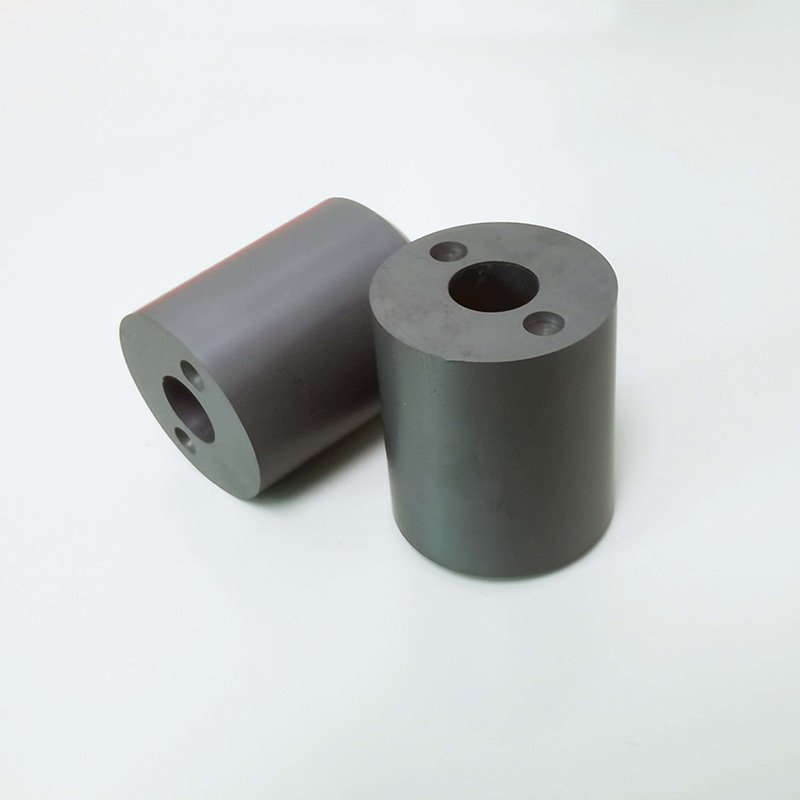
Post-fired grinding, drilling, slotting, and end finishing can achieve features that are impractical in the die, but they add handling, tolerance limits, inspection, yield risk, and lead time. Tooling cost also rises with complex inserts and unbalanced sections. A repeatable program keeps essential geometry as-extruded and reserves machining for functional interfaces.
6. Key Ceramic Extrusion Construction Quality Elements
Stable ceramic extrusion depends on controlling the body, machine, tooling, and thermal cycle as one process.
Body And Machine Control
12–28% moisture may be typical, depending on material and geometry; verify batch consistency, mixing uniformity, aging, and moisture records. Vacuum level and stable pressure reduce entrapped air, laminations, cracks, bloating, and density gradients. Die alignment, flow balance, and wear checks protect section geometry. com/blog/ceramic-extrusion-process-manufacturing-scale.
Drying, Firing, And Inspection
Uniform drying prevents stress-related cracking and warpage; the firing profile must be controlled against the approved material and part specification. Inspect dimensions, density, porosity, surface defects, and critical mating surfaces using defined methods and sampling.
Traceability Evidence
Lot-level records should link raw materials, moisture condition, extrusion settings, die identity, inspection results, and firing batch to the shipped component. This makes recurring defects diagnosable rather than anecdotal.
7. How to Choose a Ceramic Extrusion Manufacturer
A 3-part supplier review links ceramic extrusion capability to your actual drawing, service conditions, and approval process.
Verify Technical Capability
Material expertise should cover the specified ceramic family, feedstock behavior, tooling, and design-for-extrusion guidance. Check prototype-to-volume controls, dimensional limits, inspection methods, and relevant electrical, thermal, or industrial applications. com/capabilities/extrusion. Confirm comparable evidence directly.
- Ask for capability ranges and sample inspection reports.
- Separate verified equipment facts from unconfirmed assumptions.
Review Production Assurance
A complete review covers transition controls from prototype to volume, capacity, lead times, packaging, traceability, and documentation. Require measurement methods, certificates, test results, revision control, and nonconformance procedures before approval. Confirm which tolerances, surface conditions, quantities, and acceptance criteria the supplier can contractually support.
- Request capacity by quantity tier and target date.
- Define packaging and transit-protection requirements.
Build A Complete RFQ
The RFQ should include the current drawing revision, critical tolerances, material or grade requirement, quantities, testing, target dates, and acceptance criteria. Identify mating surfaces, assembly dimensions, service conditions, and required documentation. Porcecore asks buyers to connect the part with its job and open questions. com for a concrete quotation discussion.
- Include drawings, quantities, testing, and target dates.
- Mark critical dimensions and approval documents.
8. Common Ceramic Extrusion Buying Mistakes
Eight preventable errors can turn a workable ceramic extrusion inquiry into rework, delayed approval, or an unusable part.
Tolerance, Shrinkage, And Process
05 mm without process context is a warning sign; the commercial consequence is rejected parts or an inflated price. State critical dimensions, datums, inspection method, and function. Firing shrinkage and drying gradients can distort long profiles or thin walls.
Material, Surface, And Validation
A material name alone—such as alumina or silicon carbide—does not define grade, porosity, strength, or compatibility. Specify service conditions and grade requirements, then confirm open points with Porcecore. Unstated surface finish, edge-break, or chipping limits create assembly failures; skipping prototypes multiplies risk.
Quote, Inspection, And Packaging
Three quotes are not comparable when tooling, yield, finishing, documentation, lead time, or quantity assumptions differ. Normalize the scope line by line before selecting a supplier. A missing inspection plan or packaging specification can cause damage, disputes, and approval delays.
9. Steps to Launch a Ceramic Extrusion Program
A seven-gate launch keeps ceramic extrusion decisions tied to the part, service conditions, and acceptance criteria.
Define The Requirement
Gate 1 records function, operating temperature, loads, chemistry, mating surfaces, critical dimensions, quantity, and inspection expectations. Engineering approves the preliminary geometry and material shortlist; procurement confirms forecast, target quantities, and commercial scope. Gate 2 converts the concept into a controlled drawing, material designation, tolerance scheme, and manufacturability review.
Prove The Process
Gate 3 approves die design, feedstock assumptions, and tooling responsibilities from the reviewed drawing. The supplier should document open risks, trial conditions, revision control, and tooling ownership before fabrication begins. Gate 4 covers prototype or pilot runs, dimensional inspection, visual checks, and application testing.
Release Repeat Orders
Gate 5 approves representative samples against the signed drawing, material documentation, inspection plan, and test report. Keep the approved sample reference, certificate requirements, packaging specification, and deviation disposition with the purchase file. Gate 6 releases production after capacity, lead time, batch traceability, incoming inspection, and reorder triggers are confirmed.
10. Ceramic Extrusion Pricing and Cost Factors
1 drawing revision should define the material grade, formulation basis, profile, mating dimensions, tolerances, inspection, packaging, Incoterm and destination before proposals are compared. Cost normally combines raw material and additives, die and tooling, setup, scrap and yield, drying, firing, secondary machining, inspection, packaging and freight. 3 quote assumptions should be standardized: annual volume, release quantity, forecast certainty, acceptable cosmetic criteria, test frequency, documentation and delivery window.
| Quantity Tier | Tooling / Setup Cost | Estimated Unit-Cost Driver | Lead-Time Consideration | Quote Assumptions |
|---|---|---|---|---|
| Prototype | Usually highest allocation | Machining, setup, scrap | Tool design and trials | One drawing; inspection defined |
| Low volume | Spread across few pieces | Material, firing, inspection | Batch scheduling | Release quantity and packaging |
| Mid volume | Amortized over releases | Yield, machining, freight | Capacity reservation | Forecast and acceptance criteria |
| Production | Lowest allocation per piece | Material, yield, throughput | Blanket schedule possible | Annual volume and Incoterm |
Discuss Your Ceramic Extrusion Requirement
Email a drawing or describe your technical ceramic component, operating environment and acceptance criteria for a project-specific quotation conversation.