

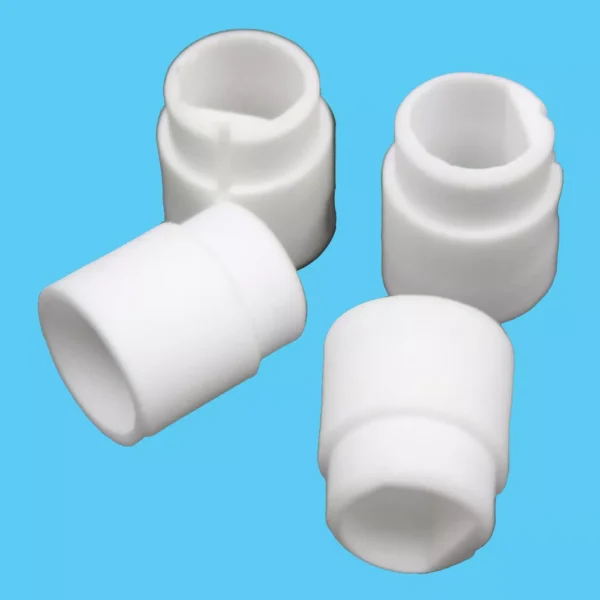


A bushing may look simple but often controls alignment, electrical isolation, clearance, or wear at a critical interface. Build the RFQ around the mating parts, installation method, service environment, and inspection characteristics that determine whether the finished part is usable.
Key Inquiry Requirements
Define the bushing’s role
Identify whether the alumina bushing acts as an electrical insulator, a spacer, a guide, a sleeve, or a bearing-related interface. One part name can cover very different designs. Explain the mating shaft or fastener, housing, load path, movement, and whether the bore or outside surface is the primary functional reference.
Provide an assembly section showing retention, insertion direction, clearances, shoulders, washers, seals, and neighboring materials. If the bushing is pressed, clamped, bonded, or captured, describe that concept. Installation details can affect edge loading and stress, so they belong in the technical inquiry rather than being left to interpretation.
Control fits and interfaces
The bore and outside diameter should be specified in relation to their mating parts, not as isolated numbers. Define datum axes, fit intent, insertion method, rotation or sliding requirements, and any shoulder or flange that establishes position. If a clearance must remain after assembly, state how it will be checked and under what condition.
Describe edge breaks, chamfers, radii, grooves, slots, and end faces that support assembly or prevent damage. Identify surfaces subject to contact, sealing, electrical isolation, or alignment. A supplier can then distinguish cosmetic geometry from characteristics that need controlled processing and documented inspection.
Material and service environment
For alumina bushings, describe the surrounding environment and the reason alumina was selected. Relevant context may include electrical potential, contact materials, mechanical loading, vibration, chemical exposure, cleaning, atmosphere, and repeated installation. Avoid relying on a general statement such as high temperature or corrosion resistant when the actual service conditions can be described.
If the design is sensitive to thermal expansion, preload, or dissimilar-material contact, provide the relevant assembly relationships and test assumptions. Ask suppliers to state the proposed material designation, processing route, finish, and any limitations that could affect the bushing’s fit or durability in the intended assembly.
Inspect the critical surfaces
Inspection should focus on the bore, outside diameter, coaxial relationship, shoulder location, end-face condition, and edge integrity where these characteristics control assembly. Consider how the supplier will measure small bores or fragile edges, and whether inspection occurs before or after cleaning. The drawing should identify acceptance limits rather than relying on an undefined good fit.
For insulating applications, define any required electrical checks and their test conditions only when they are part of the acceptance plan. For guiding or bearing-related applications, distinguish dimensional inspection from assembly testing. This prevents a supplier report from being mistaken for validation of the complete mechanism.
Make the RFQ comparison-ready
Include the bushing drawing, mating-part drawings, assembly section, installation process, service environment, expected duty pattern, cleaning method, and inspection requirements. Explain the consequence of failure, such as loss of alignment, unwanted contact, leakage path, binding, or assembly damage. This helps prioritize the characteristics that deserve technical review.
Request quotations that identify material and process assumptions, included inspection, packaging, traceability, and open design questions. If alternative grades, finishes, or manufacturing routes may be considered, require written approval before substitution. A structured response makes it easier to compare technical suitability without assuming stock or standard dimensions.
Questions Before You Inquire
What details are essential for an alumina bushing RFQ?
Provide bore and outside-diameter requirements, mating-part drawings, fit intent, shoulder or flange geometry, installation method, load or movement, service environment, cleaning, and inspection needs. An assembly section is especially useful because it shows retention, clearances, and the surfaces that actually control function.
How should bushing fits be communicated?
Describe the mating parts, insertion or retention method, desired sliding or interference relationship, rotation requirement, and the condition in which fit will be checked. Define datums and acceptance limits on the drawing. Avoid using only informal terms such as close fit or free fit.
What alumina material information should be requested?
Ask for the proposed material designation, processing route, relevant technical data, traceability approach, finish, and limitations affecting the application. The correct specification depends on mechanical, electrical, chemical, and assembly conditions. Do not assume that every alumina bushing uses the same material or process.
Are electrical tests needed for every alumina bushing?
No. Electrical checks should be included when the bushing’s insulating function is part of the purchase requirement. Define the test condition and acceptance basis. For guide or spacer applications, dimensional, surface, edge, and assembly-related checks may be more relevant than an electrical test.
Send a Clear Component Brief
Share your drawing, quantity and application with Porcecore. Mark the requirements that are fixed and the questions that remain open.



Reviews
There are no reviews yet.