
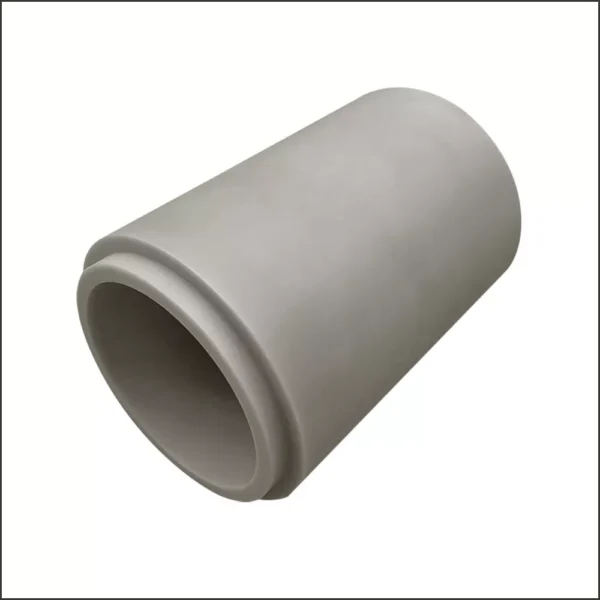
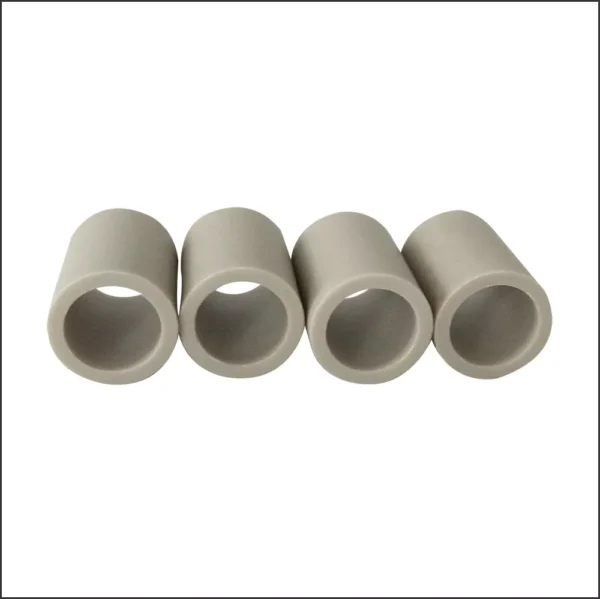


Use this page to frame an RFQ for an aluminum nitride tube. Share the drawing, service environment, inspection expectations and any assembly interfaces so candidate production routes can be compared on relevant evidence.
Key Inquiry Requirements
Tube geometry and functional intent
An aluminum nitride tube can serve as a precise insulating, protective or process-facing component, but its suitability depends on the complete geometry rather than the material name alone. Define the bore, outside profile, wall transitions, end conditions and any stepped or flanged features on the drawing. Identify which surfaces locate, seal, support or remain exposed, because each may require a different inspection focus.
For an RFQ, distinguish nominal dimensions from controlling dimensions and mark datum references clearly. State whether the tube is used as a sleeve, passage, support or barrier, and explain how it interfaces with mating hardware. If the design includes openings, grooves or thin sections, include section views and edge details so suppliers can review manufacturability without assuming an undocumented standard form.
Material and processing questions
Ask suppliers to confirm the proposed aluminum nitride material route and the resulting relationship between composition, microstructure and finished geometry. The RFQ should request the applicable material designation, available technical data and any limitations relevant to machining, handling or joining. Avoid treating a generic material label as a complete specification; the selected grade and process should be traceable to the intended use.
Where post-forming machining is required, identify which faces may be machined and which must remain as-formed. Request information on achievable feature definition, edge treatment and surface condition for the actual geometry. If the tube will be assembled with metals, ceramics or seals, describe the contact arrangement and thermal or mechanical constraints so the quotation addresses the component as an engineered interface.
Inspection and acceptance planning
A useful inspection plan should connect each critical feature to a measurement method and acceptance rule. For tubes, consider bore continuity, concentricity relationships, wall uniformity, end squareness, cracks, chips and visible surface anomalies. The buyer should decide which characteristics require full inspection, sampling or documented review, then include those decisions with the drawing instead of leaving them implicit.
Request representative inspection records or a proposed control plan when the application is sensitive to alignment or sealing. Clarify how the supplier will identify the part, preserve traceability and report nonconforming observations. If cleanliness, packaging or particulate control matters, state the handling and packaging expectation in the RFQ so it can be evaluated alongside dimensional and visual evidence.
Application-specific comparison
Compare quotations against the actual operating context: temperature cycling, electrical isolation, chemical exposure, pressure differential, vibration and contact with neighboring materials may each influence the design review. The buyer should provide the relevant duty cycle and boundary conditions without asking a supplier to infer them from the tube shape. This allows competing proposals to be judged on documented suitability rather than broad material claims.
For a fair technical comparison, request comments on drawing assumptions, proposed process steps, inspection coverage and unresolved risks. A supplier may recommend a geometry adjustment, machining allowance or alternative finishing sequence, but such changes should be shown against the approved design. Keep the comparison focused on evidence tied to the specific tube, not on generic capability statements.
What to include in the RFQ
Send a controlled drawing with revision status, material family, quantity scenario and intended use. Add assembly drawings where the tube sits inside a larger system, together with critical interface dimensions, datum scheme and any prohibited changes. State whether the quotation is for a prototype, qualification batch or repeat supply, while avoiding assumptions about stock, minimum order, price or delivery until a supplier responds.
Ask for a written quotation that separates technical assumptions from commercial terms. Useful responses identify the proposed material, manufacturing route, inspection scope, packaging basis and exceptions to the drawing. If questions remain about a feature, require them before approval. This creates a clean record for design review and makes later samples easier to compare with the quoted configuration.
Questions Before You Inquire
What drawing information should accompany an aluminum nitride tube RFQ?
Provide the controlled part drawing, section views, datum scheme, mating interfaces and critical dimensions. Include bore and outside geometry, end conditions, edge requirements and any service-related constraints. An assembly drawing is useful when alignment, sealing, insulation or contact with other materials affects the tube’s function.
Can a tube quotation be based only on material and length?
Usually not for a technical-ceramic component. Material and length do not define wall relationships, bore quality, end geometry, inspection needs or assembly behavior. A supplier can discuss feasibility from preliminary information, but a meaningful comparison requires the drawing and the application conditions that govern the critical features.
Which inspection topics are commonly relevant for ceramic tubes?
Buyers commonly review bore continuity, concentricity, wall consistency, end squareness, chips, cracks and surface condition. The appropriate scope depends on function and risk. The RFQ should identify critical characteristics, preferred measurement evidence, sampling expectations and packaging controls rather than relying on an undefined general inspection statement.
How should mating parts be described in the RFQ?
Show the mating hardware or provide its interface dimensions, materials and assembly method. Explain whether the tube locates, seals, insulates, protects or carries a load. Also identify movement, thermal cycling, clearances and contact restrictions. This context helps suppliers assess geometry and highlight assumptions before quotation.
Send a Clear Component Brief
Share your drawing, quantity and application with Porcecore. Mark the requirements that are fixed and the questions that remain open.


Reviews
There are no reviews yet.