
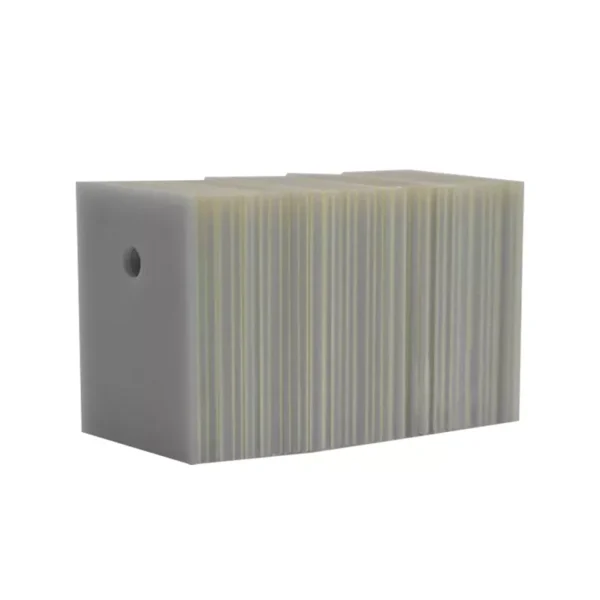

Define the substrate as part of the complete thermal and electrical stack. Confirm material family, thickness strategy, metallization or attachment route, mounting envelope, and acceptance evidence rather than relying on a generic substrate label or a reference image.
Key Inquiry Requirements
Define the Substrate’s Role in the Stack
An aluminum nitride substrate should be specified within the assembly stack it will join. Show the semiconductor, heater, sensor, power device, heat spreader, baseplate, fasteners, and insulation boundaries where relevant. Identify which surfaces carry electrical features, which faces contact thermal interfaces, and which edges must remain clear for mounting, routing, or inspection.
Describe the operating duty in functional terms: electrical isolation needs, heat-flow path, switching or cycling behavior, environmental exposure, cleaning, and attachment process. Avoid inserting unverified numeric claims into the initial request. The supplier needs the complete context to review whether the proposed ceramic family, thickness, surface condition, and metallization approach fit the assembly.
Lock the Material Identity and Grade
The supplied topic identifies aluminum nitride, while the source metadata uses a different material label. Resolve that discrepancy before quotation by naming the intended material family in the controlled drawing and asking the supplier to confirm the proposed grade. Include restrictions on additives, surface treatments, or alternative ceramics if substitution would affect the assembly.
Material selection should be linked to measurable requirements and test methods. State which characteristics are critical for design approval, such as thermal path behavior, dielectric function, mechanical integrity, dimensional stability, or chemical compatibility, without assuming values. Request the supplier’s available evidence and explain how material identity will be traced to the supplied lot or production record.
Drawing Features and Metallization
Provide the substrate outline, thickness, holes, slots, corner treatments, edge conditions, datum scheme, and critical surface relationships. Add conductor patterns, pads, isolation gaps, vias, or metallized regions in the appropriate drawing or fabrication data. Identify features that are functional, cosmetic, reference-only, or subject to later attachment so review effort is focused on the actual assembly risks.
Metallization and attachment should be described as an interface system, not just a coating name. Clarify conductor material expectations, pattern registration, adhesion or joining requirements, finish, soldering or bonding process, and any masking boundaries. Ask the supplier to identify design limits, process assumptions, and inspection access for features that may be hidden after assembly.
Thermal, Electrical, and Mechanical Inspection
Inspection planning should connect directly to the substrate’s use. Define dimensional checks for outline, thickness, holes, and flatness where they affect mounting. Specify how surface defects, edge chips, metallized pattern registration, isolation gaps, and visible joining concerns will be evaluated. If thermal or electrical characterization is required, state the fixture, conditioning, method, and reporting expectations before quotation.
A substrate may pass a visual check yet fail during assembly if warpage, surface condition, or pattern location is not controlled. Provide mating-part drawings and process stack-up information where possible. Ask for sample reports, lot traceability, and nonconformance handling in the quotation response, while recognizing that the final inspection scope must be agreed for the specific design.
Make the RFQ Easy to Review
Send a controlled drawing, conductor artwork or data, assembly stack-up, material statement, application brief, and expected evaluation stage. Identify whether the supplier should quote bare ceramic, metallized substrate, or a later assembled condition. Include quantity scenarios for commercial comparison without implying stock, minimum order, or a fixed production route.
Request a response that lists proposed material grade, process route, critical assumptions, inspectable characteristics, documentation, and open engineering questions. Ask specifically about any feature requiring a design change, special handling, or destructive verification. This creates a useful technical comparison and reduces the chance that two quotations describe materially different substrate configurations.
Questions Before You Inquire
What should an aluminum nitride substrate RFQ include?
Include the controlled outline drawing, thickness and datum scheme, holes or edge features, metallization artwork, assembly stack-up, thermal and electrical role, attachment process, environment, inspection needs, and documentation expectations. State the intended material family explicitly and resolve any conflicting source or legacy labels before technical review.
Is aluminum nitride automatically suitable for every thermal substrate?
No. Suitability depends on the complete thermal, electrical, mechanical, chemical, and assembly context. Confirm the proposed grade, surface condition, metallization, attachment route, and required evidence against the actual design. A material name by itself does not establish compatibility, reliability, or guaranteed performance.
Should metallization be included in the same quotation?
State clearly whether the request covers bare ceramic, metallized substrates, or a later assembled condition. If metallization is included, provide artwork, conductor and finish expectations, attachment process, masking boundaries, and inspection criteria. This prevents suppliers from quoting different process scopes under the same substrate name.
How are substrate flatness and surface defects evaluated?
Define the datum, measurement method, inspection condition, and the surfaces that affect mounting or thermal contact. Describe acceptable edge damage, visual defects, and metallization anomalies in the drawing or quality specification. Ask the supplier to identify measurement limits and reporting formats rather than assuming a generic ceramic inspection standard.
Send a Clear Component Brief
Share your drawing, quantity and application with Porcecore. Mark the requirements that are fixed and the questions that remain open.



Reviews
There are no reviews yet.