
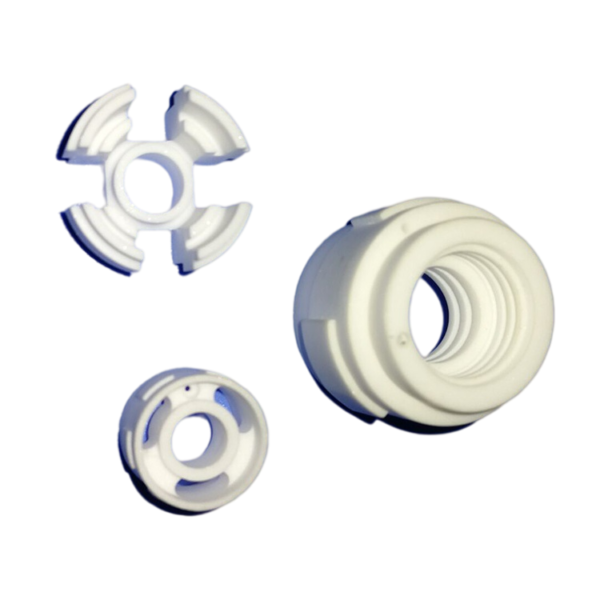


Use this page to prepare an RFQ for a beryllium oxide ring. Define the ring profile, mating surfaces, assembly environment, handling requirements and evidence needed for safe and technically controlled procurement.
Key Inquiry Requirements
Define the ring application
A beryllium oxide ring should be specified through its assembly role, not only its annular shape. Explain whether it acts as a spacer, insulator, support, seal interface, thermal path or alignment element, and identify the neighboring components. State which face, bore or outside diameter controls installation so the drawing can prioritize the correct functional relationships.
Include the assembly method, contact pressure, fasteners, bonding or sealing materials and any expected service environment. If the ring is installed near operators or in equipment requiring controlled maintenance, describe the handling and containment expectations. This context helps separate geometry requirements from material-safety controls and prevents an informal assumption about suitability.
Control annular geometry
Show the bore, outside diameter, thickness, face parallelism, concentric relationships and edge treatment on the controlled drawing. Add grooves, steps, keyways, holes or orientation features with clear datums. If the ring has different front and rear faces, mark them explicitly. A generic washer sketch is not enough when the component determines alignment, compression or electrical clearance.
Identify the surfaces that mate with metal, ceramic, elastomer or another ring, and provide the relevant assembly envelope. Include section views for recessed profiles or thin lands. If the part must fit into a stack, show neighboring dimensions and the intended joint so the supplier can review tolerance accumulation without inventing unspecified limits.
Address material and processing review
Ask for a technical review of the proposed forming and finishing route for the beryllium oxide ring. Discuss how the bore, faces, grooves and edges will be produced and inspected, especially where the drawing contains narrow sections or interrupted features. Request clear identification of any operations that generate dust or require dedicated controls.
Keep the quotation focused on the actual material designation and supplied condition. Ask the supplier to state assumptions about machining, surface treatment, cleaning, marking and packaging. If another material is proposed as an alternative, require a separate comparison because a substitution can change thermal, electrical, mechanical and handling considerations.
Specify handling and inspection
Beryllium oxide requires disciplined handling controls, particularly when dust or damaged surfaces could be generated during processing, repair or disposal. The RFQ should define applicable workplace, packaging, labeling and contamination-control expectations for the project. Ask bidders to describe relevant controls and exclusions without requesting unsupported claims about regulatory approval or universal safety conditions.
Inspection should cover the features that govern assembly: bore, outside diameter, thickness, face condition, concentricity or runout where relevant, grooves and edge integrity. State whether inspection records, cleanliness evidence, traceability or packaging checks are required. Link every acceptance item to the drawing revision and clarify how damaged or suspect parts are isolated and reviewed.
Prepare a controlled BeO ring RFQ
Provide the drawing, assembly view, material designation, handling specification, revision history and intended supply stage. Include the expected application environment and any cleaning, packaging or labeling requirements. If the ring is part of a regulated or safety-sensitive process, identify the buyer’s internal review route and required documentation rather than assuming a supplier certificate will cover it.
Evaluate quotations for geometry control, process transparency, safety documentation and inspection completeness. Ask for marked-up drawings where the supplier sees risks around edges, dust generation, interfaces or measurement access. Approve the manufacturing definition, handling plan and acceptance criteria together before authorizing samples or repeat sourcing.
Questions Before You Inquire
Why should handling controls be included in a BeO ring RFQ?
Beryllium oxide requires careful control of dust, damaged surfaces, processing waste and maintenance activities. Including handling, packaging, labeling and contamination expectations helps suppliers define appropriate controls and gives the buyer a clear basis for receiving, installation and disposal decisions.
What dimensions matter most for a beryllium oxide ring?
The critical features depend on the assembly, but commonly include bore, outside diameter, thickness, face relationships, concentricity or runout, grooves and edge condition. Identify functional datums and show mating parts so the quotation addresses stack-up and alignment rather than only nominal ring size.
Can a supplier substitute another ceramic?
Only after a separate technical review and buyer approval. Material substitution can change thermal, electrical, mechanical, chemical and handling behavior, even when the ring geometry remains unchanged. Require any alternative to be identified clearly with its assumptions, evidence and effect on the assembly requirements.
What records should accompany supplied rings?
Define the required package in the RFQ, which may include drawing-revision traceability, material information, dimensional inspection, visual or edge checks, cleanliness records, packaging confirmation and handling documentation. Ask suppliers to identify which records apply to the actual lot or part and which are general process documents.
Send a Clear Component Brief
Share your drawing, quantity and application with Porcecore. Mark the requirements that are fixed and the questions that remain open.


Reviews
There are no reviews yet.