
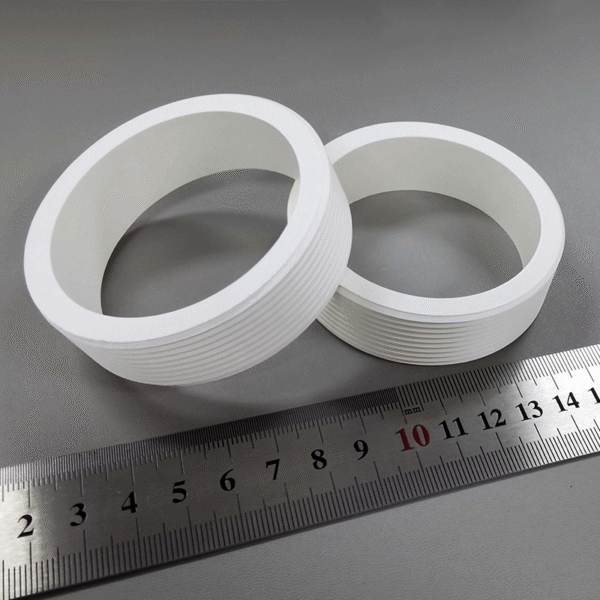
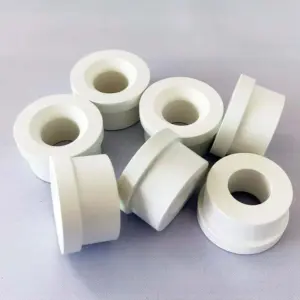
Define the mating thread, envelope, engagement, installation access and surrounding materials before comparing quotations. A useful RFQ should also state whether the bushing acts as a spacer, insulating insert, threaded support or replaceable interface, because those roles can change the relevant review criteria.
Key Inquiry Requirements
Design intent and interface definition
Begin with the mechanical purpose of the threaded bushing. Identify the mating male or female thread, engagement length, shoulder or flange features, access for installation, and any restriction on rotational movement. The drawing should distinguish functional surfaces from non-critical surfaces and show datum references. If the bushing is used around conductors or hot hardware, describe those interfaces so the quotation can address the complete assembly context.
Threaded ceramic parts require careful consideration at the transition between the ceramic body and the mating hardware. State the installation method, tightening approach, expected service handling and whether repeated removal is required. Include a section view when internal steps, blind threads, reliefs or counterbores matter. These details help reviewers compare manufacturability and inspection coverage without assuming that a visually similar bushing has the same fit or service role.
Material and application questions
Boron nitride is the stated material family for this component, but the RFQ should still identify the intended grade or permit the supplier to propose an equivalent for approval. Describe the surrounding atmosphere, thermal cycling, electrical exposure, contact materials and contamination controls that matter to the application. Avoid relying on a generic material label when the assembly has unusual chemical, vacuum or dielectric requirements.
Ask suppliers to explain how their proposed material and process relate to the component’s operating environment, while keeping acceptance criteria tied to documented requirements. If thermal dissipation, dielectric separation or low-force handling is important, say how those functions will be evaluated. The objective is not to request unsupported headline performance, but to make the application conditions clear enough for a meaningful technical comparison.
Thread quality and ceramic handling
The thread is the central inspection feature, so the drawing should identify the thread standard, nominal designation, class or fit requirement where applicable, effective engagement and allowable edge condition. Request a defined method for checking the thread and any agreed visual criteria for chips, cracks, surface damage or incomplete features. Ceramic threads should be handled as functional precision surfaces, not judged solely by overall appearance.
Also review transitions, corners and load paths around the threaded region. Sharp changes in section, unsupported overhangs or concentrated tightening forces may require design discussion before release. A supplier response is more useful when it identifies inspection access, measurement limitations and recommended handling controls. These conversations can prevent a late discovery that a thread is nominally correct but unsuitable for the chosen assembly process.
RFQ documentation and comparison
Send a controlled drawing with revision status, material callout, thread details, critical characteristics, finish requirements, inspection expectations and packaging concerns. Add an application note describing mating hardware, installation sequence and any restrictions on lubricants, tools or contact pressure. If a sample or reference part exists, identify whether it is for geometry, fit, appearance or functional demonstration only.
When comparing quotations, separate confirmed compliance from proposed assumptions. Review drawing comments, material documentation, inspection reports, process limitations and any exclusions affecting threads or fragile features. Ask for clarification on open points before awarding work. A lower unit quotation is not directly comparable if it excludes inspection, special handling, tooling or engineering review needed to protect the threaded interface.
Receiving and qualification checks
At receipt, verify revision, quantity and identification before opening the technical inspection package. Check the threaded feature with the agreed method, inspect accessible surfaces for damage, and confirm that packaging has prevented movement or contact between parts. Dimensional inspection should follow the drawing’s datums and critical characteristics, with records retained according to the buyer’s quality process.
For first-article or design qualification work, define what evidence is required before production release. Depending on the application, that may include dimensional results, material documentation, visual records and a controlled fit check using representative mating hardware. Qualification should confirm the specified interface and handling process; it should not be based on assumptions drawn from the product name or photograph alone.
Questions Before You Inquire
What should be included in an RFQ for a threaded ceramic bushing?
Include a controlled drawing, thread standard and fit, engagement details, external envelope, datums, material requirement, application environment, installation method, inspection criteria and packaging expectations. Explain whether the part is an insulator, spacer, support or replaceable insert, and identify any mating hardware or sample used for evaluation.
Can the bushing be quoted from a photograph?
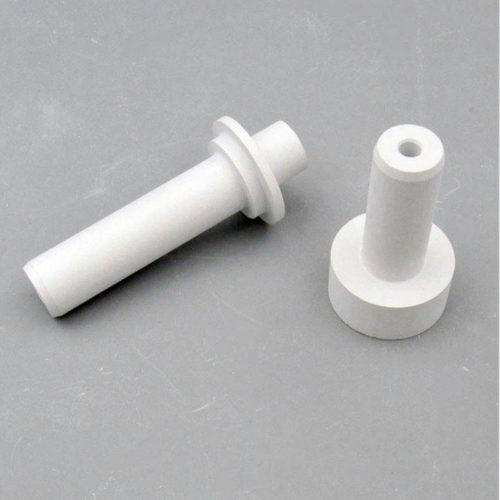
A photograph can support initial discussion but cannot establish thread fit, datums, critical dimensions or acceptance criteria. For a responsible quotation, provide a drawing or complete specification. If the design is still developing, share the available interface information and ask for engineering questions before treating any proposal as technically comparable.
How should the ceramic thread be inspected?
Use a method agreed in the drawing or quality plan, such as appropriate gauges, dimensional measurement or a controlled fit check. The inspection should address thread form and engagement as well as chips, cracks and edge damage. The chosen method must be suitable for the feature and documented consistently across samples.
What application details affect material selection?
Describe thermal exposure, cycling, atmosphere, electrical isolation, nearby materials, contamination concerns, installation forces and removal frequency. These conditions help a supplier assess whether the stated boron nitride family is appropriate and whether a particular grade or process needs approval. Avoid leaving performance-critical conditions implied by the component name.
Send a Clear Component Brief
Share your drawing, quantity and application with Porcecore. Mark the requirements that are fixed and the questions that remain open.



Reviews
There are no reviews yet.