
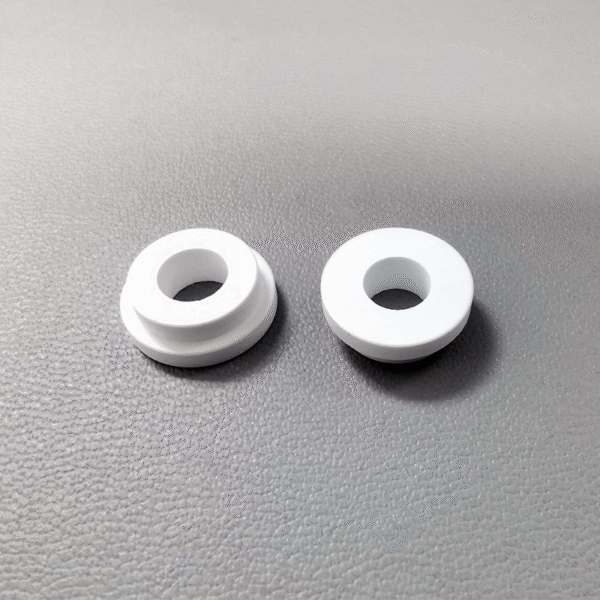

Use this page to frame the questions behind a boron nitride washer inquiry. Identify what the washer must isolate, support, separate or protect, then connect those functions to a controlled drawing and measurable acceptance criteria.
Key Inquiry Requirements
Clarify the washer’s function
A boron nitride washer may serve as an electrical barrier, a spacer, a support ring or a protective interface. These roles can change the relevant design priorities. State whether the part carries clamp load, maintains a gap, separates conductors or contacts a heated assembly. Identify the neighboring materials and surfaces so the supplier can understand the actual interface rather than infer it from the washer label.
Describe whether the assembly is static, cycled, adjusted or repeatedly dismantled. Include the direction of loading, contact arrangement and any concern about abrasion, cracking, contamination or surface marking. If the washer is part of a stack, provide the stack-up and reference datums. This information helps define the drawing around function while avoiding unsupported assumptions about service performance.
Develop the geometry package
Define the outside profile, opening, thickness, steps, slots, chamfers and edge treatments that affect assembly. Show the working faces and identify which dimensions control clearance, seating, alignment or gap. For thin or delicate components, make handling-sensitive edges visible in the design review. A section view can reveal relationships that are not clear in a plan view.
Use a controlled revision and distinguish critical dimensions from descriptive dimensions. Identify flatness, parallelism, concentricity or surface requirements only where the assembly needs them, then specify the datum structure and inspection approach. If several variants share a family of geometry, provide a schedule that prevents mixing hole sizes, thicknesses or mounting references during quotation and release.
Discuss material and environment
Ask suppliers to identify the proposed boron nitride material designation, forming route and finishing sequence. Material family names can encompass different grades and manufacturing approaches, so compare the evidence provided for the intended environment. Separate typical property data from the requirements that will be used for acceptance, and request clarification when a proposal relies on general claims about thermal or dielectric behavior.
Describe actual exposure conditions, including atmosphere, heat cycles, electrical potential, adjacent materials, cleaning agents and contact pressure where relevant. Explain whether the washer is exposed directly or enclosed within an assembly. If surface condition, cleanliness or outgassing matters, state how those concerns will be assessed. Concrete conditions are more useful than a generic request for high-temperature or insulating service.
Set inspection and acceptance logic
Inspection should focus on the features that control fit and function: opening clearance, thickness, seating faces, concentricity, edge condition and surface integrity. Define measurement references and reporting expectations, especially when the washer contributes to insulation distance or stack height. If visual inspection is required, identify the faces and defect types that matter instead of leaving quality language open to interpretation.
Consider whether first-article approval, lot documentation or sample review is appropriate for the application. Explain how deviations will be proposed and approved, including any change to material designation, edge preparation or finishing route. An agreed inspection plan lets buyers compare suppliers on evidence and risk management rather than relying on a broad statement that the ceramic is suitable.
Prepare a focused RFQ
The inquiry should include the released drawing, material family, assembly context, exposure conditions, quantity assumptions, quality documents and destination. State whether the washer is a new design, replacement interface or part of a qualified assembly. Include mating drawings or controlled excerpts when they are needed to interpret clearances, electrical separation or stack height.
Ask suppliers to identify tooling, process, finishing, inspection and packaging assumptions separately where applicable. Request a list of open questions and proposed deviations before approval. When multiple sizes are needed, use a part-number table and specify shared requirements. This creates a fair comparison while preserving the buyer’s authority over design, acceptance and application validation.
Questions Before You Inquire
What should buyers define before sourcing boron nitride washers?
Define the washer’s function, mating materials, geometry, load path, electrical or thermal exposure, cleaning conditions and inspection needs. Include the assembly stack-up when gap, alignment or insulation distance matters. The RFQ should make clear which requirements are mandatory and which process details may be proposed by the supplier.
Is boron nitride alone a sufficient material specification?
No. Boron nitride is a material family and should be linked to a proposed designation, processing route and application requirements. Ask suppliers to separate representative property data from contractual acceptance criteria. The final specification should also address geometry, surface condition, cleanliness and the environment in which the washer will operate.
Which washer features commonly need inspection?
Features may include opening size, thickness, flatness, parallelism, concentricity, seating surfaces and edge condition. Select inspection items based on the assembly’s actual risk, such as clearance, stack height or insulation distance. Define datums, measurement methods and reporting expectations so different proposals can be evaluated consistently.
Can a standard boron nitride washer replace a custom design?
Only after the complete interface has been checked. Confirm clearances, contact pressure, gap, mating materials, environmental exposure and handling requirements before accepting a standard profile. If the washer protects a qualified assembly or controls electrical separation, a drawing review and documented approval are prudent before substitution.
Send a Clear Component Brief
Share your drawing, quantity and application with Porcecore. Mark the requirements that are fixed and the questions that remain open.

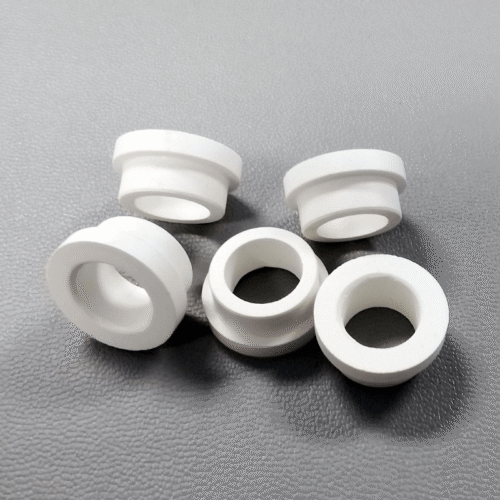

Reviews
There are no reviews yet.