
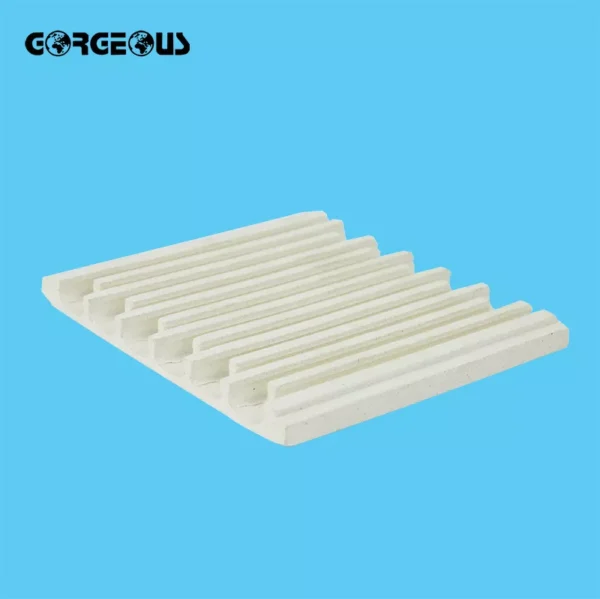


A heat plate is more than a flat ceramic panel. Buyers should describe heater placement, sensing, mounting, contact surfaces, thermal uniformity goals, electrical interfaces where applicable, and the surrounding assembly so suppliers can quote against a clear technical baseline.
Key Inquiry Requirements
Define the heating assembly
Start with the role of the ceramic heat plate in the equipment: supporting a workpiece, transferring heat through a contact face, shielding nearby parts, or integrating with another heater structure. Show the active area, inactive margins, mounting points, clearances, apertures, and any surfaces that must remain planar or accessible.
Include the complete assembly view when the plate interfaces with clamps, sensors, insulation, fasteners, electrical conductors, or a process chamber. A part drawing may not reveal preload, expansion allowance, contact pressure, or service access. Those relationships should be visible before a supplier evaluates the design.
State thermal requirements carefully
Describe the required heating behavior using application-defined criteria rather than a broad request for high temperature or fast heating. Depending on the process, relevant criteria may include ramp behavior, hold stability, surface-to-surface consistency, response to changing loads, or allowable variation across a defined measurement map. State how each criterion will be measured.
Also identify heat-up and cool-down cycles, dwell periods, atmosphere, contact materials, and any thermal gradients expected during use. If the design is still being validated, label target values as development objectives. This gives suppliers room to identify test conditions and limits without implying an unverified guarantee.
Geometry, mounting, and interfaces
Plate geometry can influence both installation and thermal behavior. Define thickness, outline, holes, slots, recesses, grooves, edge breaks, reference surfaces, and mounting features from controlled datums. Mark areas subject to clamping or contact, and explain whether the plate must remain removable, serviceable, or replaceable within the assembly.
If a heater, sensor, conductor, or insert is integrated, show its location, routing, termination, and protection concept. Clarify whether the inquiry concerns a ceramic plate only or a more complete heating subassembly. Separating those scopes prevents confusion about what is included in the quotation and what remains the buyer’s responsibility.
Electrical, cleanliness, and inspection
Where the heat plate includes electrical or sensing features, provide the interface definition, connector constraints, insulation expectations, and test points. State the intended inspection of continuity, isolation, resistance, or sensor response only if those checks are part of the purchase requirement. The supplier should identify the proposed test method and the conditions under which results are recorded.
For clean or controlled processes, define surface condition, residue limits, handling, and packaging. Dimensional inspection should address mounting interfaces, active area location, flatness or profile where relevant, and feature integrity. A clear acceptance plan should distinguish ceramic-part inspection from assembly-level thermal validation.
Build a comparison-ready RFQ
A useful inquiry combines the part drawing with the thermal map, load description, assembly drawing, control concept, atmosphere, cleaning process, and expected duty pattern. Identify the performance evidence needed for design approval, such as a test fixture description, measurement locations, stabilization criteria, or a sample report format.
Ask each supplier to state material and process assumptions, integrated versus separate scope, inspection coverage, packaging, and design exclusions. If alternatives are acceptable, define the approval process for changes in material route, heater layout, sensor position, or interface geometry. This keeps technical comparisons aligned with the intended use.
Questions Before You Inquire
What information should accompany a ceramic heat plate drawing?
Include the assembly context, heated area, mounting method, load or contact description, sensor and electrical interfaces, atmosphere, cleaning needs, duty pattern, and acceptance tests. These details show how the plate functions and prevent suppliers from quoting only an outline without the relevant interfaces.
How should thermal uniformity be discussed?
Define the measured area, sensor locations, load condition, stabilization method, atmosphere, and allowable variation if those are known. If values are still developmental, identify them as targets rather than guarantees. Ask suppliers to explain the proposed test method and relevant assumptions.
Can a ceramic heat plate include heater features?
It can be specified as a ceramic plate, an integrated ceramic heating element, or a broader heating subassembly, but the scope must be explicit. Show conductor routes, terminations, sensors, insulation, and interfaces. Ask the supplier to separate included and excluded items in the quotation.
Which inspections matter most for a heat plate?
Prioritize mounting geometry, active-area location, critical surfaces, feature integrity, and any electrical or sensor checks included in the specification. Assembly-level thermal validation should be defined separately, with test conditions and measurement locations agreed before approval.
Send a Clear Component Brief
Share your drawing, quantity and application with Porcecore. Mark the requirements that are fixed and the questions that remain open.


Reviews
There are no reviews yet.