



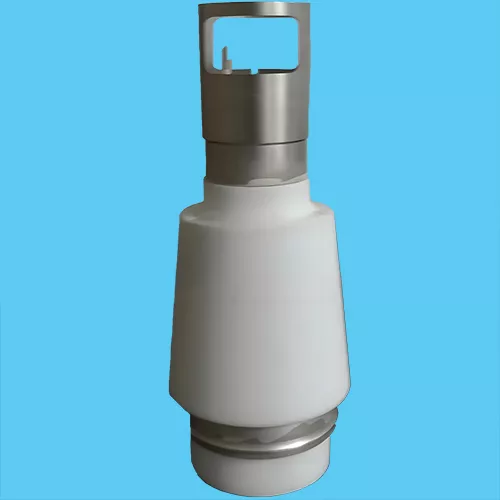
Define the heater around its electrical interfaces, heat-transfer geometry and cutoff behavior. Porcecore supports requirement review for custom ceramic heater inquiries without treating the pictured design as a standard stocked product.
Key Inquiry Requirements
Heater assembly definition
A ceramic thermal cutoff heater should be specified as an assembly concept, not only as a ceramic plate or electrode pattern. The RFQ should show the heated area, mounting features, terminals, insulation zones, protective device location and any contact surfaces. Include the installation orientation and neighboring components because heat flow and clearance can influence the practical design review.
Clarify whether the ceramic body, conductive elements, cutoff device and lead arrangement are supplied as one integrated part or as separate items. State which interfaces are fixed and which may be proposed. This prevents an ambiguous request from being interpreted as a generic heating element and helps suppliers identify design dependencies before preparing a quotation.
Thermal cutoff requirements
A non-resettable cutoff is intended to act once under an abnormal thermal condition, so its role must be separated from normal temperature control. The buyer should define the protection objective, triggering condition, reset expectation, replacement strategy and relationship to the primary control system. Do not describe a cutoff as adequate protection until the complete assembly and use case have been reviewed.
Request clarification on how the proposed cutoff is positioned, connected and verified during assembly. The RFQ can ask for the supplier’s stated activation basis and test approach without inventing a trigger value. If a specific threshold is required, provide it as a controlled requirement with allowable variation, test conditions and approval criteria.
Electrical and mechanical interfaces
Identify the supply arrangement, terminal style, insulation boundaries, connector constraints and permissible routing for wires or bus connections. The drawing should distinguish energized surfaces from touch-safe or bonded areas and should show mounting holes, slots, supports and keep-out zones. Buyers should also define whether the heater is clamped, bonded, inserted or otherwise retained in the equipment.
Mechanical loads deserve equal attention to electrical specifications. State assembly forces, vibration exposure, contact pressure, thermal expansion constraints and any requirement for repeated installation. If the heater is fitted against a machined surface, include its flatness and finish requirements where they affect contact. Suppliers can then review the ceramic, electrode and protection-device interfaces together.
Testing and quality evidence
Inspection should cover the features that determine safe integration: dimensions, terminal identity, continuity or resistance checks, insulation condition, visual defects and cutoff-device installation. The buyer should define whether testing is performed on each unit, by sample or during process qualification. Describe the acceptance method rather than requesting a vague statement of quality.
For thermal protection, ask suppliers to document the agreed verification method and the limits of what the test demonstrates. A functional check may not reproduce every field condition, while a destructive activation test may affect the tested unit. The RFQ should therefore distinguish routine inspection, design validation and any destructive qualification activity.
Building a useful RFQ
Include the current drawing, electrical schematic, mounting environment, heat-transfer path, normal duty cycle, abnormal-event description and expected quantity by development phase. State whether the inquiry concerns a prototype, engineering sample, qualification build or repeat production. These details allow the supplier to identify tooling, assembly and test questions without implying stock, capacity or guaranteed performance.
When comparing quotations, review the proposed heater architecture, cutoff integration, exclusions, assumptions and requested customer inputs. Ask for deviations to be listed separately from the compliant offer. A strong RFQ also defines who approves changes to ceramic geometry, conductor layout, protection-device selection and documentation, keeping technical ownership clear throughout development.
Questions Before You Inquire
What makes this different from an ordinary ceramic heater?
The concept combines heating with a non-resettable thermal protection function intended for abnormal conditions. The RFQ should define the protection role separately from normal temperature control, including activation basis, replacement expectations, testing and integration with the equipment’s primary control and safety systems.
What information is needed to quote a cutoff heater?
Provide the heater drawing, electrical requirements, mounting method, heat-transfer environment, normal duty cycle, abnormal-event description, terminal arrangement, protection expectations, quantities by phase and inspection needs. Also identify whether the ceramic, conductors, cutoff device and leads are one assembly or separate deliverables.
Can the thermal cutoff be reset after activation?
The stated concept is non-resettable and single-use, so it should be treated as requiring replacement after activation unless the approved design says otherwise. Define how activation is detected, how the assembly is removed and what replacement interface is expected before finalizing the RFQ.
What tests should buyers request?
Request dimensional and visual inspection, electrical continuity or resistance checks, insulation-related checks where applicable, terminal verification and confirmation of cutoff-device installation. Any activation or qualification test should specify conditions, sample handling and whether it is routine, design validation or destructive testing.
Send a Clear Component Brief
Share your drawing, quantity and application with Porcecore. Mark the requirements that are fixed and the questions that remain open.



Reviews
There are no reviews yet.