


Porcecore can review machinable ceramic tube drawings, interfaces and process conditions for quotation. Define the through-path, flange or restriction features, support points and inspection method so suppliers can assess the complete part rather than a generic tube profile.
Key Inquiry Requirements
Map the tube architecture
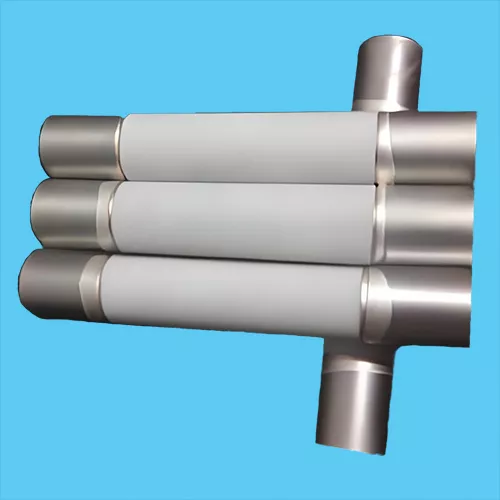
Describe the tube as a functional assembly part, not only as a hollow cylinder. Show the through-path, openings, shoulders, flanges, local restrictions, grooves and any external locating surfaces. Identify which features guide flow, support another component or establish position. This helps a supplier distinguish cosmetic geometry from characteristics that control installation and use.
Provide section views wherever the internal profile cannot be understood from an outside view. Mark wall zones that must remain continuous and explain whether the tube is open at both ends, stepped internally or locally narrowed. If the part is installed in a manifold or enclosure, include enough neighboring geometry to reveal access, clearance and retention conditions.
Clarify machinable glass ceramic
Machinable glass ceramic is chosen when the design requires ceramic characteristics together with a route that can produce detailed shapes, but the final suitability remains application-dependent. State the material family and any approved designation separately from the dimensional drawing. Ask the supplier to explain the proposed blank, machining sequence and finishing operations for the specific geometry.
The RFQ should identify whether the tube will see vacuum, pressure, heat, chemical contact, electrical isolation or repeated assembly. These conditions influence how surfaces, edges and transitions should be reviewed. Avoid converting general material familiarity into an unverified performance promise. Instead, request the evidence and qualification approach appropriate to the service environment.
Control mounting and restriction features
Flanged or restricted tube designs require careful definition of datums, interface faces and transitions. Show the flange thickness, bolt or clamp relationship, sealing land, insertion depth and any feature that prevents rotation or axial movement. If a restriction is process-critical, identify its location and inspection method rather than leaving the feature to interpretation from a general view.
Consider how the tube will be handled during assembly and maintenance. Specify edge protection, acceptable contact marks and areas that must remain free of machining residue. Where a mating seal or insert is used, include its material and expected condition. This gives the supplier a basis for reviewing clearances and potential stress concentrations before manufacture.
Set machining and inspection expectations
Request a proposed inspection plan for internal dimensions, flange geometry, local restrictions, concentricity relationships and surface condition. Deep or partially hidden features may need a different measurement approach from easily accessible external surfaces. State which characteristics require individual records and which can be checked through sampling, while keeping the method aligned with the drawing revision.
If the tube includes thin walls or abrupt profile changes, ask for manufacturability feedback and representative inspection evidence. A controlled sample can reveal how well the process holds the intended geometry and finish. Record any approved deviations, measurement limitations or revised datums before moving from prototype review to repeat quotation.
Prepare a complete quotation package
Include the latest two-dimensional drawing, three-dimensional model if available, assembly context, quantity assumptions, packaging requirements and cleanliness expectations. Explain whether the part is a replacement, a new design or a geometry adapted from another component. If the supplier is expected to recommend a machining route, provide the functional priorities that should guide that recommendation.
Ask for the quotation to separate material, blank preparation, machining, finishing, inspection and documentation assumptions. Request a drawing review with questions and exclusions clearly identified. This makes competing offers easier to compare and helps prevent an apparently similar tube from carrying different interpretations of the hidden bore, flange or restriction features.
Questions Before You Inquire
What is important on a machinable ceramic tube drawing?
Show the full internal path, wall transitions, openings, flanges, shoulders, restrictions, datums and mating interfaces. Add section views for hidden geometry and identify critical dimensions. Include assembly context, service conditions and inspection expectations so the supplier can review both manufacturability and the tube’s intended function.
Should the tube be quoted from a model or a drawing?
Provide both when possible, but treat the controlled drawing as the purchasing reference. The model communicates geometry and the drawing defines revisions, datums, tolerances and inspection intent. If only a model exists, identify critical features separately and ask the supplier to flag any assumptions before quotation.
How should internal restrictions be inspected?
Define the restricted location, controlling dimensions, datum relationship and required reporting method. Depending on access and geometry, inspection may use dedicated gauges, imaging or another agreed technique. Ask the supplier to state the method and its limitations, then retain evidence for the characteristics that affect assembly or process behavior.
What assembly details should accompany an RFQ?
Include mating-part drawings, seal or insert information, retention method, insertion depth, access limits and expected maintenance actions. Explain whether the tube experiences pressure, vacuum, heat, chemicals or electrical fields. These details help the supplier review clearances, edge conditions and handling requirements as one integrated component.
Send a Clear Component Brief
Share your drawing, quantity and application with Porcecore. Mark the requirements that are fixed and the questions that remain open.


Reviews
There are no reviews yet.