

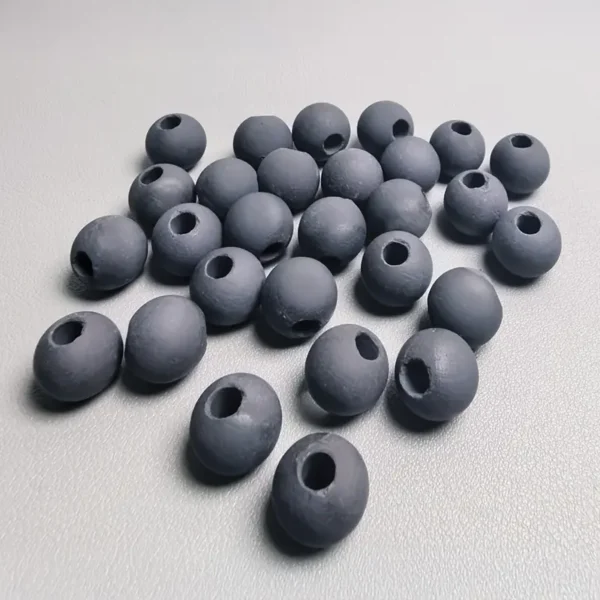


A sphere with a through-hole is an engineered component, not merely a round shape. Define its datum strategy, hole relationship, surface condition and application context before comparing quotations.
Key Inquiry Requirements
Define the sphere as a functional component
Silicon carbide ceramic spheres may be used as shaped parts with a regular or near-spherical body, and some designs include a through-hole or other internal feature. The RFQ should show the true functional geometry, including sphere definition, hole axis, opening details, transitions and any contact zones. A simple diameter callout is rarely enough to control a part that must locate, rotate, seal or guide.
Provide datums that relate the spherical surface to the hole and to any mating features. State whether the sphere is used individually, in a repeating group, inside a guide, or as part of an assembly. That context determines which characteristics deserve priority and helps suppliers interpret the difference between cosmetic roundness and geometry that affects the component’s actual function.
Compare spherical form and material route
Silicon carbide provides the material identity for this sourcing brief, but a buyer should still request the supplier’s specific grade, forming approach and finishing route. Different routes can influence the attainable geometry, surface condition, internal feature quality and inspection method. Ask for the technical basis of the quotation rather than comparing material names alone.
When reviewing alternatives, keep the definition of spherical form consistent. Clarify whether the supplier is quoting a true spherical requirement, a controlled near-spherical envelope or a geometry established by selected measurement points. Also confirm how the hole is produced and inspected. These distinctions matter when a part must interact predictably with a seat, guide, fluid path or precision mechanism.
Control the hole, openings and contact surface
For a sphere with a through-hole, the relationship between the hole axis and the spherical body may be more important than either feature considered separately. Define opening geometry, axis orientation, continuity, edge treatment and allowable surface condition. If the hole carries a pin, fluid, wire or optical path, identify the functional requirement without embedding unstated performance assumptions.
The contact surface should receive its own inspection language. Explain whether the sphere rolls, seats, slides, meters or remains fixed, and identify the mating material and contact pattern. Request inspection evidence for the characteristics that control that interaction, such as form, feature location, openings and visible damage. Avoid accepting a general visual statement as a substitute for drawing-based verification.
Address handling and integration risks
Small spherical ceramic parts can be difficult to fixture and inspect without affecting the measured result. Ask suppliers to explain how the component will be supported, oriented and protected during processing and inspection. If the drawing includes a fragile opening, thin section or sharp transition, identify it explicitly and request a manufacturability comment before design release.
Assembly information should include the receiving geometry, retention method, operating orientation and any cleaning or packaging restrictions. If multiple spheres work together, provide the relationship between parts and the intended selection or matching basis. This avoids a quotation that covers isolated pieces while overlooking the tolerances, cleanliness or handling controls needed for the complete assembly.
Request comparable quotation evidence
A decision-ready RFQ should include the latest drawing and model, material designation, feature priorities, inspection requirements, application description, documentation expectations and intended project quantity. Ask each supplier to list process assumptions, exclusions, proposed inspection methods and any drawing notes they cannot support. This makes technical differences visible before price or schedule is considered.
During supplier review, compare how clearly each response addresses spherical form, hole geometry, surface condition, packaging and change control. Request sample or first-article documentation only where it is relevant to the project plan, and define what approval means. The result should be a controlled sourcing record for custom silicon carbide spheres, without treating any quoted capability as an automatic guarantee.
Questions Before You Inquire
What drawing details matter most for silicon carbide ceramic spheres?
Show the spherical definition, critical form requirements, hole diameter and axis relationship, opening treatment, contact regions, surface expectations and relevant datums. Add the assembly function, mating materials, orientation and inspection needs. If the sphere is near-spherical rather than mathematically spherical, state the intended acceptance basis clearly.
How are ceramic sphere holes typically evaluated?
Evaluation should address the hole’s size, continuity, axis relationship, openings and edge condition, using methods suitable for the geometry. The buyer should define which characteristics are functional and how they must be reported. Supplier-proposed inspection methods should be reviewed against the drawing before approval.
Are silicon carbide ceramic spheres suitable for every spherical application?
No material or geometry should be accepted solely from its name. Suitability depends on loading, contact, environment, temperature, cleanliness, assembly and inspection requirements. Provide those conditions in the RFQ and ask for a documented technical review rather than assuming a quoted sphere will meet the application.
Can a near-spherical design be quoted if a perfect sphere is unnecessary?
Yes, if the drawing defines the allowable form and the functional surfaces or contact zones. Explain where deviation is acceptable and where it is not, then align the inspection method with that definition. This can support practical manufacturing while preserving the characteristics that matter to the assembly.
Send a Clear Component Brief
Share your drawing, quantity and application with Porcecore. Mark the requirements that are fixed and the questions that remain open.


Reviews
There are no reviews yet.