

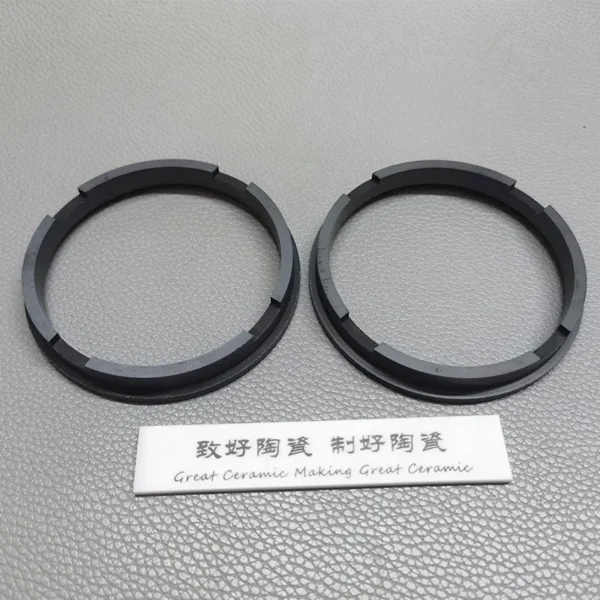

A seal ring cannot be evaluated from material and nominal diameter alone. Porcecore can review the ring drawing, joint arrangement and service context to help identify the information needed for manufacturability review, dimensional control and application-specific RFQ comparison.
Key Inquiry Requirements
Define the sealing function first
The term seal ring can describe several arrangements, including a static face element, a retained ring, a wear interface or a component used with a separate sealing material. Explain what the ring is expected to do and where contact occurs. Show the mating parts, compression direction, retention method and installation sequence. This context matters because the same circular outline can serve very different assembly requirements.
The drawing should distinguish functional surfaces from handling surfaces and identify the primary datum. Include inner and outer diameters, thickness, face geometry, grooves, steps, chamfers, radii and orientation features. If the ring must remain concentric with another component, define the relevant relationship rather than relying on a general dimensional tolerance. A section view is often essential for communicating contact width, seating depth and adjacent clearances.
Connect material choice to service exposure
Silicon carbide is a material family whose suitability depends on the complete duty, not simply the component name. Describe contact with liquids, gases, powders, vapor, cleaning agents or process residues, along with pressure direction, motion, thermal cycling and neighboring materials. Also state whether the ring is intended to remain electrically insulating or participate in another controlled interface. These facts support a more relevant material and process review.
Where the buyer requires a particular grade, composition range or documentation package, write it into the technical specification. Otherwise, ask suppliers to identify the proposed material route and explain any limitations relevant to the application. Compare documented material information with the real service conditions. Do not infer compatibility from a broad label such as ceramic or silicon carbide, especially when the ring will be joined, coated, lubricated or installed against a dissimilar surface.
Control faces, edges and mating clearance
Sealing behavior often depends on the relationship between two faces, not just on the ring’s average size. State face flatness, parallelism, waviness or finish requirements only where they are functionally justified, and identify how those characteristics will be measured. Show the mating face condition, allowable runout and any clearance needed during assembly. If the ring is fragile at an edge, specify handling and protection expectations.
Review corner transitions carefully. A sharp inside corner, a small chamfer or an unfinished edge can affect seating, stress concentration and assembly damage. Mark prohibited defects, contact bands and nonfunctional areas separately. If lapping, grinding, coating, metallization or bonding follows ceramic production, define which dimensions and surfaces are controlled after each relevant stage. This prevents a final inspection plan from overlooking process-related changes.
Plan inspection around sealing risk
A useful inspection plan links each critical characteristic to a reference, instrument or agreed evaluation method. For a seal ring, that may include diameters, thickness, concentricity, face relationships, edge condition and visible surface defects. Define whether measurements are taken on the complete ring, selected samples or each piece. If the assembly has a leak or pressure acceptance test, specify the test article, setup and responsibility rather than attaching an unexplained pass requirement.
Request traceability that connects inspection results to the drawing revision and production lot when that matters to the program. Clarify how nonconforming edges, chips, stains, handling marks or surface interruptions are classified. Buyers should also ask which records accompany shipment and which are available only on request. This makes quality review proportionate to the sealing function and avoids vague acceptance language.
Make the RFQ comparable
A decision-ready RFQ should contain the ring drawing, assembly section view, service description, mating-material information, quantity context, packaging conditions and desired quotation format. Identify prototype, validation or repeat-supply intent without implying inventory, price or delivery commitments. Ask suppliers to list assumptions about the sealing arrangement, proposed material, forming method, machining, finishing and inspection so technical differences remain visible.
When comparing quotations, review design interpretation, functional surfaces, material evidence, process capability, inspection scope, packaging protection and deviation handling alongside commercial terms. If the supplier recommends changing a radius, thickness, groove or clearance, require the change to be shown against the controlled design. The strongest RFQ response should make it easy for engineering and quality teams to decide what still needs validation before approval.
Questions Before You Inquire
What information is most important for a ceramic seal ring?
Provide a sectioned assembly drawing showing contact faces, compression or retention, mating materials, motion, pressure direction, thermal exposure and relevant fluids. Include ring dimensions, datums, edge details, surface requirements and inspection criteria. Without this context, a nominal diameter and material name are not enough for a meaningful comparison.
Can silicon carbide rings be used in moving assemblies?
That depends on the contact design, opposing material, lubrication or process medium, loads, speed and thermal conditions. The RFQ should describe movement and wear concerns rather than assume suitability from the material name. A supplier can then review geometry, surface treatment and validation needs against the actual interface.
How should sealing surfaces be inspected?
Identify the functional faces, datum scheme, required dimensional relationships and agreed measurement methods. If the assembly requires a separate leak, pressure or contact test, describe the complete test setup and acceptance basis. Visual checks should also define relevant edge damage or surface interruptions instead of relying on subjective language.
Is this seal ring an off-the-shelf product?
It should be treated as a drawing-led component inquiry. The final supply basis depends on approved geometry, material route, machining or finishing, inspection and packaging requirements. Request a project-specific quotation and ask the supplier to separate technical assumptions, deviations and commercial conditions.
Send a Clear Component Brief
Share your drawing, quantity and application with Porcecore. Mark the requirements that are fixed and the questions that remain open.
Reviews
There are no reviews yet.