


State the internal working volume, wall and base arrangement, access, supports, lifting method, atmosphere, charge characteristics and cleaning practice. Ask suppliers to review thermal and chemical assumptions against the actual process rather than quoting an unqualified service limit.
Key Inquiry Requirements
Process vessel definition
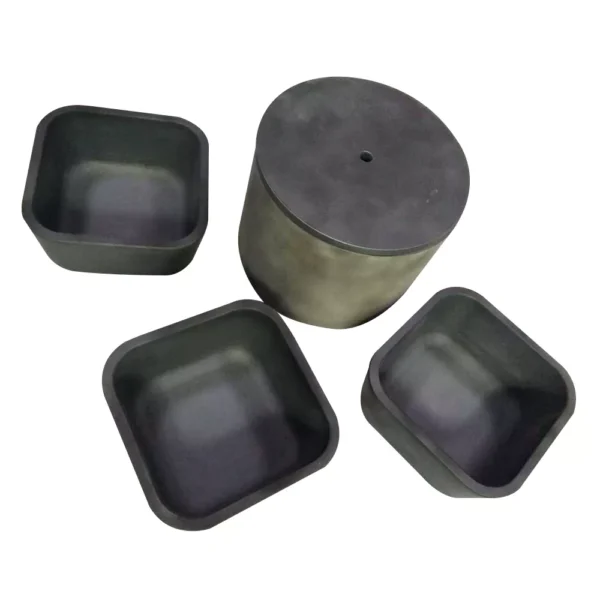
A square crucible is defined by more than its outside footprint. The charge space, wall profile, base support, opening, corner radii and interaction with the furnace all influence how it should be designed and evaluated. Explain the process sequence, material loaded, fill level, heating pattern and removal method so the vessel can be considered as part of the complete thermal workflow.
Use a controlled drawing to distinguish internal working dimensions from external clearance dimensions. Show the furnace envelope, support points, lid or cover interface and any required access for tools. If the crucible is nested, rotated or supported by a carrier, include those interfaces. This prevents a nominal square form from being mistaken for a complete process specification.
Material and atmosphere review
Define silicon carbide as the material family and request the proposed grade, structure and relevant data for the intended application. The review may involve thermal cycling, chemical compatibility, mechanical handling, surface condition and contamination concerns. Ask for test methods and conditions with any supplied values, because crucible behavior cannot be established from a material label alone.
Describe the working atmosphere, pressure conditions, reactive species, process duration, heating and cooling pattern, and contact materials. Identify whether the charge can wet, infiltrate, react with or abrade the ceramic. If purity or contamination control matters, state the acceptance basis and analytical evidence required. Do not assume a general high-temperature description establishes suitability for your exact process.
Square geometry and features
Specify inside length and width, outside envelope, wall thickness, base thickness, corner treatment, rim condition and any draft or taper. State whether the interior must be machined, as-formed or otherwise finished, and identify surfaces that contact the charge. If a lid, setter, flange, drain, hole or lifting feature is required, locate it from clear datums and define its functional purpose.
A square vessel may develop different stresses at corners, edges and support transitions than a round vessel. Request a manufacturability review of corner radii, wall changes and local features before final release. If multiple crucibles operate together, define spacing, orientation, support compatibility and identification. The supplier should confirm which dimensions are controlled and which are quotation assumptions.
Handling and contamination control
Crucible damage often occurs during loading, transfer, installation or cleaning rather than during the nominal process alone. Describe lifting points, tongs, robot tooling, carrier contact, stacking and storage. Define whether the vessel may be brushed, vacuum-cleaned, chemically cleaned or otherwise conditioned. Packaging should protect corners, rim surfaces and the base from impact and particle transfer.
Set acceptance criteria for chips, cracks, warpage, residue, surface marks and foreign material, with particular attention to charge-contact areas. If cross-contamination is a concern, state the required cleaning or documentation approach. Ask how the supplier will identify the part, preserve traceability and separate conforming product from pieces requiring review, without assuming a particular factory process.
RFQ review and acceptance
An effective RFQ includes the drawing, process description, furnace constraints, charge information, atmosphere, thermal cycle, support arrangement, quantity context and revision. Add photos or sketches of the existing fixture only as supporting evidence; the controlled dimensions and acceptance requirements should remain in the drawing. Identify whether evaluation samples or process trials are part of your approval route.
Compare quotations by material definition, geometry interpretation, feature capability, inspection coverage, packaging, change control and stated process assumptions. Ask specifically about corner integrity, dimensional stability, surface condition and any evidence relevant to your cycle. Final acceptance should be based on agreed criteria and application review, not on an unverified temperature claim or a generic crucible description.
Questions Before You Inquire
What process details should be included in a square crucible RFQ?
Describe the charge, fill level, atmosphere, pressure, heating and cooling sequence, process duration, support arrangement, furnace envelope and removal method. Include contact materials and contamination concerns. These details let suppliers assess geometry, grade and handling assumptions instead of treating the vessel as a generic square container.
Which dimensions matter most?
Define internal working length and width, wall and base thickness, opening, corner radii, overall envelope, support surfaces and any lid or carrier interface. Identify critical datums and clearances. The correct priorities depend on the furnace and charge, so include mating-fixture information and distinguish functional dimensions from noncritical external features.
Should surface and contamination requirements be specified?
Yes. Identify charge-contact surfaces, acceptable residue, foreign-particle limits, cleaning method and any analytical or visual evidence required. Explain the consequence of contamination for your process. Avoid relying on broad purity language; request a defined acceptance basis and documentation linked to the proposed material and manufacturing route.
How should temperature capability be discussed?
Provide the actual atmosphere, cycle, heating rate, cooling rate, support condition and chemical exposure. Ask the supplier to review the proposed silicon carbide grade and geometry against those conditions, with evidence and test context. Do not insert a generic maximum temperature into the specification as a guaranteed operating limit.
Send a Clear Component Brief
Share your drawing, quantity and application with Porcecore. Mark the requirements that are fixed and the questions that remain open.


Reviews
There are no reviews yet.