

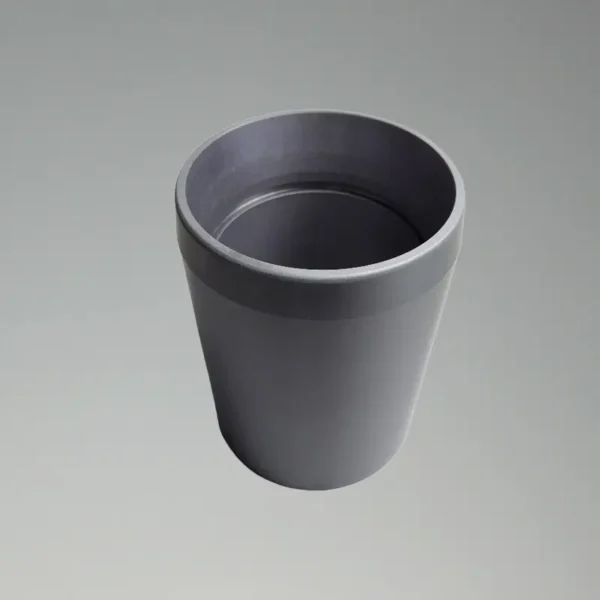

A silicon carbide tube is rarely defined adequately by material and nominal length alone. The RFQ should establish the tube’s internal passage, wall profile, end conditions, support arrangement and process environment. Use the component drawing and application sketch to separate functional requirements from general appearance, then ask suppliers to identify process and inspection assumptions.
Key Inquiry Requirements
Specify the tube architecture
Show the silicon carbide tube in longitudinal and cross-sectional views, with internal diameter, external diameter, wall transitions, overall length, straightness intent and end details identified. If the tube includes steps, slots, holes, flanges or varying wall sections, dimension each feature from controlled datums. State whether the bore or outside surface is the primary functional reference.
The installation sketch should show how the tube is supported, aligned, retained or connected. Identify contact zones, clearances and prohibited loads, especially when the component sits inside a larger assembly. A simple cylindrical outline can conceal important interface conditions, so the RFQ should make the assembly relationship explicit before suppliers prepare quotations.
Explain the operating environment
The supplied evidence identifies the component as a silicon carbide tube but does not establish a complete service specification. Describe the process medium, thermal cycle, atmosphere, pressure context, support spacing, handling method and cleaning regime. These inputs help a supplier review the design while keeping suitability decisions tied to the actual application.
If the tube is exposed to deposits, chemical contact, thermal gradients or repeated installation, identify those conditions as design-review topics. Do not substitute generic material reputation for an application assessment. Ask for the proposed material documentation, surface condition and relevant processing assumptions that support the particular tube design.
Evaluate forming and finishing choices
Tube production can involve forming, sintering and selective machining or finishing, depending on the geometry and required interfaces. Ask the supplier which features are produced in the formed state and which are finished afterward. Clarify how end faces, bores, holes, slots and local wall variations will be accessed, protected and inspected.
When comparing offers, review material designation, manufacturing route, dimensional assumptions, edge treatment, cleaning and packaging together. A quotation should make clear whether the stated geometry is directly achievable, whether a feature needs a manufacturing note, and which requirements require additional discussion. This prevents apparently similar tube offers from carrying different technical interpretations.
Prepare a complete sourcing package
Include the controlled drawing, three-dimensional model, installation sketch, quantity by project phase, sample expectations and required records. Identify the tube’s role as a sleeve, conduit, support, enclosure or process interface if that affects inspection priorities. Provide mating dimensions where fit depends on another component, while keeping unconfirmed assembly details clearly marked.
State how the tube will be received, cleaned, stored and installed if those actions affect acceptance. Ask suppliers to flag risks involving thin walls, unsupported spans, sharp edges, holes or access for measurement. Their response should distinguish confirmed requirements from assumptions and propose questions before the design becomes difficult to change.
Inspect and control tube revisions
Sample inspection should cover bore, outside diameter, wall thickness, length, straightness, end condition, feature position and visible damage according to the agreed drawing. Check the measurement method for internal features and verify that results reference the same datums used in design. A satisfactory outside profile does not prove that the tube will fit its assembly.
Maintain revision control for geometry, material documentation, tooling, finishing, cleaning, packaging and inspection. If a bore, wall, end face or support feature changes, review the effect on fit and process use. Record approved deviations and retain the relevant report or sample reference so future quotations and releases use the same acceptance basis.
Questions Before You Inquire
What should a silicon carbide tube drawing show?
Show internal and external diameters, wall sections, length, straightness intent, end conditions, holes or slots, datums and interface features. Add section views and an installation sketch where support or alignment matters. Identify which dimensions are functional and how they will be inspected.
Does the material name define tube suitability?
No. Suitability depends on the process medium, thermal cycle, atmosphere, pressure context, support arrangement, cleaning and assembly. Provide those conditions and request the proposed material documentation and manufacturing assumptions. This allows a technical review without relying on generic claims.
How should thin or complex tube walls be inspected?
Agree inspection access and measurement methods during quotation. Identify wall-thickness locations, internal features, end faces and any difficult-to-reach surfaces. The supplier should explain how the geometry will be checked and what records will be supplied against the controlled drawing.
What changes require a tube revision review?
Review changes to bore, wall, length, end geometry, holes, slots, material specification, forming route, finishing, cleaning, packaging or inspection method. Even a small internal change can affect fit or process use. Record approved deviations and recheck the affected characteristics before release.
Send a Clear Component Brief
Share your drawing, quantity and application with Porcecore. Mark the requirements that are fixed and the questions that remain open.


Reviews
There are no reviews yet.