
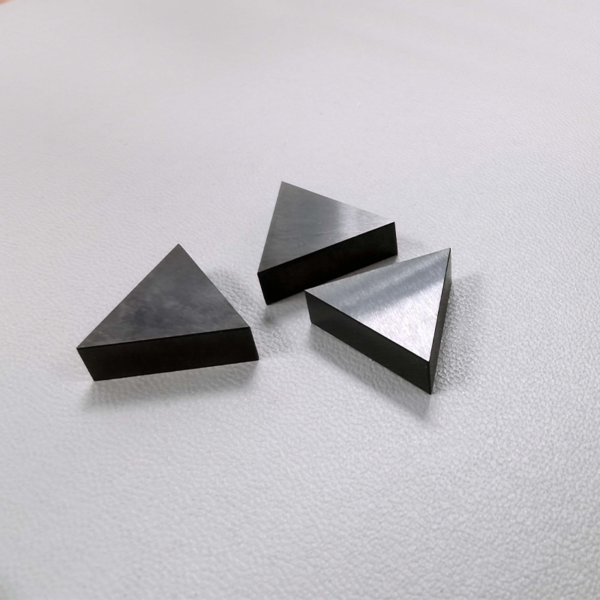


Build an RFQ around the block’s finished features and its role in the assembly. Provide controlled drawings, machining expectations and service conditions so proposed processing can be reviewed against the actual component.
Key Inquiry Requirements
Block geometry beyond a simple blank
A silicon nitride ceramic block may begin as a rectangular or bar-like form, yet its purchasing definition usually depends on the finished features cut into that body. Identify pockets, holes, slots, shoulders, radii, chamfers and locating surfaces on a controlled drawing. Mark the features that establish assembly position, load transfer or clearance, since these should guide both process review and inspection planning.
Describe the component’s role within the larger system rather than presenting only an isolated solid model. A block used as a spacer, wear element, guide, support or thermal barrier may have different priorities for flatness, edge condition and contact area. Include section views where hidden geometry, intersecting holes or local thickness cannot be understood from the primary view.
Customized processing and design review
Customized processing should be discussed in terms of the required final geometry, not a vague promise of machining. Ask the supplier to review the drawing for accessible surfaces, internal corners, small features, material removal and potential distortion or handling risk. The response should identify assumptions and propose clarifications where the drawing leaves the manufacturing sequence open.
If the design permits alternative process steps, separate functional requirements from preferred production details. State which surfaces must remain intact, which edges may receive a defined treatment and which dimensions are essential after processing. This gives suppliers room to recommend a suitable route while preserving the engineering intent and preventing undocumented substitutions from entering the quotation.
Datums, tolerances and surface evidence
Blocks often depend on relationships between broad faces and machined features. Establish a datum structure that reflects assembly use, then specify only the tolerances needed to control those relationships. Consider flatness, parallelism, perpendicularity, positional relationships and surface texture where they affect contact or movement. Do not add numerical requirements without design evidence; instead, define the decision points the supplier must review.
Request inspection evidence that matches the drawing’s critical features. Depending on the design, this may include dimensional reports, feature-location results, visual examination and records for edges or surface damage. Clarify the reference condition for measurement, the reporting format and how nonconforming features will be handled. A concise acceptance plan is more useful than a broad request for guaranteed precision.
Service conditions and material selection
The silicon nitride material family should be evaluated together with the block’s actual duty. Share information about contact materials, loading direction, sliding or impact, temperature changes, atmosphere, chemicals and electrical requirements when relevant. These conditions can influence geometry, finish, support and inspection priorities, so a supplier should not be expected to infer them from the block outline.
When comparing proposals, request the material designation and available technical documentation for the offered configuration. Distinguish published material information from component-specific verification. If the block is part of a validated assembly, explain which characteristics must be demonstrated on the finished part. This helps prevent a technically attractive material description from obscuring unresolved design or processing questions.
RFQ package for customized blocks
An effective RFQ package includes the controlled drawing, three-dimensional model where helpful, assembly context, revision level, quantity scenario and intended qualification stage. Add notes for prohibited processing marks, edge handling, cleanliness, identification and packaging if these affect installation. Keep commercial assumptions separate from technical requirements so quotations remain comparable across different proposed routes.
Ask each supplier to return a marked-up drawing or assumption list, proposed material information, processing approach, inspection scope and exceptions. Invite questions about inaccessible features, minimum sections or unsupported corners before the quotation is finalized. The objective is a reviewable component definition that supports sample approval and future repeat requests without relying on informal interpretation.
Questions Before You Inquire
What makes a silicon nitride block RFQ different from a standard stock inquiry?
A customized block is defined by its finished geometry, datums, interfaces and inspection needs, not simply by material and approximate size. The RFQ should include a controlled drawing, assembly context and service conditions. It should invite manufacturing comments while making clear which functional features cannot change.
Should the buyer specify every machining process?
Not necessarily. The buyer should specify the required finished geometry, critical surfaces, acceptance criteria and any prohibited conditions. The supplier can then propose a suitable processing route and identify risks. If a particular process is mandatory for validation or compatibility, state that constraint explicitly and explain its relevance.
Which block features deserve special review before quotation?
Review intersecting holes, internal corners, deep pockets, thin sections, sharp transitions, broad contact faces and features located from multiple datums. Also examine edges that may chip during handling or assembly. These details can affect feasibility, inspection access and the final acceptance plan, so they should be visible in the RFQ.
How can quotations for customized ceramic blocks be compared fairly?
Use the same drawing revision, application context and inspection questions for every supplier. Compare proposed material information, processing assumptions, feature coverage, documented risks and exceptions to requirements. Keep price and timing separate from technical compliance, and resolve open assumptions before treating quotations as equivalent.
Send a Clear Component Brief
Share your drawing, quantity and application with Porcecore. Mark the requirements that are fixed and the questions that remain open.


Reviews
There are no reviews yet.