


Describe the block’s role in the jig, the parts it locates, the direction of loading and the surfaces that must remain stable. Include the fixture sequence, cleaning exposure, clamping method and replacement strategy where relevant. Do not assume dimensions, temperature capability, service life, stock or guaranteed positioning accuracy without project evidence and an agreed verification plan.
Key Inquiry Requirements
Map the locating function before the profile
Start by explaining what the block positions and when contact occurs during the jig cycle. Identify the workpiece surfaces, locating sequence, clamp direction, release path and any datum transfer. An irregular silhouette should follow a clear functional logic; the RFQ must show which faces locate, which faces provide clearance and which features are non-functional handling or mounting details.
Include the fixture assembly around the block. Show neighboring components, access for loading, tool clearance, fasteners, retainers and cleaning paths where they influence the shape. A supplier can then review whether the proposed ceramic geometry is practical and whether the irregular profile requires separate machining, a joined design or another manufacturing approach.
Define datums, contacts and clearances
Positioning blocks often depend on a small number of critical contacts rather than the entire outer profile. Mark primary, secondary and tertiary locating surfaces, define their relationship and state which dimensions control workpiece position. Add contact lengths, reliefs, lead-ins and non-contact zones when they protect the part or allow debris to escape.
Clearance should be specified for the real loading and unloading motion. Identify minimum gaps, undercuts, corner reliefs and access windows without assuming that a visual gap is sufficient. If the block interfaces with a compliant clamp, coated workpiece or fragile surface, explain the contact condition and allowable marking so the geometry can be reviewed against the complete jig operation.
Specify the irregular shape for manufacture
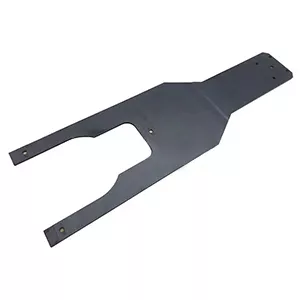
An irregular block may contain angled faces, radii, steps, slots, pockets or compound transitions. Dimension each feature from stable datums and provide sections where a single view could be ambiguous. State profile tolerances, edge breaks, corner conditions and surface requirements according to function. Avoid describing the shape only through a reference image; a controlled model or drawing is needed for quotation and inspection.
Ask the supplier to identify features that drive machining time, fixturing complexity or inspection difficulty. If the profile can be simplified without losing locating function, that design discussion may improve manufacturability. Any proposed change should be recorded against the drawing revision, because a small alteration to a contact face can change the jig’s repeatability and replacement interchangeability.
Connect silicon carbide selection to the process
Silicon carbide may be evaluated when the fixture encounters wear, particles, chemical exposure or demanding thermal conditions, but the RFQ should define the actual process environment. State contact loads, cycle frequency, cleaning chemicals, atmosphere, neighboring materials and any heat exposure as known design inputs. Do not treat the material family as proof of a particular service result.
Identify the faces that may be coated, ground, polished, bonded or left as-processed. Surface texture can affect workpiece marking, friction, debris retention and cleaning. If the block is replaceable, define how it is seated and aligned after replacement, and whether a matched reference or adjustment procedure is part of the fixture design.
Plan verification and replacement control
Inspection should verify the locating features first: datum relationships, profile, contact-face position, clearance and mounting interfaces. Request a measurement report or agreed inspection record for the critical characteristics, together with visual checks for chips, cracks and surface damage. If the block is difficult to measure conventionally, define the fixture, gauge or coordinate method before production approval.
Include identification, orientation marking, protective packaging and replacement documentation when the block is part of a maintained jig. Ask quotations to state whether they cover sample inspection, process approval, matched sets or replacement reference parts. The final RFQ should make clear what is being purchased: a ceramic shape alone, or a verified locating component within a defined fixture system.
Questions Before You Inquire
What makes an irregular positioning block different from a generic ceramic block?
Its locating faces, clearances and datum relationships are tied to a specific jig and workpiece. The outer shape may include reliefs, steps or angled surfaces that control loading and release. Therefore, a complete drawing and fixture context are more important than a generic material or block description.
Which features should be marked critical on the drawing?
Mark the surfaces and dimensions that determine workpiece position, clamp access, release clearance and block mounting. Include datum relationships, profile controls, contact-face location and any replacement interfaces. Cosmetic or non-contact features can be identified separately, helping suppliers focus inspection and quotation effort on the characteristics that affect jig function.
Should the RFQ include the complete fixture?
A full fixture model may not always be necessary, but the supplier needs enough context to understand contacts, loading, clearance and mounting. Provide an interface drawing, assembly views or controlled reference geometry where possible. This reduces the risk of quoting a profile that looks correct but cannot be installed or inspected in the jig.
How can replacement blocks remain interchangeable?
Define the replacement datums, mounting interfaces, critical locating dimensions, orientation marking and inspection evidence. State whether adjustment is allowed after installation. Interchangeability should be verified against the fixture’s functional reference, not assumed from nominal dimensions or a similar-looking sample. Keep the approved drawing and revision level linked to every replacement inquiry.
Send a Clear Component Brief
Share your drawing, quantity and application with Porcecore. Mark the requirements that are fixed and the questions that remain open.


Reviews
There are no reviews yet.