
How to select a technical ceramic material with confidence
Learn how to select technical ceramic components by connecting material family, service conditions, geometry, grade, tolerances and acceptance requirements.
A drawing-led framework for selecting technical ceramic components
Evaluate the part, operating conditions, mating surfaces, tolerances, and acceptance criteria together before requesting a drawing-led quotation.
Drawing Revision Control
Start with the current drawing revision, component form, quantity, and intended use. Flag changed dimensions or notes so quotation decisions follow the same controlled requirement.
Material Grade Priorities
Identify the ceramic family and grade only when known, then confirm purity, density, and relevant property priorities against the actual thermal, electrical, mechanical, or chemical environment.
Geometry, Tolerances, and Assembly
Define tubes, rods, rings, substrates, or custom forms with critical dimensions, tolerances, wall sections, edge details, and features that determine fit, handling, or assembly.
Functional Mating Surfaces
Identify every surface that mates, seals, slides, insulates, locates, or transfers heat. Surface finish and joining expectations may matter as much as the base material.
Application Conditions
Describe operating temperature, thermal cycling, loads, wear, atmosphere, voltage, contact media, and exposure duration. These conditions help separate essential performance needs from preferred specifications.
Inspection and Acceptance Criteria
Set acceptance criteria before quotation, including inspection points, dimensional evidence, material documentation, cleanliness, packaging expectations, and traceability needed for approval or incoming inspection.
Explore Technical Ceramic Material Families
Explore alumina ceramics, zirconia ceramics, silicon carbide ceramics and other material families alongside component forms and application considerations before a drawing-led quotation discussion.

Ceramic Manufacturing Capabilities
Ceramic manufacturing capabilities may include forming, firing, machining, surface finishing and inspection for technical components. The suitable process depends on material family, geometry, tolerances and acceptance criteria, so capabilities and feasibility should be confirmed against the current drawing and project requirements.
Discuss Your Ceramic Part
Ceramic Solutions by Industry
Advanced ceramics applications span industrial equipment, electrical assemblies, thermal management, wear-resistant systems and other engineered environments. Material and component selection should follow operating temperature, chemical exposure, electrical behavior, loading, mating surfaces and service life requirements for the individual project.
Discuss Your Ceramic Part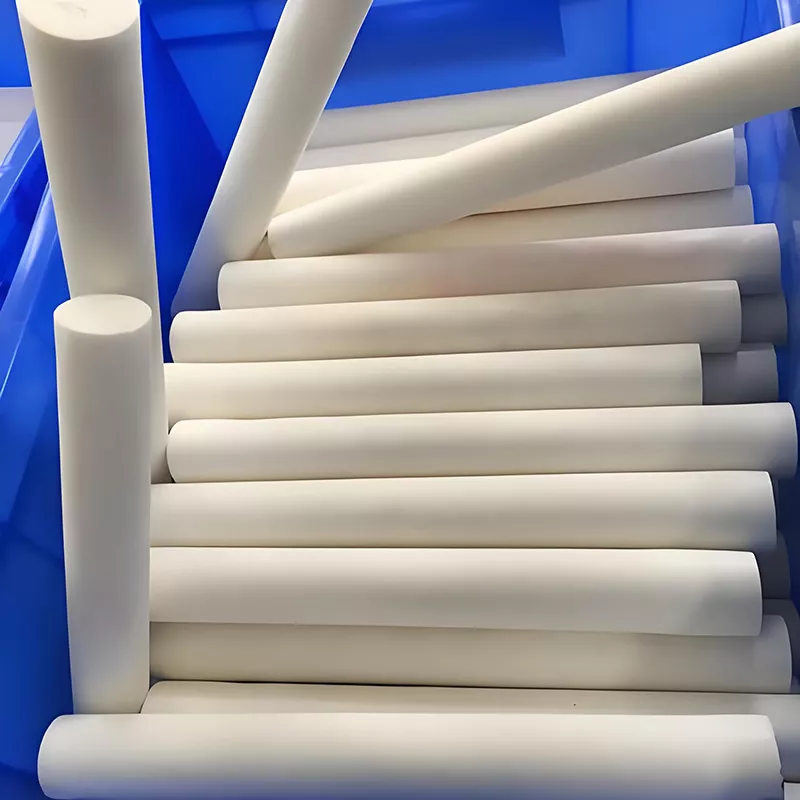
Advanced Ceramic Materials
Advanced ceramic materials include oxide, nitride, carbide and specialty families such as alumina, zirconia, silicon nitride, silicon carbide, aluminum nitride and boron nitride. Grade-specific properties, available sizes and processing options require confirmation for each intended geometry and application.
Discuss Your Ceramic Part
Technical Ceramic Products
Technical ceramic products include familiar component forms such as tubes, rods, rings, substrates and other custom parts. A useful inquiry identifies the material designation if known, dimensions, tolerances, mating surfaces, quantity and operating conditions, with final specifications confirmed project by project.
Discuss Your Ceramic Part
Technical Ceramic Resources
This technical ceramics guide helps buyers connect material families and component forms with application requirements. Use it to organize drawing revisions, service conditions, inspection expectations and documentation needs before contacting Porcecore by email or WhatsApp for a quotation discussion.
Discuss Your Ceramic PartHow to select a technical ceramic material: compare the factors
Evaluate the requirements that connect material choice to geometry, service conditions, inspection and sourcing decisions.
← Swipe left or right to view →
Apply the material-selection framework to real project requirements
Use the part, operating environment and acceptance criteria to turn material exploration into a clearer sourcing conversation.
Equipment Builder
Your assembly needs a ceramic tube, ring, rod or substrate, but the material name alone does not define fit, load, temperature, mating surfaces or the tolerances required for reliable integration.
Start with the drawing revision, geometry, service conditions and critical interfaces. Porcecore can help frame the inquiry around a suitable ceramic family, project-specific grade questions and requirements that need confirmation.
Process Engineer
A process component may face heat, corrosion, electrical stress, wear or thermal cycling, while different ceramic families address different combinations of mechanical, thermal, electrical and chemical demands.
Organize the selection around the dominant operating risks and the properties that matter most. Then share the application conditions with Porcecore so material options can be discussed against the actual component duty.
Procurement Team
Supplier comparisons become difficult when quotations use different grades, tolerances, inspection methods or documentation assumptions. An apparently similar ceramic component may not represent the same technical or commercial requirement.
Request quotations using a consistent package: current drawing, known material designation, quantity, service conditions, acceptance criteria and documentation needs. This gives your team a more concrete basis for comparing proposals.
Component Distributor
Customers may ask for a replacement ceramic part by shape or legacy material name, without complete information about dimensions, interfaces, operating environment, inspection expectations or the reason for replacement.
Use the replacement part as the starting point for a structured inquiry. Collect available drawings and application details, identify open questions, and engage Porcecore to clarify whether an oxide, nitride, carbide or specialty ceramic merits review.
How to select a technical ceramic material: the complete buyer’s guide
Use a practical decision framework to match properties, geometry, service conditions, manufacturing requirements, and supplier capabilities—while avoiding costly specification gaps, material misfits, quality risks, and procurement delays.
1. What does how to select a technical ceramic material mean?
Three material families—oxides, nitrides, and carbides—form much of the technical-ceramics landscape. These engineered, inorganic, non-metallic materials are selected for measurable performance such as strength, hardness, thermal behavior, electrical insulation, chemical resistance, or wear life, not appearance.
Eight requirement groups shape material selection: mechanical loads, temperature and thermal cycling, electrical conditions, chemistry, friction or wear, geometry and tolerances, quantity, and lifecycle expectations. The component’s mating surfaces, assembly method, inspection needs, and production scale must be considered with the material rather than afterward. One property never proves suitability: high hardness may coexist with poor thermal management, while strength can be irrelevant if tensile stress or thermal-expansion mismatch governs failure.
2. The evolution of technical ceramic material selection
Alumina ceramics, including commonly specified high-purity grades, illustrate how technical ceramics moved from traditional ceramic uses toward controlled engineering materials for semiconductor and industrial equipment. Oxide, carbide, and nitride families now reflect deliberate control of purity, powder characteristics, forming, and sintering rather than a single generic ceramic recipe. Sub-micron grain size, low porosity, precision grinding, and documented inspection have also widened practical choices in geometry and tolerance.
3. Types to compare when selecting a technical ceramic material
Screen the material family against the part’s dominant duty: wear, fracture resistance, thermal transfer, insulation, or chemical exposure. Then confirm grade, geometry, processing route, and availability with the supplier.
| Family | Strengths | Typical screening use |
|---|---|---|
| Alumina/oxides | Insulation; wear; purity | Tubes, rings, insulators |
| Zirconia | Toughness; strength | Wear parts, precision components |
| Silicon carbide | Heat; abrasion; chemical resistance | Seals, nozzles, furnace parts |
| Silicon nitride | Thermal shock; dynamic loading | Bearings, supports |
| Aluminum nitride | Thermal conduction; insulation | Heat-spreading substrates |
| Boron nitride | Machinability; insulation; heat | Fixtures, high-temperature parts |
Oxides And Zirconia
Alumina and other oxides commonly suit electrical insulation, wear parts, tubes, and semiconductor hardware, but grade and purity affect performance.
Carbides And Structural Nitrides
Silicon carbide suits hot, abrasive, or chemically severe environments, including seals, nozzles, furnace parts, and semiconductor components; brittleness and joining remain design concerns.
Thermal And Machinable Options
Aluminum nitride is screened where electrical insulation and thermal conduction are both important. Boron nitride may suit high-temperature, lubricious, or electrically insulating applications, depending on grade.
Machinable ceramics can be cut after manufacture; fired ceramics generally require forming, sintering, and often diamond finishing. Confirm the route, tolerances, and acceptance criteria before narrowing the shortlist.
4. How to select a technical ceramic material by properties
Start with the failure mode, then rank properties by consequence.
| Candidate | Strength profile | Thermal or electrical emphasis |
|---|---|---|
| Alumina | Hard, wear-resistant | Insulation; moderate conductivity |
| Zirconia | Higher toughness | Lower thermal conductivity |
| Silicon nitride | Toughness and shock resistance | Thermal stability |
Mechanical Screening
Compression strength, hardness, fracture toughness, density, and wear should follow the actual load path. Ceramics tolerate compression well but remain sensitive to tensile stress, point loading, and stress concentration.
Use hardness for abrasion, toughness for crack tolerance, and density when moving mass matters. Keep secondary values secondary unless the design exposes them.
Thermal And Electrical Fit
Thermal conductivity, expansion, and thermal-shock resistance govern heating, cooling, and joining. Hardness alone is insufficient: low conductivity can leave a friction surface hot and accelerate wear.
Environment And Microstructure
Corrosion resistance, purity, and porosity must match the fluid, contamination limit, and service temperature. Low porosity generally supports strength, sealing, and cleanability, but grade-specific data requires confirmation.
5. How to select a technical ceramic material for geometry and manufacturing
Part geometry determines whether a ceramic route is practical: size, wall thickness, holes, slots, corners, tolerances and mating surfaces must be reviewed together. The same alumina grade may suit a simple tube but become costly after extensive machining. Confirm the process route, tolerances and acceptance criteria against the current drawing and project requirements.
Geometry Sets Process Risk
Thin walls, deep holes and slots increase forming and sintering distortion risk. Sharp internal corners concentrate stress, while tight tolerances or fine surface finishes may require diamond grinding or polishing after sintering.
From Powder To Finished Part
Powder preparation affects uniformity; forming establishes the near-net shape, and sintering develops final density with predictable shrinkage. Complex geometry may justify near-net forming, while simple geometry can tolerate more machining. Post-sinter grinding and polishing add cost but control fits, sealing faces and roughness.
Joining And Inspection
Joining method changes the design: brazing, adhesive bonding and mechanical clamping impose different clearances, surface finishes and thermal-expansion demands. Identify the actual mating surfaces before material confirmation. Inspection should cover dimensions, flatness, holes, finish, density or grade documentation, and visual defects.
6. Key construction and quality elements for ceramic components
Three evidence layers separate a qualified component from a plausible datasheet match: material identity, controlled geometry, and documented inspection.
Material And Microstructure
The grade designation and purity should be confirmed against the quotation, with density, porosity, grain structure, and applicable test method identified. A generic alumina percentage is insufficient when contamination or fracture behavior matters. Supplier records should distinguish general reference values from batch or lot evidence.
Geometry And Surface Integrity
Drawing-controlled dimensions should define tolerances, datum scheme, mating surfaces, flatness, runout, and surface finish; inspection records should show actual results. Radiused transitions and chamfers reduce stress concentration at holes, shoulders, and corners. Defect limits should address cracks, chips, pits, warpage, discoloration, and exposed contamination.
Acceptance Evidence
Lot identification should remain linked to inspection reports, packing labels, and shipment records. Packaging should protect brittle edges and prevent moisture, abrasion, or foreign-particle ingress during transport. A technically adequate component has measurable acceptance criteria, not only matching property values.
7. How to select a technical ceramic material supplier
One RFQ should test both engineering judgment and delivery discipline.
Assess Technical And Quality Depth
Start with material coverage, prototype support, scalable production, process controls, metrology, inspection records, and drawing revision control. Ask for grade-specific data and applicable documentation; do not infer certifications or capabilities from a product listing.
Build A Complete RFQ
Attach the current drawing, material designation if known, annual and initial quantities, operating temperature, loads, chemistry, electrical conditions, and mating surfaces.
State tolerances, surface finish, acceptance criteria, cleaning, packaging, required documents, sample approval, and delivery milestones. This gives suppliers comparable assumptions and exposes open technical questions early.
- Current drawing revision
- Initial and forecast quantities
- Service conditions and acceptance criteria
- Packaging and delivery milestones
Verify Continuity And Communication
Compare response clarity, engineering questions, prototype-to-production transfer, quoted lead times, capacity assumptions, and change-control communication. For distributors and equipment builders, confirm how shortages, substitutions, nonconformities, and schedule changes will be reported.
8. Common mistakes when selecting a technical ceramic material
Eight recurring errors can turn a technically plausible ceramic choice into a poor part decision.
Check More Than Hardness
Hardness alone does not predict service reliability: tensile stress, point loading, thermal gradients, and coefficient-of-expansion mismatch can drive cracking or delamination.
Define Process And Cleanliness
Purity is not a contamination specification, while machining effort and yield losses can dominate total cost. Ask: Which elements, particles, surfaces, tolerances, and inspection limits are controlled, and what scrap rate is realistic? Also define brazing, adhesive, shrink-fit, or other joining requirements.
Demand Grade And Prototype Evidence
Generic labels conceal differences in grain size, porosity, strength, and thermal data; an untested prototype leaves those risks unresolved.
9. How to select a technical ceramic material: a launch checklist
Nine actions turn material selection into a controlled launch: define service conditions, rank failure risks, shortlist candidates, verify data, review manufacturability, and align responsibilities before buying samples or requesting quotations.
Define And Rank Requirements
1. Record temperature, loads, chemistry, electrical conditions, mating materials, duty cycle, quantity, and acceptance criteria. Engineering then ranks risks such as fracture, wear, corrosion, thermal shock, or insulation failure.
2. Quality confirms measurable inspection needs; procurement confirms quantity, timing, and documentation requirements.
Shortlist And Validate Candidates
Compare candidate grades using grade-specific data, not generic family values. Review geometry, tolerances, surface finish, joining, edge conditions, and feasible manufacturing routes. Confirm whether the proposed material is alumina, zirconia, silicon carbide or another ceramic family against the actual component duty and acceptance requirements.
Test, Approve, And Monitor
The supplier proposes feasible options; engineering and quality approve representative samples against defined criteria. Procurement converts the approved drawing, grade, packaging, delivery, and commercial terms into the order.
10. Technical ceramic material pricing and total cost
1 quote should separate recurring unit cost from one-time development work. Raw material purity, forming complexity, sintering yield, machining, surface finish, inspection, testing, packaging, tooling and lead time can each change the delivered total. 2 comparisons should include lifecycle value, not unit price alone.
| Cost driver | Cost impact | Pricing uncertainty | Questions to ask |
|---|---|---|---|
| Material and process | Purity, forming complexity and sintering yield affect scrap and base cost. | Grade availability and yield assumptions. | What grade, process route and yield basis are quoted? |
| Machining and finish | Tight tolerances, surface finish and complex geometry increase labor and tooling. | Final dimensions and inspection method may be incomplete. | Which surfaces require grinding, polishing or special inspection? |
| Quality and logistics | Testing, packaging, documentation and lead time add landed cost. | Requirements may change after approval. | Are testing, packaging, freight and delivery dates included? |
| Quantity and development | Tooling and setup spread across units; prototypes carry higher unit cost. | Forecast and revision risk affect breaks. | What are prototype, batch and annual-volume prices? |
How to select a technical ceramic material: common questions
Clear answers for connecting material guidance with drawings, operating conditions, inspection expectations and project-specific quotation requirements.
How to select a technical ceramic material when the grade is not yet known?
How to select a technical ceramic material from a drawing?
How to select a technical ceramic material for demanding operating conditions?
Do I need a complete engineering drawing before requesting a quotation?
How should I specify tolerances and functional surfaces on ceramic components?
What inspection and documentation should be included in the inquiry?
Does quantity affect technical ceramic material selection and quotation?
What should I send Porcecore to begin a ceramic component discussion?
Technical ceramic selection questions from industrial buyers and engineers
Share your current drawing revision, quantity, service conditions and acceptance criteria for a clearer Porcecore quotation discussion.