
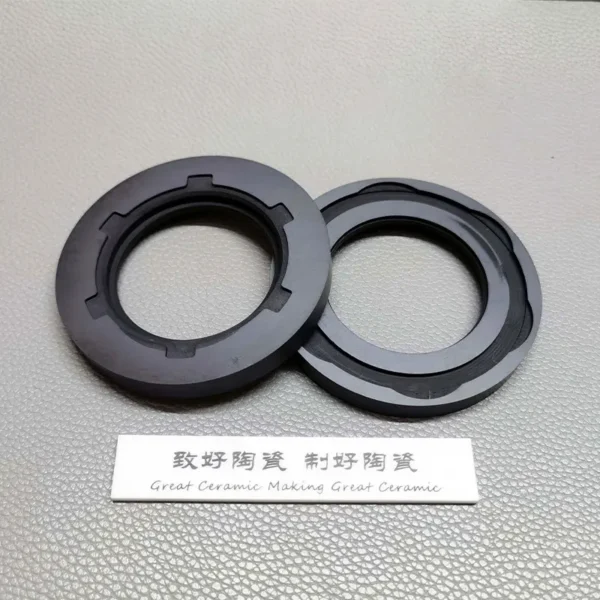
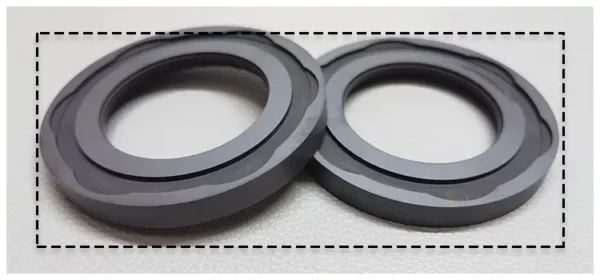

Build the RFQ around the sealing interface, ring geometry, mating hardware and inspection plan rather than treating the component as a standard stocked washer.
Key Inquiry Requirements
Ring function and interface definition
A silicon carbide mechanical seal gasket ring is defined by how it interfaces with mating faces, retainers, shafts or housings. The ring may be simple in outline while still carrying critical requirements for flatness, concentricity, face condition, chamfers and orientation. Include an assembly cross-section and identify the sealing path so the quotation addresses the working interface rather than only the outside profile.
Explain whether the ring is intended to seal, space, support, isolate or contribute to a mechanical seal assembly. Describe contact motion, clamping method and installation sequence where relevant. These details help distinguish a static gasket-like interface from a rotating or sliding seal arrangement, and they give the reviewer a basis for asking focused questions about the ceramic body and its mating parts.
Material selection and service context
Silicon carbide is commonly evaluated for demanding wear, thermal or chemical service, but suitability depends on the specific grade, microstructure, finish and system conditions. The RFQ should identify the fluid or atmosphere, pressure category, temperature range, contact materials, movement and cleaning exposure without presuming a guaranteed result. Request material documentation that matches the proposed grade and intended application.
A ring can fail at the interface even when its bulk material is well selected. Review differential expansion, edge loading, clamping force, lubrication or dry-running conditions, and the possibility of particles entering the seal path. If the ring will be paired with another ceramic or metal, include those materials and their relevant interface constraints for a more meaningful technical comparison.
Critical geometry and drawing practice
Show all diameters, widths, face relationships, grooves, steps and locating features in a controlled drawing. Identify the sealing face, datum face and any non-functional surfaces separately. A section view is especially useful for asymmetric profiles or recessed details. If the ring must align with a shaft or housing, define the relationship between concentric features instead of listing isolated dimensions.
State which characteristics require inspection and how the part will be measured. Depending on the geometry, face inspection, diameter measurement, runout evaluation or visual edge review may be relevant. The RFQ should invite confirmation of measurement capability and reporting format. This avoids vague acceptance language and helps align the supplier quotation with the actual seal design.
Finish, edges and assembly handling
The working face of a seal ring should be discussed separately from its handling edges and non-contact surfaces. Identify whether lapping, grinding, edge breaking, cleaning or special packaging is required, while leaving the exact process open for technical review. Functional surface condition should be connected to the mating design and sealing mechanism, not copied from a generic material table.
Installation can be affected by small chips, contamination, orientation mistakes or uneven support. Include requirements for protective packaging, part identification and cleanliness where those issues matter to the assembly. If the ring is fragile during installation, describe the tooling or handling sequence. The supplier can then comment on practical risks before the order is finalized.
RFQ and acceptance checklist
An effective request should include the ring drawing, mating-component drawings, seal cross-section, service description, quantity assumptions and any existing failure or inspection history. Identify whether the requirement is for a prototype, replacement or repeat design. Ask the supplier to list material grade, manufacturing assumptions, inspection scope and drawing deviations clearly in the quotation.
During review, compare the response across interface geometry, surface treatment, inspection evidence, packaging and change control. Confirm how nonconforming edges, dimensional findings or material substitutions will be handled. The approved purchase specification should state the accepted revision and the characteristics that determine release, while keeping unconfirmed performance claims out of the procurement record.
Questions Before You Inquire
What information is most important for a silicon carbide seal ring RFQ?
Supply the ring drawing, mating-face and housing details, seal cross-section, movement or clamping conditions, service media, environment, quantity assumptions and inspection requirements. Identify the actual sealing face and any critical concentric or face relationships. This allows the supplier to assess the interface as an assembly feature rather than quote an isolated ring.
Is a silicon carbide ring automatically suitable for rotating seals?
No. Rotating service depends on the complete seal design, including mating materials, speed, lubrication, pressure, thermal conditions, alignment and face finish. Treat silicon carbide as a material option for technical evaluation. Request application-specific review and define the conditions that must be considered before accepting a proposed grade or geometry.
Should face finish be included in the drawing?
Yes, if the face participates in sealing or controlled contact. Identify the functional face, datum relationship and inspection expectation, then discuss the appropriate finish with the supplier. Avoid using an unexplained generic value; the requirement should relate to the seal design, mating material and measurement method used for acceptance.
How can gasket-ring quotations be compared fairly?
Use the same drawing revision, interface information, material documentation request, inspection scope and packaging expectations for each quotation. Compare stated assumptions and deviations as carefully as commercial terms. A low price is not directly comparable if it excludes functional-face inspection, special handling, material traceability or clarification of critical geometry.
Send a Clear Component Brief
Share your drawing, quantity and application with Porcecore. Mark the requirements that are fixed and the questions that remain open.

Reviews
There are no reviews yet.