
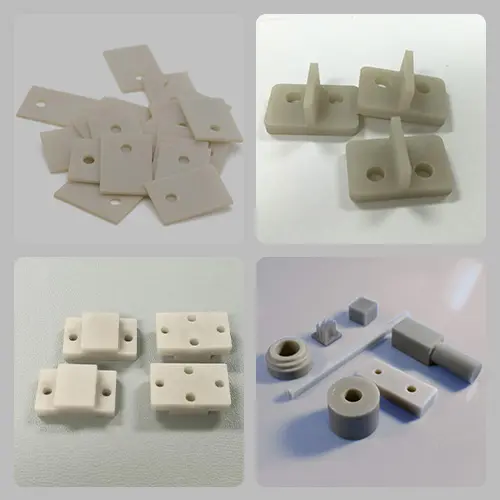
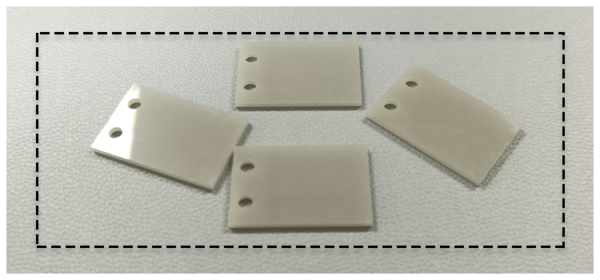

Specify the finished outline, thickness, flatness, holes, edge treatment, surface condition and any conductive pattern or joining process. The application, operating environment and assembly method should guide material grade selection and verification planning.
Key Inquiry Requirements
Role in an assembly
An aluminum nitride substrate can serve as a rigid insulating platform beneath or between electrical elements, while its ceramic body supports the mechanical layout. The useful specification is not simply a material name. It is the relationship between the substrate outline, mounting pattern, conductor arrangement, heat path, clearance zones and surrounding hardware. A clear drawing helps separate electrical insulation needs from dimensional and assembly-control requirements.
For an RFQ, describe what the substrate must carry, contact, isolate or align. Include the mating parts, attachment method, conductor geometry and any areas that must remain free of glaze, metal or tooling marks. If the part will be clamped, bonded, brazed or metallized, identify that process at inquiry stage so the supplier can review compatible surfaces and inspection points rather than treating the item as a generic sheet.
Drawing and material definition
The drawing should establish finished length and width, thickness, datum references, corner geometry, apertures, slots, steps and edge breaks. State which dimensions are critical to assembly and which may be reviewed as noncritical. For ceramic substrates, also distinguish functional faces from handling faces, because surface expectations can affect packaging, inspection and any later joining or patterning work.
Define the aluminum nitride material family together with the properties that matter to your design review, without assuming a catalogue grade is interchangeable with another. Ask for the available material data, applicable test methods and any proposed substitutions before approval. Where thermal behavior, dielectric isolation or mechanical loading drives the design, request evidence tied to the proposed grade and your intended geometry.
Features, metallization and joining
A plain insulating substrate may be only one stage of the finished assembly. Your RFQ should state whether the ceramic remains uncoated, receives a deposited conductor, or is prepared for a separate bonding operation. Identify conductor locations, masking boundaries, pad geometry, adhesion expectations and any soldering, brazing or wire-bonding interface. These details determine how the part should be reviewed and inspected.
If the drawing includes slots, through-holes, countersinks, grooves or local thickness changes, show their position from controlled datums and explain their function. Ceramic machining and edge handling can influence feasible feature sizes and chip control, so invite a manufacturability review before release. A supplier response should identify open points, proposed process assumptions and the inspection records available for the completed part.
Inspection and acceptance
Acceptance criteria should cover the attributes that affect installation and service: outline, thickness, flatness, hole position, edge integrity, visible cracks, chips, contamination and surface condition. Set measurement references and sampling expectations in the purchasing specification. If the substrate will join a thermal or electrical stack, consider whether coplanarity, contact coverage or pattern registration needs explicit verification.
Do not rely on an unqualified phrase such as high quality or high thermal performance. Instead, ask which measurements can be reported for the selected grade and geometry, which standards or internal methods apply, and how nonconforming pieces are controlled. A practical RFQ separates material documentation, dimensional inspection, visual inspection and any application-specific testing that your engineering team requires.
RFQ checklist and review
Send a controlled drawing, revision identifier, annual or project quantity estimate, intended application, mating-part information and packaging concerns. Include the complete conductor or metallization artwork when relevant, along with the required delivery format for inspection data. If the design is still provisional, mark the dimensions requiring supplier feedback so quotation assumptions remain visible.
During comparison, review more than unit pricing. Check whether each response addresses material grade, feature capability, inspection coverage, surface preparation, packaging and change-control expectations. Ask for clarification where a proposal uses broad property language without test conditions. Final approval should follow drawing review, sample or first-article evaluation where appropriate, and agreement on the evidence that will accompany production.
Questions Before You Inquire
What should accompany an aluminum nitride substrate RFQ?
Provide a controlled drawing, material family, revision, quantity context, application description, mating interfaces and any conductor or metallization artwork. Identify critical dimensions, flatness, holes, surface zones and inspection records required. If the design is incomplete, mark open items clearly so quotation assumptions can be reviewed before approval.
Can the substrate include metallization or other features?
That depends on the approved design and process route. State whether you need a bare ceramic, patterned conductor, joining preparation, holes, slots or stepped geometry. Include locations, masking limits and interface requirements. The supplier should confirm feasibility, assumptions and inspection coverage against the drawing rather than infer them from the product name.
How should thermal requirements be specified?
Describe the heat path, attached components, operating environment and relevant interface materials. Ask for data on the proposed aluminum nitride grade using identified test methods and conditions. Avoid inserting an assumed conductivity or temperature value into the RFQ unless your engineering basis supports it; require confirmation that the selected geometry and assembly are suitable for review.
What visual defects should be addressed?
Define acceptable limits for chips, cracks, contamination, warpage, edge damage and surface marks, with inspection lighting or measurement methods where needed. Ceramic appearance alone cannot establish functional acceptance. Link visual criteria to installation and joining risks, and request records showing how the agreed limits will be checked.
Send a Clear Component Brief
Share your drawing, quantity and application with Porcecore. Mark the requirements that are fixed and the questions that remain open.


Reviews
There are no reviews yet.