
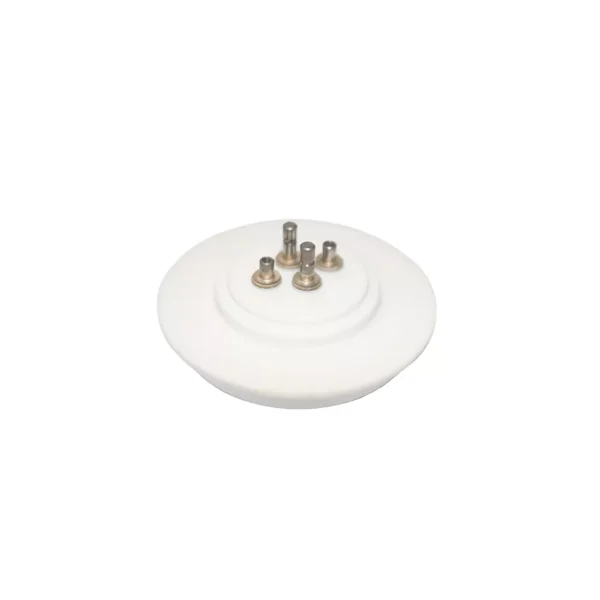


Prepare the RFQ with a cross-section, joining sequence, material pair, contact function, and service environment. Identify whether the connector is intended to transmit electrical current, provide insulation, support a feedthrough, or hold an assembly together. Ask suppliers to explain the proposed joining and verification route before approval.
Key Inquiry Requirements
Define the connector’s system role
A brazed ceramic connector may combine an insulating ceramic body with metal elements to create a feedthrough, terminal, support, or sealed interface. The same general form can have very different requirements depending on whether it carries current, isolates voltage, anchors a conductor, contains a pressure boundary, or transfers load between materials.
Explain the assembly’s operating cycle and failure consequences. Identify electrical, mechanical, thermal, vacuum, pressure, moisture, and chemical functions separately. State which interfaces are active after brazing and which are protected by housing or potting. This context lets suppliers assess the joint design as an assembly instead of treating ceramic and metal as independent catalogue materials.
Cross-section and joint geometry
A useful drawing should show ceramic profiles, metal inserts, joint locations, braze gaps or interfaces where controlled, fillets, clearances, shoulders, and datum references. Include a section view through every brazed region and identify surfaces that must remain clean, plated, ground, or dimensionally controlled. Show how the connector is supported during joining and final installation.
Geometry should account for differential expansion and access for inspection or assembly. Avoid hiding critical joint features behind a single outside view. Mark the functional electrical path, sealing boundary, load path, and clearance zones. If the connector joins to a customer housing or cable, include that mating information so the proposed design can be reviewed in context.
Materials and brazing process questions
Ceramic-to-metal brazing can involve several material combinations and joining approaches, including active or metallized interfaces, depending on the design. Buyers should specify acceptable ceramic and metal families, surface preparation constraints, plating expectations, and any restrictions on joining materials. If the material selection is open, request a documented proposal with assumptions and compatibility concerns.
The RFQ should ask suppliers to describe the intended brazing process at an appropriate level, including atmosphere or processing environment, fixturing concept, and post-join treatment where relevant. Do not request an unsupported temperature or strength promise. Instead, define the service conditions and qualification evidence needed to show that the finished connector meets its function.
Inspection and qualification planning
Inspection may need to address ceramic dimensions, metal position, joint appearance, braze coverage, voids or discontinuities where measurable, electrical isolation or continuity, and sealing behavior where applicable. The correct controls depend on the connector’s function. Define which characteristics are release requirements and which are engineering-development observations.
For demanding assemblies, agree a qualification plan before production. It may include representative thermal cycling, pressure or leak evaluation, electrical testing, mechanical checks, or sectioned sample analysis, but the method and acceptance limit must be written in advance. Ask for sample results and traceability that connect the evidence to the approved design and process condition.
Building the brazed connector RFQ
Send the assembly drawing, connector cross-section, ceramic and metal material requirements, joining locations, service environment, quantity assumptions, and required documentation. Include any customer-controlled plating, cleaning, outgassing, insulation, or sealing requirements. Explain whether the request concerns a new design, a replacement, or a process transfer from an existing source.
During quotation review, compare the proposed joint architecture, material assumptions, process controls, inspection coverage, qualification plan, packaging, and treatment of rework. Ask the supplier to identify design features that may affect fixturing, braze access, distortion, or inspection. A technically clear RFQ makes it easier to separate a credible joining proposal from a generic ceramic component quote.
Questions Before You Inquire
What is the most important information for a brazing connector RFQ?
Provide a cross-sectional drawing, ceramic and metal material requirements, joint locations, service environment, electrical or sealing function, assembly sequence, and inspection criteria. Include mating hardware and the consequences of failure. These details allow the supplier to evaluate the complete joint rather than quote an undefined ceramic-to-metal connector.
Does brazing automatically make a ceramic-to-metal joint hermetic?
No. Hermetic behavior depends on joint design, material compatibility, surface preparation, process control, defects, finishing, and the specified test method. If sealing is required, define the boundary, test conditions, sampling, and acceptance limit in the RFQ. A brazed appearance alone is not evidence of hermetic performance.
Can the metal and ceramic materials be left open for supplier recommendation?
They can be open when the application constraints are clearly stated, but the supplier should submit a defined material and process proposal for approval. Provide electrical, mechanical, thermal, chemical, and cleaning requirements. Ask the supplier to identify assumptions and compatibility risks before the material combination becomes part of the released specification.
What inspection should be requested after brazing?
Request inspection tied to the connector’s function, which may include dimensional checks, joint visual review, electrical continuity or isolation, sealing evaluation, metal position, and agreed sample analysis. The exact scope depends on the design. Define methods, sampling, traceability, and acceptance criteria before quotation so every supplier is evaluated on the same basis.
Send a Clear Component Brief
Share your drawing, quantity and application with Porcecore. Mark the requirements that are fixed and the questions that remain open.


Reviews
There are no reviews yet.