

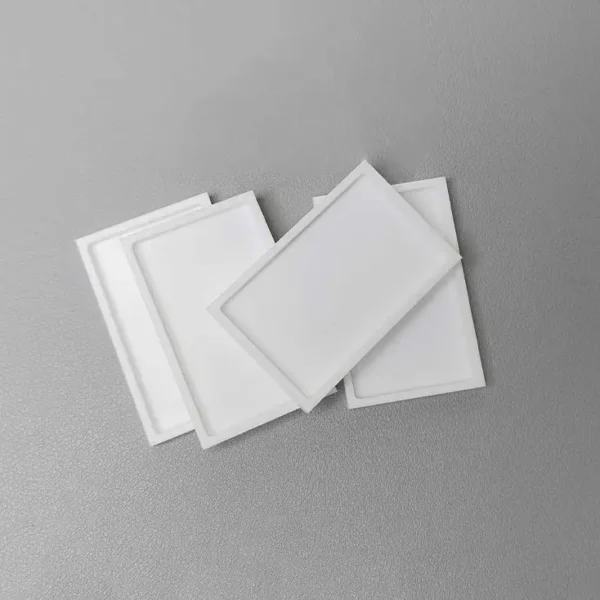


Define the finished shape, interfaces and service environment before requesting a quotation. A useful RFQ should make the required machining features, reference datums and acceptance evidence unambiguous.
Key Inquiry Requirements
Define the plate around its working geometry
Machinable ceramic plates are usually specified by the geometry they must present to an assembly rather than by a simple blank size. Describe the outside profile, openings, pockets, steps, slots, edge breaks and any repeated features on the drawing. Identify functional faces, mounting surfaces and reference datums so a supplier can distinguish cosmetic edges from interfaces that control fit, alignment or electrical separation.
A clear drawing should also show section views wherever a feature changes depth or creates a hidden intersection. State whether the part is intended as a plate, disc, spacer, cover or shaped insulating member, because the same material family can serve different design roles. Include revision status, units, general notes and a marked list of critical characteristics to keep quotation discussions focused.
Discuss machinability without assuming unlimited detail
The value of a machinable glass ceramic is often connected to the ability to produce designed features after forming. That does not make every miniature feature, sharp internal corner or thin web automatically practical. Ask for a manufacturability review against the drawing, including tool access, corner treatment, feature spacing, edge integrity and the relationship between machined surfaces and the original blank.
When comparing responses, separate proposed process capability from a guaranteed result. Request representative inspection records or sample approval only when they are relevant to the application and available for review. If a feature is especially important, define how it will be measured, which datum controls the measurement and whether visual inspection, dimensional inspection or a documented sample review is expected.
Specify the material and service environment
The material line should identify the required machinable glass ceramic family and any approved alternatives, rather than relying on a product name alone. Explain the operating environment in practical terms: electrical isolation, contact with fluids, thermal cycling, vacuum or atmosphere, cleanliness, mechanical loading and exposure to handling damage. These inputs help a supplier assess whether the proposed material route suits the intended component role.
Avoid placing unstated assumptions into a purchase order. Ask the supplier to identify the material designation, available technical data, processing condition and any limitations that affect the drawing. Where the plate will sit against metal, another ceramic or a seal, describe the mating materials and assembly method so interfaces can be reviewed rather than treated as isolated dimensions.
Plan inspection around datums and interfaces
Inspection should follow the way the plate functions. Identify the primary datum, secondary locating features and surfaces that must remain flat, parallel or accurately positioned relative to one another. For discs, specify the relevant diameter, concentric relationship and hole pattern; for plates, distinguish overall profile requirements from local step, slot or pocket requirements.
Ask what inspection evidence accompanies the quotation or shipment, and define the required format before production begins. A useful quality package may include a dimensional report, marked drawing, material identification or visual review, but the exact deliverables belong in the RFQ. If cleanliness, edge condition or damage limits matter, state those requirements explicitly instead of assuming they are covered by standard practice.
Build a complete RFQ package
Send the latest drawing together with quantity assumptions, intended use, application environment, packaging concerns and any sample or approval route. Identify whether the design is at concept, prototype or repeat-production stage, while avoiding an implication that stock or a fixed delivery schedule exists. Ask for clarification of any feature that cannot be inspected with the proposed drawing datums.
The quotation response should make its basis visible. Request confirmation of material family, manufacturing route, drawing exceptions, inspection approach, tooling or setup considerations and assumptions affecting cost. If substitutions are acceptable, define the approval process in advance. A disciplined RFQ lets buyers compare technically equivalent proposals while preserving room for design feedback before release.
Questions Before You Inquire
Can these plates be quoted from a sketch?
A sketch can support an initial discussion, but a quotation becomes more reliable when the supplier receives a dimensioned drawing with datums, tolerances, material definition and service conditions. If the design is still developing, identify the missing information and request a manufacturability review before treating the response as a firm technical proposal.
What features should be highlighted on the drawing?
Highlight surfaces that locate the part, holes or slots used for assembly, stepped or recessed regions, sealing interfaces, thin webs and any feature whose position affects system alignment. Mark critical characteristics separately from general geometry, and include section views when depth, corner treatment or hidden intersections could be misunderstood.
How should machinable ceramic alternatives be compared?
Compare the stated material family, available technical data, feature-making route, inspection method, surface condition and compatibility with the intended environment. Do not compare only on a material label or nominal blank size. Ask each supplier to list deviations, assumptions and evidence supporting the proposed route.
What should an RFQ say about inspection?
Specify the drawing revision, measurement datums, critical dimensions, visual acceptance points and required documentation. State whether first-article review, sample approval or a dimensional report is needed. The RFQ should also identify packaging and edge-protection expectations if the finished plate contains delicate machined features.
Send a Clear Component Brief
Share your drawing, quantity and application with Porcecore. Mark the requirements that are fixed and the questions that remain open.


Reviews
There are no reviews yet.