


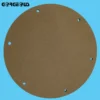

Use this page to prepare a technically complete request for a porous ceramic plate. Define the functional flow path, support arrangement, exposure conditions and acceptance criteria before comparing suppliers. A reference name or photograph is not enough to establish pore structure, plate geometry or repeatable performance.
Key Inquiry Requirements
Component role and application context
A porous ceramic plate may serve as a permeable support, diffuser, separator, filter element or controlled interface, depending on the assembly around it. Its function comes from the relationship between the pore network, open surfaces, thickness and boundary conditions. Therefore, the RFQ should explain what must pass through the plate, what must be retained and how the plate is supported.
Describe the working orientation, pressure or vacuum arrangement, contact surfaces and expected duty cycle without turning the request into an assumed performance guarantee. Include whether flow must be uniform across the active area, whether dead zones are acceptable and how the plate will be cleaned or regenerated. These details guide meaningful design review and supplier comparison.
Porosity and material definition
The term porous ceramic does not by itself establish pore size, distribution, open porosity, connectivity or strength. Buyers should define which of these characteristics are critical and which may be proposed by the supplier. If the application depends on a narrow pore range or consistent permeability, make the measurement method and sampling basis part of the technical specification.
Specialty ceramic is the stated material family for this page, while the source topic references a ceramic plate and porous microstructure. Do not assume a particular ceramic composition, binder system or firing route. Ask for the proposed composition, compatibility with the process media, expected contamination controls and evidence that the selected body can meet the required geometry.
Plate drawing and interfaces
Show the plate outline, thickness, active area, inactive margins, holes, grooves, steps and mounting features on the controlled drawing. Identify datum surfaces and distinguish functional faces from handling or sealing faces. If the plate is bonded, clamped, brazed or sealed into a housing, provide the mating geometry and define any loading or compression limits that matter to the design.
Surface finish and edge treatment deserve explicit attention because porous edges can behave differently from dense machined surfaces. State whether exposed edges may be sealed, masked or finished, and identify any regions where pores must remain open. Include cleanliness, packaging and contamination limits when the component enters a sensitive fluid, vacuum or process environment.
Inspection and application evidence
Inspection should be linked to the actual function. Depending on the design, this may include dimensions, flatness, visual condition, pore distribution, permeability, pressure response, surface cleanliness or evidence of blocked regions. The required test should be named with its fixture, medium, orientation and reporting units, because results from different methods may not be directly comparable.
When reviewing samples, compare both the ceramic body and the way it is measured. Ask whether the sample represents the proposed production route and whether the report covers the active area rather than only a convenient coupon. A plate that looks uniform may still require application-level testing before it is accepted as a functional interface.
Building a complete RFQ
Include the latest drawing, functional description, process media, pressure or vacuum conditions, temperature range, cleaning method, mounting arrangement, quantity stage and required records. Explain whether the request concerns feasibility, prototype evaluation or a repeatable production design. If the pore structure is open for development, ask for a controlled proposal with clearly stated assumptions.
Approval should combine dimensional review with the relevant functional evidence. Establish how deviations, lot changes, material substitutions and cleaning or packaging changes will be communicated. This makes the component traceable as an engineered ceramic part and keeps the quotation aligned with what the assembly actually needs, rather than with a generic porous plate description.
Questions Before You Inquire
What does “porous ceramic plate” specify by itself?
It specifies a component form and a broad functional concept, but not pore size, connectivity, open porosity, permeability, ceramic composition, thickness or strength. Those characteristics must be defined from the application. A useful RFQ explains the media, flow direction, support condition, cleaning method and inspection method required for acceptance.
Should the buyer specify pore size or permeability?
Specify whichever characteristic directly controls the application, and relate it to a defined measurement method. Pore size alone may not describe flow behavior, while permeability can depend on test medium, direction and fixture. If the design is still being developed, ask the supplier to propose measurable criteria and identify the assumptions behind them.
What plate features commonly need drawing detail?
Include active area, thickness, margins, holes, grooves, steps, mounting surfaces, edge treatment and any regions that must remain permeable. Show datums and mating housing geometry. Also state whether sealing, clamping, bonding or cleaning contacts the porous surface, because those operations can change the functional interface.
How should porous plate samples be evaluated?
Evaluate dimensions and visible condition together with the function-specific test defined in the RFQ. Confirm the fixture, medium, orientation, active area and reporting units, then compare results with the approved criteria. Representative samples should reflect the proposed process; appearance alone cannot establish uniform permeability or usable pore structure.
Send a Clear Component Brief
Share your drawing, quantity and application with Porcecore. Mark the requirements that are fixed and the questions that remain open.


Reviews
There are no reviews yet.