
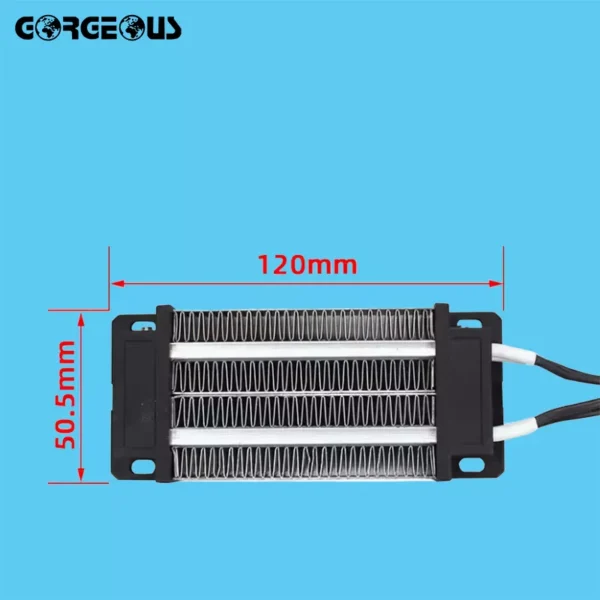


Describe the heater assembly, power source, controlled object, mounting method and operating cycle. The RFQ should make clear what must be heated, how heat is transferred, how temperature is monitored and which electrical and mechanical checks are required.
Key Inquiry Requirements
Define the heating duty
Begin with the object or zone that requires heat and describe the desired temperature behavior over the operating cycle. State whether the element is used for warming, maintaining, thawing, drying or another defined task. Show the thermal path from ceramic element through any holder, plate, air gap, adhesive or contact surface so suppliers can understand the intended assembly.
Describe startup, steady operation, cycling, dwell periods and shutdown conditions without inventing values that have not been validated. If the heater works inside an enclosure or alongside sensitive components, include airflow, insulation, ambient conditions and nearby materials. These details help separate the element’s role from the performance of the complete system.
Specify electrical interfaces
List the available supply type, nominal input conditions, wiring arrangement, connector or terminal format and permitted installation orientation. Clarify whether the element is independently controlled, grouped with other elements or governed by a separate sensor and controller. Identify electrical isolation, insulation, grounding and touch-protection requirements as design constraints for the assembly.
A PTC designation should not replace an electrical specification. Ask for the supplier’s proposed interpretation of resistance behavior, current control and allowable variation, then compare it with the system’s control method. Define the required checks for resistance, insulation, continuity and terminal integrity, while keeping acceptance limits tied to the approved design and applicable test procedure.
Design the thermal and mechanical fit
Show the heating element’s contact surfaces, clamping method, supports, clearances and expansion allowance. Explain whether heat transfers by direct contact, conduction through a carrier, convection or a combination. Any pressure, vibration, sliding insertion or repeated assembly should be documented because the element must be evaluated within its actual mechanical arrangement, not as a free-standing ceramic shape.
Include the surrounding materials and their response to heating, especially where differential movement or local stress may affect the assembly. Mark no-contact zones, cable exits, bend restrictions and service access. If a carrier, frame or reflector is supplied separately, identify responsibility for interface dimensions and assembly verification in the RFQ.
Set inspection and testing criteria
Create an acceptance plan that connects each critical requirement to a check. Depending on the design, this may include visual condition, dimensions, resistance, insulation, terminal position, flatness, fit in a fixture and a controlled functional test. State the test configuration, instrumentation expectations and sequence, because a result is difficult to compare when suppliers use different setups.
Separate component inspection from full-system validation. A heater element quotation should identify what can be verified on the ceramic part and what depends on the buyer’s holder, controller, sensor, enclosure or thermal load. If representative samples or first-article checks are needed, define the sample basis and approval route before production quantities are discussed.
Prepare a comparison-ready RFQ
Provide a drawing, wiring diagram, assembly view, duty description and environmental context. Add photographs or a reference sample only as supplemental evidence; the controlled drawing should govern dimensions and interfaces. Explain the expected production stage, whether the design is exploratory or released, and which specifications remain open for supplier recommendation.
Request a quotation that clearly lists material interpretation, manufacturing assumptions, test scope, exclusions and proposed deviations. Ask suppliers to flag conflicts between electrical input, mounting arrangement and thermal objective instead of silently selecting assumptions. This creates a useful technical comparison and gives engineering a record of the decisions required before approval.
Questions Before You Inquire
What information is essential for a PTC ceramic heater RFQ?
Include the heated object, duty cycle, supply conditions, control method, mounting arrangement, thermal path, surrounding materials, wiring details and environmental conditions. Add drawings for contact surfaces and supports, plus the required electrical, dimensional and functional inspections. A product name alone does not define how the element will operate in an assembly.
Should the buyer specify only voltage?
No. Voltage is one input, but the RFQ should also address current or resistance behavior, control strategy, wiring, insulation, thermal coupling, cycling and safety requirements. Ask the supplier to identify the proposed electrical interpretation and test method so quotations can be compared against the same system assumptions.
How are heater elements tested before assembly?
Component-level checks may include appearance, dimensions, continuity, resistance, insulation and terminal integrity, depending on the design. Functional heating checks require a defined fixture, control method, thermal load and measurement sequence. The buyer should distinguish these checks from validation of the complete heater assembly and its controller.
What mounting details should be shown?
Show contact faces, clamps, supports, clearances, expansion allowance, cable exits, insertion direction and service access. Identify whether heat transfer relies on pressure, direct contact, a carrier or airflow. Include adjacent materials and any vibration or repeated-cycling conditions that could affect the ceramic or its connections.
Send a Clear Component Brief
Share your drawing, quantity and application with Porcecore. Mark the requirements that are fixed and the questions that remain open.



Reviews
There are no reviews yet.