


Use the RFQ to describe the workpiece, vacuum interface, bump layout and mechanical envelope. Explain how the cup is supported, cleaned, connected and inspected so suppliers can distinguish functional surfaces from noncritical features and identify missing information before quotation.
Key Inquiry Requirements
Describe the vacuum interface
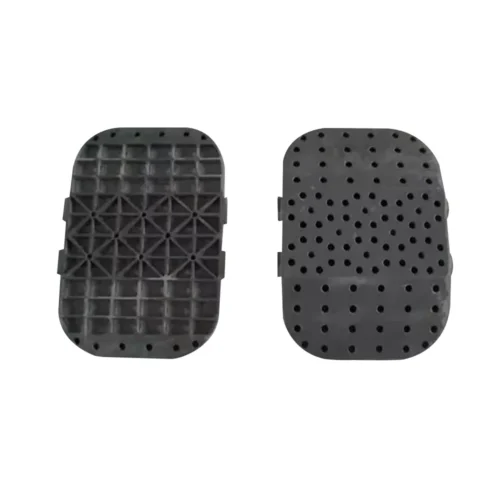
The phrase bump suction cup does not fully define the working surface. State whether the bumps create discrete support points, seal zones, flow paths or a combination of these functions. Show the intended workpiece contact area, keep-out regions and vacuum routing. Identify whether the surface contacts a rigid, flexible, coated, polished or textured workpiece, because interface behavior depends on that relationship.
Explain the required handling sequence from placement through release. Note whether the component supports a stationary process, indexing motion or repeated pick-and-place cycle, and identify any sensitivity to marks, particles or local contact pressure. These process details help suppliers understand the purpose of the bump pattern without assuming a particular equipment design or promising a performance result.
Control geometry and pattern definition
The drawing should define the outer envelope, mounting features, datum scheme, working face, bump locations, bump geometry and relevant transitions. Include vacuum ports, grooves, channels or plugged regions if present, with clear references to the functional surface. A pattern drawing or coordinate table may be necessary when repeated features must align with a workpiece, mask, carrier or downstream station.
Separate dimensions that govern sealing and support from those that simply describe the nonfunctional body. Identify allowable variation in bump height, planarity, spacing and edge zones only after engineering review determines their importance. If the pattern is generated from a digital file, control its revision and units. This prevents an apparently simple flat part from being quoted with incompatible feature interpretations.
Address material and processing questions
Silicon carbide is a material family, while the finished component also reflects forming, sintering, surface finishing and any machining or cleaning steps. Ask suppliers to identify the proposed material designation and process sequence. Request information on how they control distortion, surface condition, embedded residue and feature integrity, while distinguishing representative capability data from contractual requirements.
Discuss the working environment in concrete terms: temperature range, atmosphere, vacuum level, cleaning chemistry, particle sensitivity and contact with the handled material. Do not replace these conditions with a broad request for high performance. If the cup belongs to a larger vacuum chuck or handling assembly, provide the interface constraints and indicate which features are supplied by others.
Define vacuum and inspection evidence
Specify how the vacuum interface will be evaluated without prescribing unsupported acceptance values. The RFQ can identify the test configuration, reference workpiece, sealing state, connection arrangement and required reporting format. If leak behavior, evacuation response, holding stability or release behavior matters, describe the test method and operating sequence so proposals can be compared on equivalent evidence.
Inspection should cover the features that affect contact and flow: bump dimensions, pattern location, working-face condition, port geometry, mounting references and visible damage. Define whether inspection is 100 percent, sampled or first-article based according to application risk. Ask for records that connect measurements to drawing datums, particularly when the component must align with a larger vacuum assembly.
Make the supplier response comparable
Send the drawing, pattern data, workpiece description, assembly interfaces, quantity assumptions and inspection plan together. Include cleaning, packaging and storage expectations when surface condition or vacuum cleanliness matters. State which items are mandatory and which remain open for supplier recommendation. This gives the supplier room to propose a process while keeping functional requirements under the buyer’s control.
Request a response that lists assumptions, exclusions, deviations, proposed material designation and validation approach. Ask questions about mounting, replacement, repair and cleaning if the cup will be integrated into service equipment. If several cup patterns are under review, provide a controlled variant table. A disciplined RFQ reduces ambiguity around the working face and avoids treating a specialized interface as a generic ceramic plate.
Questions Before You Inquire
What information is essential for a silicon carbide bump suction cup RFQ?
Provide the workpiece description, functional contact area, bump-pattern data, vacuum routing, mounting envelope, cleaning conditions and inspection expectations. Explain the handling sequence and any sensitivity to marks, particles or release behavior. Include the larger assembly interface when the cup is only one part of a vacuum support system.
How should the bump pattern be specified?
Use a controlled drawing, pattern map or coordinate file that identifies datums, feature locations, heights, transitions and keep-out zones. State the revision, units and functional surfaces. Explain which pattern features affect support, sealing or flow. Avoid relying on a product name or photograph to communicate the working geometry.
What tests may be relevant to this component?
Depending on the process, buyers may define tests for vacuum integrity, flow response, holding stability, release behavior, surface condition or alignment. The RFQ should specify the test setup, reference workpiece, operating sequence and reporting format. Do not use an unqualified performance claim as a substitute for a defined method.
Can the supplier choose the vacuum cup geometry?
A supplier may recommend process details or refinements, but the buyer should control the functional interface, mounting references and workpiece constraints. Any proposed change to bump layout, ports, sealing regions or envelope should be reviewed against the assembly and approved through drawing revision or documented deviation before release.
Send a Clear Component Brief
Share your drawing, quantity and application with Porcecore. Mark the requirements that are fixed and the questions that remain open.



Reviews
There are no reviews yet.