
Describe the host assembly, exposure conditions, joining method and inspection zones so the sleeve is quoted as an engineered lining component.
Key Inquiry Requirements
Define the sleeve’s job in the assembly
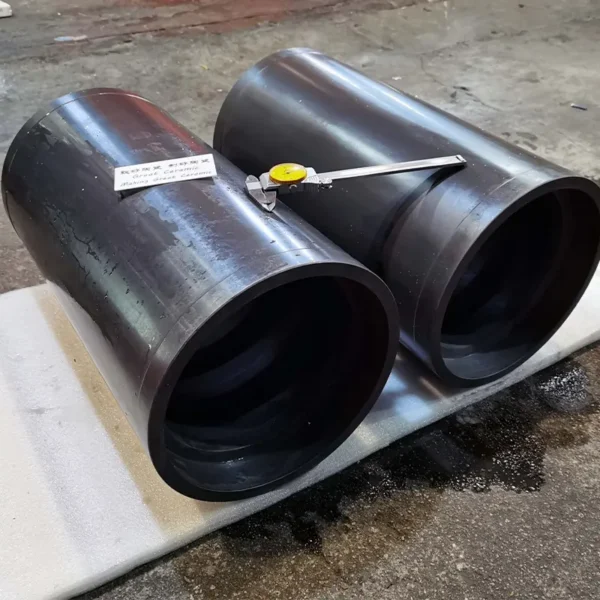
An inner sleeve or lining is not defined only by its tube dimensions. It may separate a process stream from a housing, create a wear-facing surface, protect an internal passage or establish a controlled interface between components. Explain what the sleeve contacts, what it protects and whether it is fixed, floating, replaceable or supported along its length.
Silicon carbide is often considered for demanding ceramic component applications, but a material name alone cannot predict suitability. Describe the process media, solids, flow behavior, thermal changes, pressure context and contact arrangement. The quotation should state its material assumption and identify any application information needed before the design can be reviewed responsibly.
Geometry, wall and interfaces
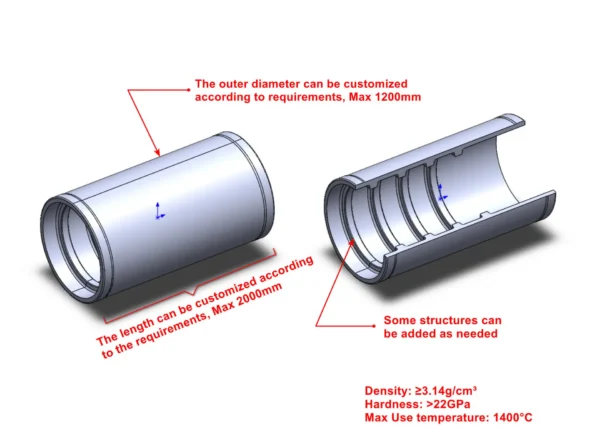
Show the complete internal and external profile, including bore changes, shoulders, grooves, ports, slots, end treatments and datum features. State wall-thickness controls where the sleeve must preserve a passage or withstand handling and installation. Include straightness, concentricity or runout requirements only where they support a defined assembly or process function.
The host housing should be represented with enough detail to establish fits, stops, clearances and access for insertion or removal. Note whether the sleeve is supported by a continuous bore, end seats, spacers or another arrangement. A sectioned assembly drawing is particularly useful when the lining is hidden after installation and cannot be inspected visually in service.
Process conditions and installation
The RFQ should describe the medium inside the sleeve and any material outside it, including corrosive exposure, particulate loading, cleaning chemistry, moisture, vacuum or atmosphere. Provide the operating and transient temperature profile without assuming the ceramic is the only limiting element. Also identify pressure direction, flow pattern and whether the sleeve sees impact or sliding contact.
Explain the installation method, such as clearance insertion, mechanical retention, bonding or another approved arrangement. State whether differential expansion, removable maintenance, sealing and alignment are design concerns. If the sleeve is part of a pump, furnace, injector or process line, describe the functional sequence rather than relying on an equipment label alone.
Surface and edge requirements
Internal surfaces may be more important than the external surface when the sleeve guides flow, isolates a medium or contacts another component. Mark the functional zones and describe whether surface texture, visual condition, edge integrity or cleanability must be reviewed. Avoid requesting a generic finish when the real requirement concerns sealing, flow or wear interaction.
End faces and entry edges often control installation and can be vulnerable during handling. Show chamfers, radii, lead-ins and protected areas on the drawing. Identify surfaces that must remain free of chips, cracks or processing residue, and explain how the part will be supported during inspection so acceptance criteria correspond to the installed function.
RFQ package and quotation comparison
Submit the sleeve drawing together with the host-component drawing, application sketch, media description, quantity scenario and inspection plan. If the design is adapted from an existing lining, include service observations and photographs as supporting evidence. Clarify which dimensions are fixed and which may be discussed for manufacturability or installation.
Ask each supplier to state the proposed material grade, forming and machining assumptions, joining or retention assumptions, inspection scope and unresolved risks. Compare responses on technical completeness, drawing compliance and evidence offered, not on a product title alone. Confirm packaging and handling requirements when the sleeve has long, thin or otherwise vulnerable geometry.
Questions Before You Inquire
Why is the host assembly needed for a sleeve quotation?
The housing establishes fits, support, stops, access and installation loads. Without it, a supplier may quote a tube that matches nominal dimensions but cannot be installed, aligned or inspected correctly. Provide a sectioned assembly or interface drawing with the sleeve’s functional datums identified.
What process information matters for a silicon carbide lining?
Describe the internal medium, solids or particles, flow behavior, pressure context, thermal cycling, cleaning chemistry and any outside exposure. Also state whether the sleeve is stationary, replaceable, bonded or mechanically retained. These details support a meaningful material and geometry review.
Should the sleeve drawing specify every surface requirement?
Specify requirements that affect flow, sealing, contact, cleanability, inspection or installation, and identify their functional zones. Avoid vague blanket language. End faces, entry edges and internal surfaces often deserve separate treatment because they can control assembly and service behavior.
Is this a standard stocked silicon carbide sleeve?
The page is structured for a custom, drawing-led inquiry and makes no stock, MOQ, lead-time or price promise. Confirm manufacturability, material proposal, inspection evidence and commercial conditions against the submitted geometry and application requirements.
Send a Clear Component Brief
Share your drawing, quantity and application with Porcecore. Mark the requirements that are fixed and the questions that remain open.

Reviews
There are no reviews yet.