
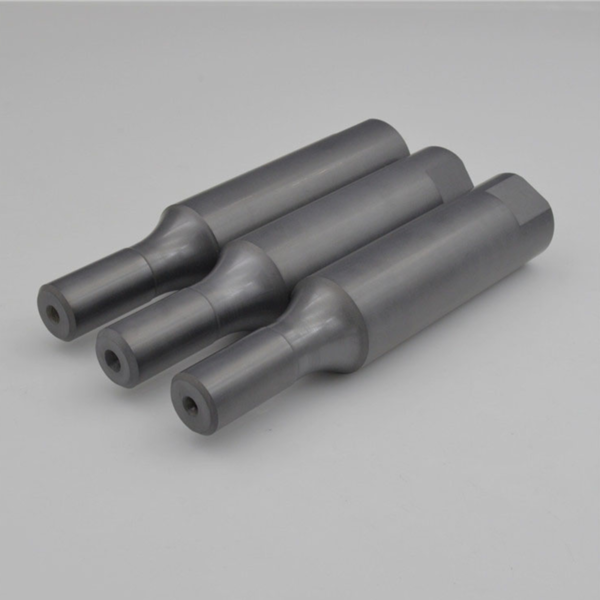
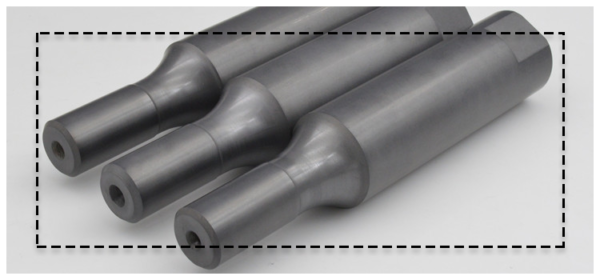
Define the mandrel by the shape it must create or support, its contact surfaces, removal method, thermal and chemical context, and inspection plan. The RFQ should invite technical review rather than imply a standard mandrel or stock configuration.
Key Inquiry Requirements
Describe the mandrel’s process role
Start by explaining what the mandrel does in the process: supports a part, establishes an internal profile, guides material, forms a surface or maintains position. Include the process sequence from installation through removal. A mandrel’s functional definition depends on what surrounds it and how it is extracted, so the RFQ should show the workpiece, access direction and any temporary or permanent contact.
Provide the working profile with section views through transitions, tapers, radii, bores, shoulders and end features. Identify surfaces transferred to the workpiece and surfaces used only for handling or support. State the intended datum scheme and orientation. If a profile is derived from a mating component, supply that component’s drawing and clarify which dimensions control the finished result.
Set silicon carbide requirements
Name silicon carbide as the intended material family and state the application reasons in functional terms, such as process exposure, stiffness, thermal duty, wear interaction or contamination control. Do not insert unverified material values. Ask the supplier to identify the proposed grade or material designation, process route and any geometry-dependent limitations that could affect the mandrel’s profile or release.
Mandrels can require forming, machining, finishing or assembly with other materials, depending on their shape and use. Request a process review for thin walls, deep features, long unsupported sections, sharp transitions and difficult-to-measure surfaces. If the design includes coatings, inserts, joining or sacrificial features, describe their role and approval requirements. Every proposed substitution should be visible in the quotation.
Explain release and handling
The extraction method should be treated as a design input, not a later shop-floor detail. Explain whether the mandrel is pulled, pushed, rotated, collapsed, heated, cooled or otherwise separated from the workpiece. Identify access limitations, extraction loads, release agents, draft requirements and surfaces that cannot tolerate contact marks. These details may change the profile, tolerances and support strategy.
Describe how the mandrel is installed, supported and handled before and after use. Include fixturing, lifting points, orientation, storage, cleaning and contamination controls where relevant. If repeated cycles are expected, state the intended inspection or refurbishment decision process. Avoid promising cycle life; instead, ask suppliers to identify wear-sensitive features and propose an evidence-based verification approach.
Define environment and verification
State the process temperature range only when it is known and relevant, together with atmosphere, vacuum or pressure context, chemical exposure, thermal cycling and contact materials. Identify transient conditions such as ramping, quenching, cleaning or accidental contact. The goal is to give suppliers enough context to review dimensional stability, surface interaction and handling risk without turning assumptions into guaranteed performance.
Define how the mandrel and the formed result will be inspected. Specify profile measurement locations, surface criteria, runout or alignment checks, and any functional trial required. Explain whether inspection is required before use, after a trial, or at defined process checkpoints. Ask suppliers to state measurement access and uncertainty for hidden or internal features rather than reporting unexplained pass results.
Build an actionable mandrel RFQ
Include the current profile drawing or model, revision, workpiece drawings, process sequence, installation and removal sketches, quantity scenario and intended use. Mark working surfaces, reference surfaces and sacrificial areas. Separate mandatory geometry from suggested features, and identify any open point where supplier feedback is invited. This package allows a quotation to address process compatibility rather than simply reproduce an outline.
Request a technical response covering material designation, manufacturing route, release assumptions, inspection plan, packaging and deviations. Ask for a drawing-marked review of risks and proposed changes. Compare quotations by profile fidelity, process understanding, measurement approach and control of interfaces. A mandrel that looks similar on paper may behave differently if its extraction path or working surface is misunderstood.
Questions Before You Inquire
What makes a mandrel RFQ different from a generic ceramic-part RFQ?
A mandrel must be defined in relation to the process and workpiece. Include the shape it forms or supports, installation and extraction sequence, contact surfaces, access, environment and verification method. Without that context, a supplier may quote a geometrically similar component that cannot be installed, released or inspected as intended.
Which mandrel surfaces should be marked critical?
Mark surfaces that contact the workpiece, establish the finished profile, guide alignment or determine release. Distinguish them from handling, support and reference surfaces. Add section views and measurement requirements for hidden transitions, tapers, radii and internal features. This helps the supplier focus process and inspection effort where it matters.
Is silicon carbide automatically suitable for every mandrel application?
No material family should be treated as an automatic guarantee. Suitability depends on the mandrel geometry, process atmosphere, temperature, chemical exposure, contact pair, extraction method and required verification. State the operating need and ask suppliers to propose a material designation and evidence, while keeping approval tied to the application.
How should mandrel life be addressed in an RFQ?
Describe the intended process sequence, repeated-use context and wear or contamination concerns, but do not assume a cycle-life guarantee. Ask suppliers to identify wear-sensitive areas, recommended inspection checkpoints and possible refurbishment criteria. If a life test is needed, define the test conditions and acceptance rule separately from the component drawing.
Send a Clear Component Brief
Share your drawing, quantity and application with Porcecore. Mark the requirements that are fixed and the questions that remain open.


Reviews
There are no reviews yet.